Develop analytical thinking Addition Worksheets for Ages 6-9
3 filtered results
-
From - To
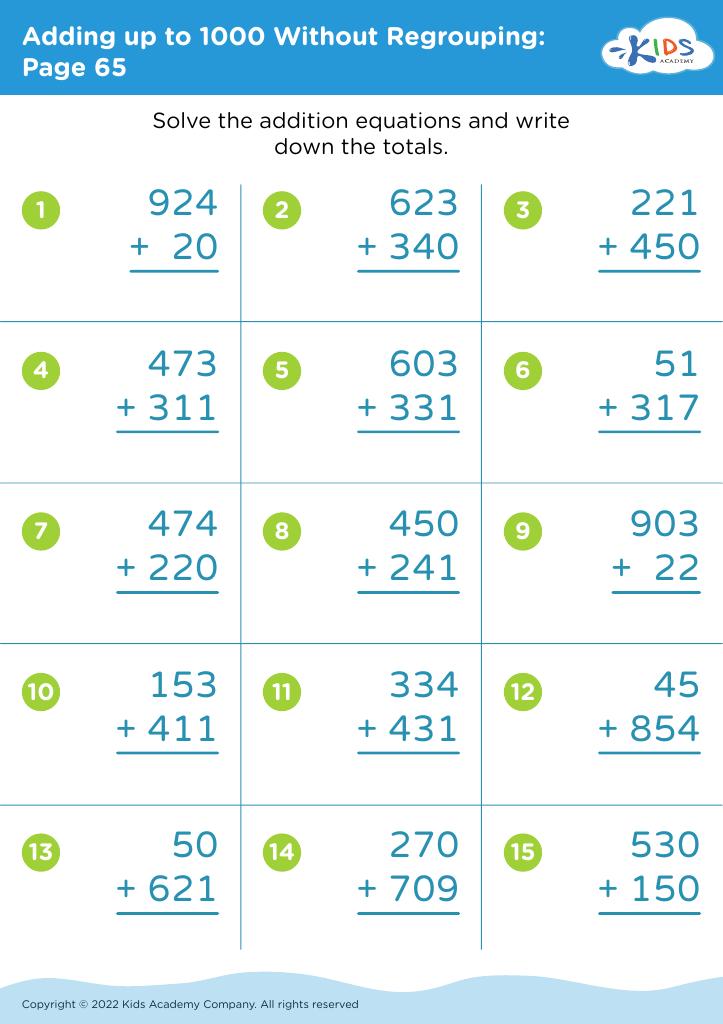
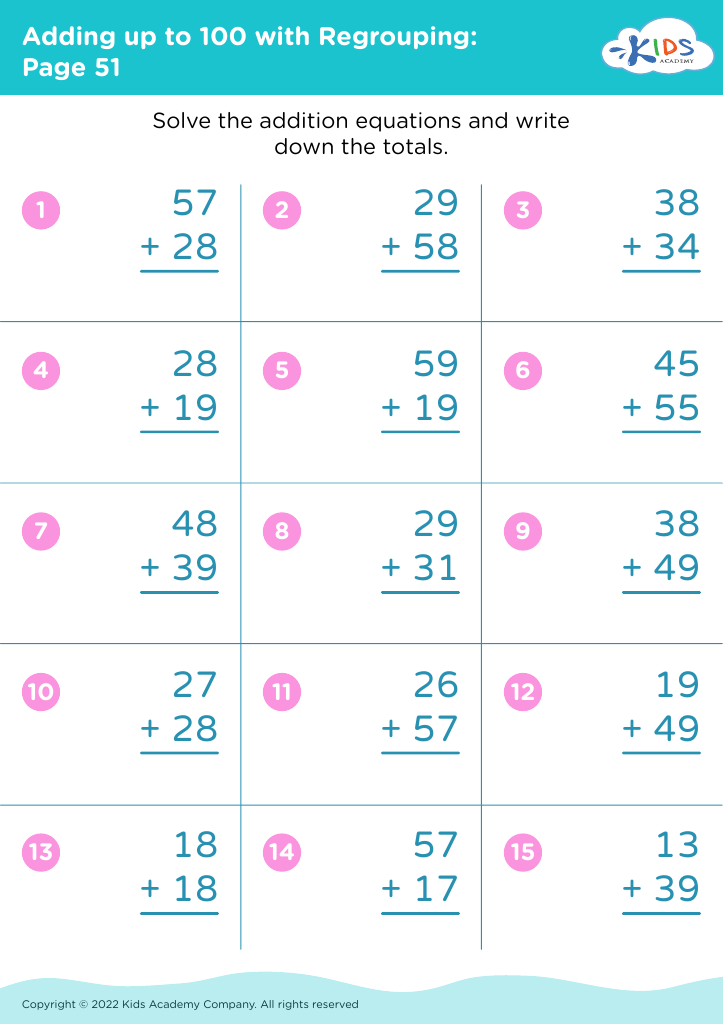
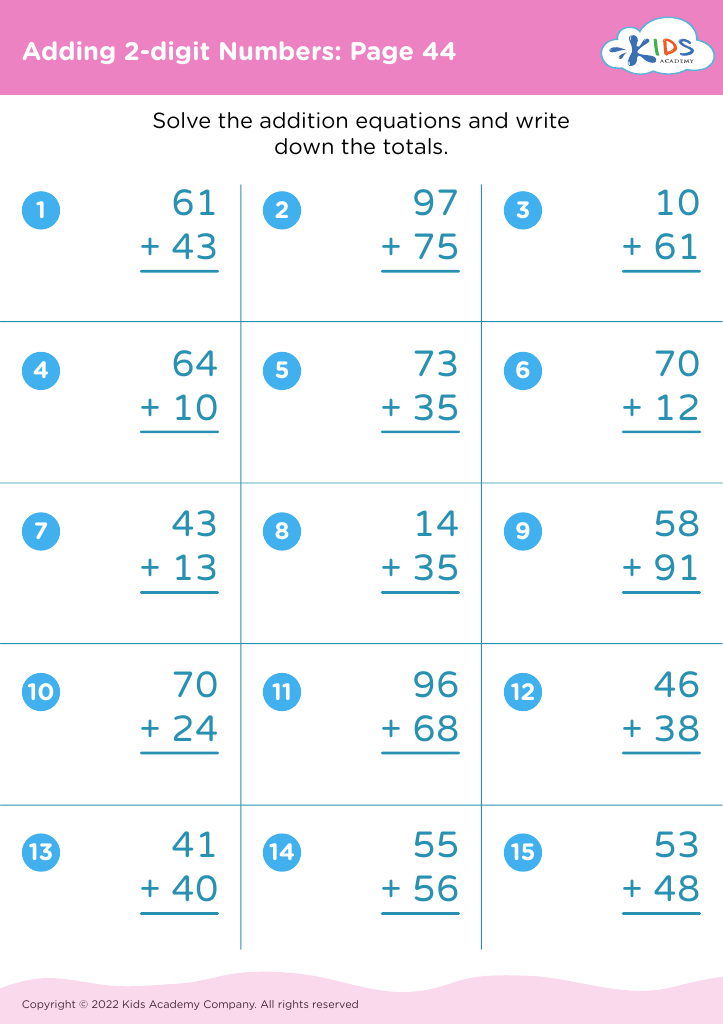
Enhance your child's analytical thinking skills with our collection of engaging addition worksheets designed for ages 6-9. These worksheets focus on fundamental math concepts while encouraging problem-solving, critical thinking, and logical reasoning. Kids will tackle fun challenges, puzzles, and real-life scenarios that require them to apply their addition knowledge in creative ways. Suitable for homework, classroom activities, or at-home practice, our worksheets foster a comprehensive understanding of addition while making learning enjoyable. Help your little learners develop the confidence and skills they need for future math success. Explore our resources today and watch your child thrive in their mathematical journey!








Developing analytical thinking through addition for children aged 6-9 is crucial for their overall cognitive growth. During these formative years, children are beginning to understand mathematical concepts, and fostering analytical thinking helps them make sense of the world around them. When children learn addition not just as rote memorization but as a problem-solving tool, they enhance their ability to think critically and approach challenges from multiple angles.
Analytical thinking in addition encourages children to explore different strategies for solving problems, such as using visual aids like number lines or manipulatives. This process promotes a deeper understanding of mathematical relationships and lays a strong foundation for more complex concepts in the future, such as subtraction, multiplication, and division.
Moreover, analytical thinking nurtures essential life skills, including reasoning, decision-making, and logical exploration. Parents and teachers who emphasize this approach are helping children become independent thinkers who can tackle not only math problems but also everyday challenges. Fostering analytical thinking also builds confidence, making children more resilient learners who feel empowered to engage with new, difficult topics. Overall, prioritizing analytical thinking in addition is vital for nurturing well-rounded, capable, and curious learners.








