Develop problem-solving skills Addition Worksheets for Ages 6-9
6 filtered results
-
From - To
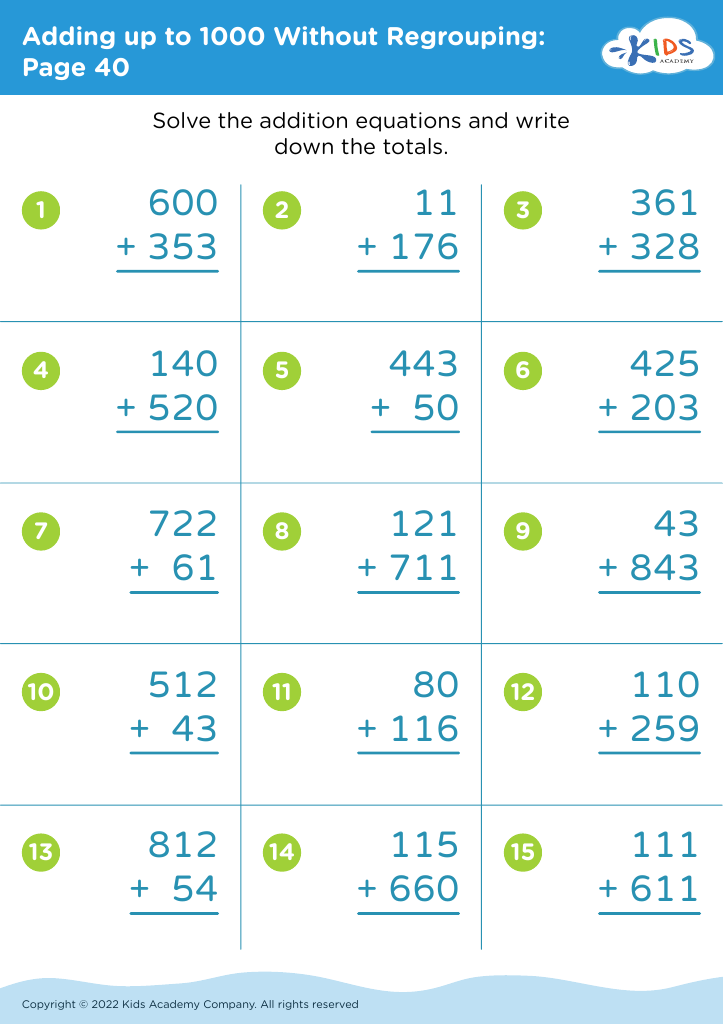
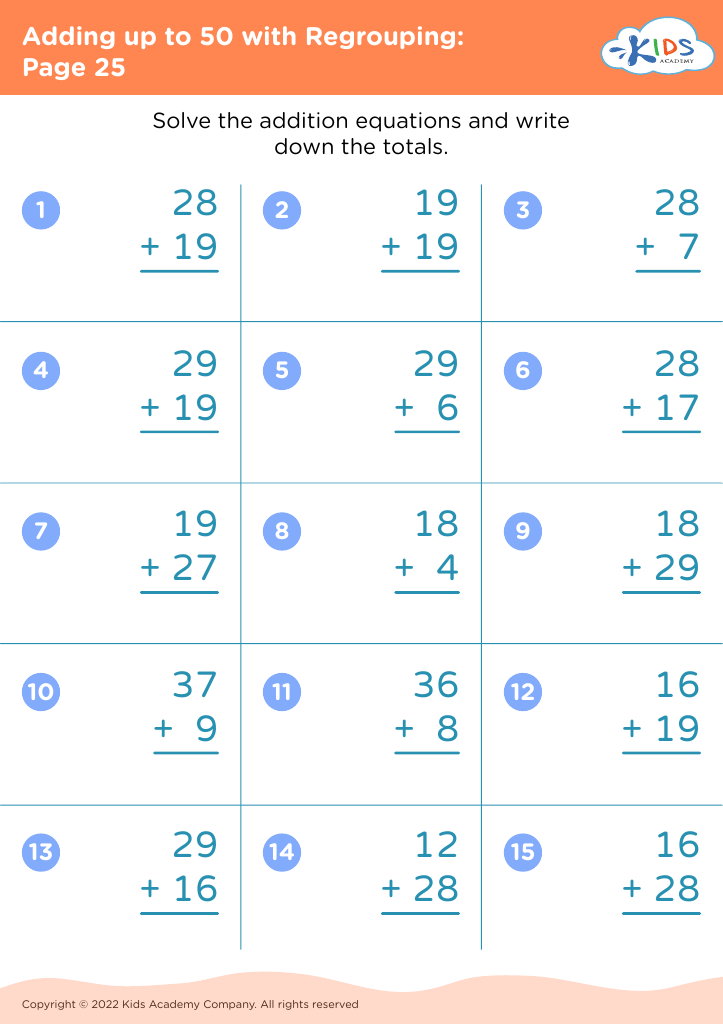
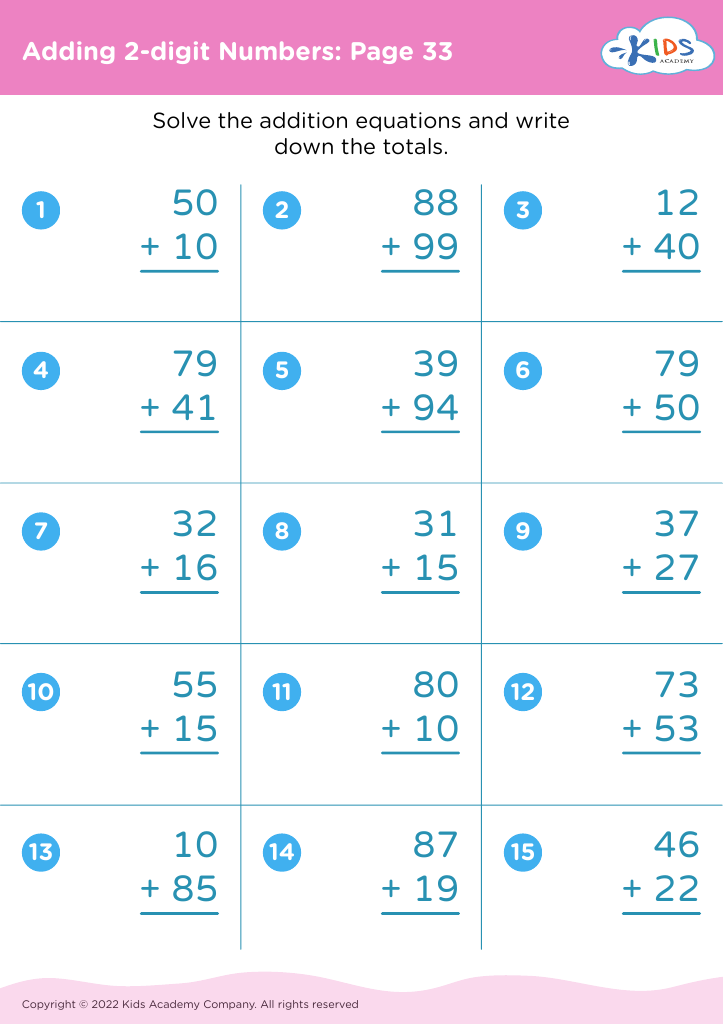
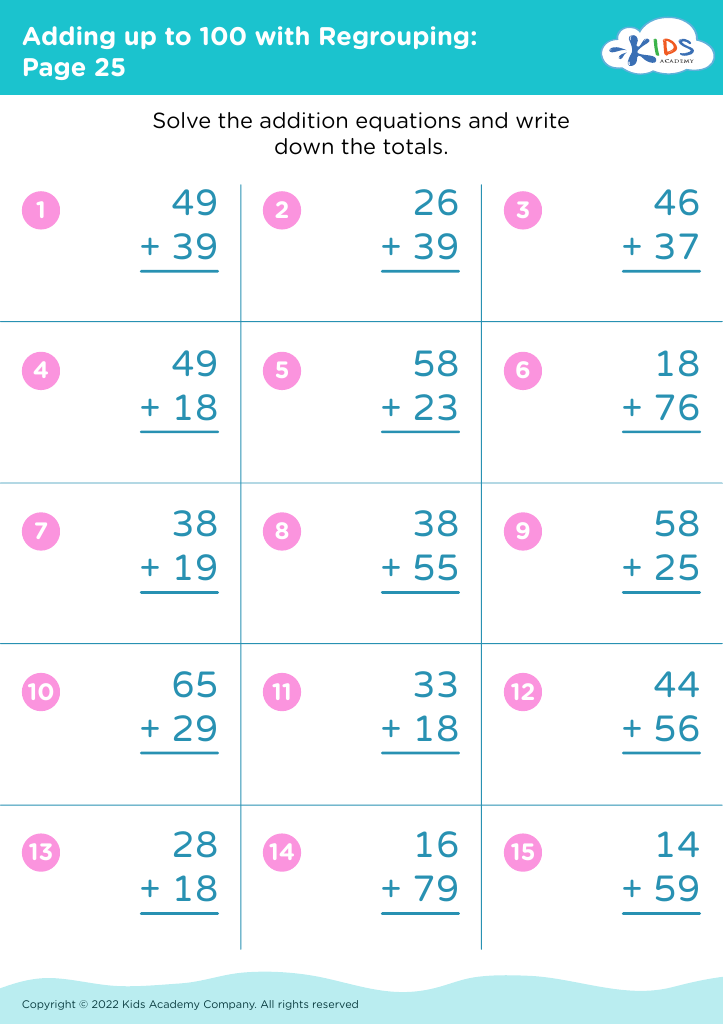
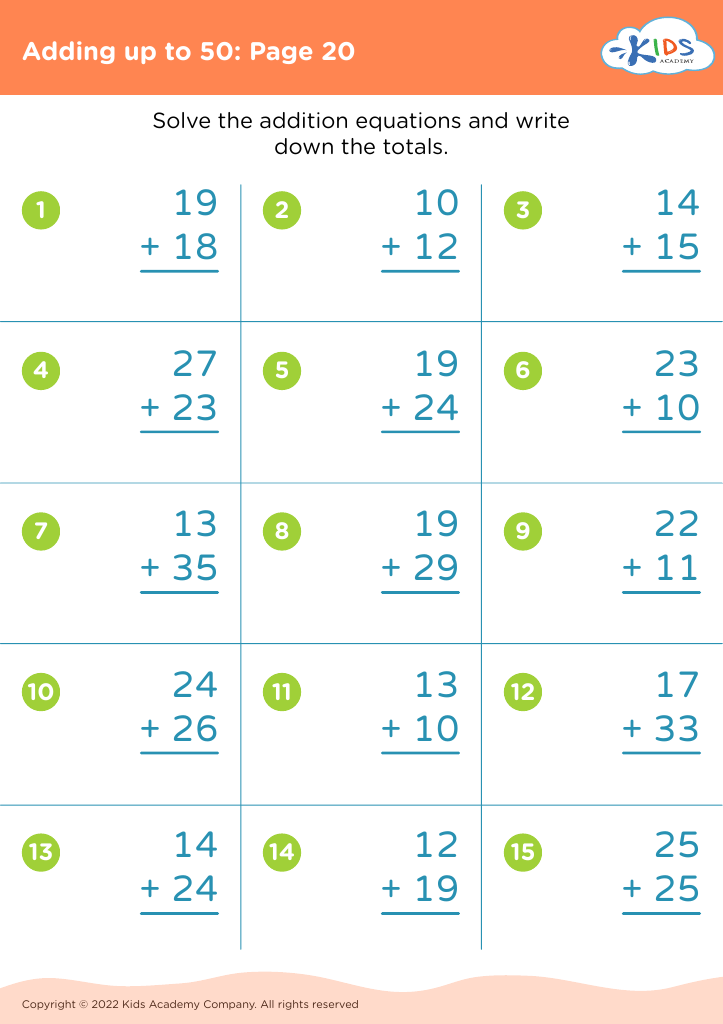
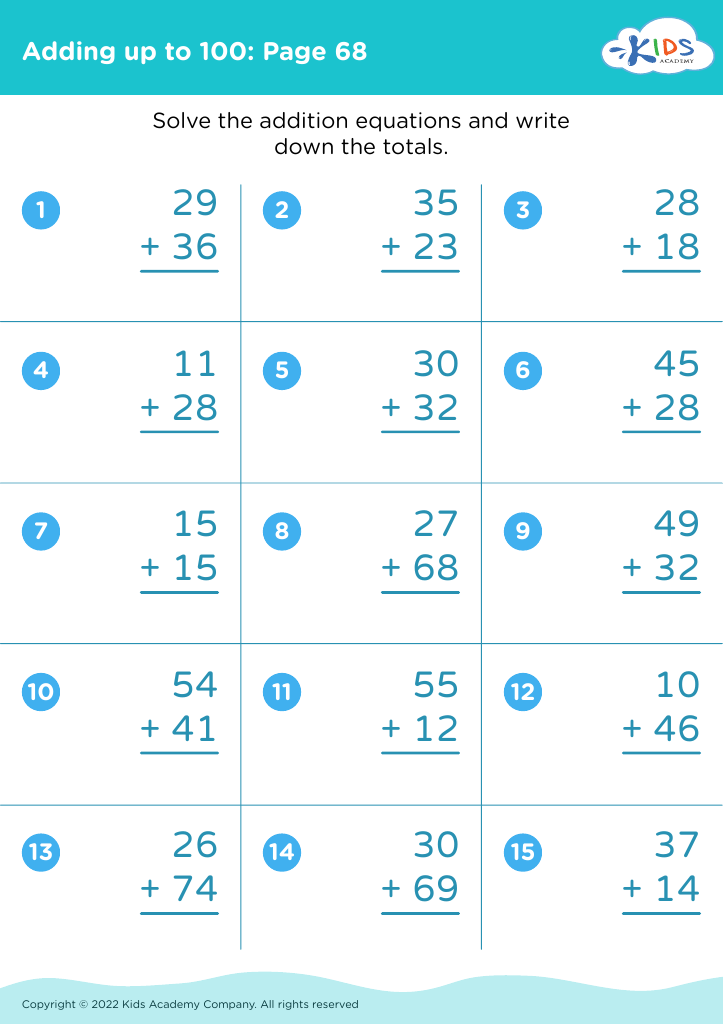
Enhance your child's problem-solving abilities with our engaging Addition Worksheets designed specifically for ages 6-9. These worksheets provide a variety of fun and interactive activities that encourage kids to think critically and approach math challenges with confidence. Each worksheet promotes foundational addition skills while incorporating real-life scenarios that make learning applicable and enjoyable. By solving problems and exploring different strategies, young learners will develop crucial analytical thinking skills. Perfect for at-home practice or classroom use, our collection is tailored to align with educational standards, ensuring your child gains essential skills while having fun with math. Unlock your child's potential today!


.jpg)





Developing problem-solving skills in addition for children aged 6-9 is crucial for several reasons. At this age, children are forming their foundational understanding of mathematics, and effective problem-solving is key to this development. Firstly, problem-solving fosters critical thinking, encouraging children to approach challenges resilience and creativity. By learning to solve addition problems, kids can improve their logic and reasoning abilities, which are transferable skills applicable to various aspects of their lives.
Moreover, mastering addition through problem-solving helps build confidence. When children successfully tackle mathematical challenges, they reinforce their self-efficacy, motivating them to engage with more complex concepts in the future. Additionally, these skills enhance their academic performance, making them more proficient in math-related tasks and preparing them for higher-level topics.
From a socio-emotional perspective, problem-solving teaches collaboration and communication as children often work in groups. Lastly, as we create a society reliant on innovation and technology, our future adults need strong problem-solving skills to navigate an increasingly complex world. By nurturing these skills early, parents and teachers contribute significantly to their overall cognitive development, preparation for advanced learning, and lifelong educational success.








