Enhance counting skills Addition Worksheets for Ages 6-9
13 filtered results
-
From - To
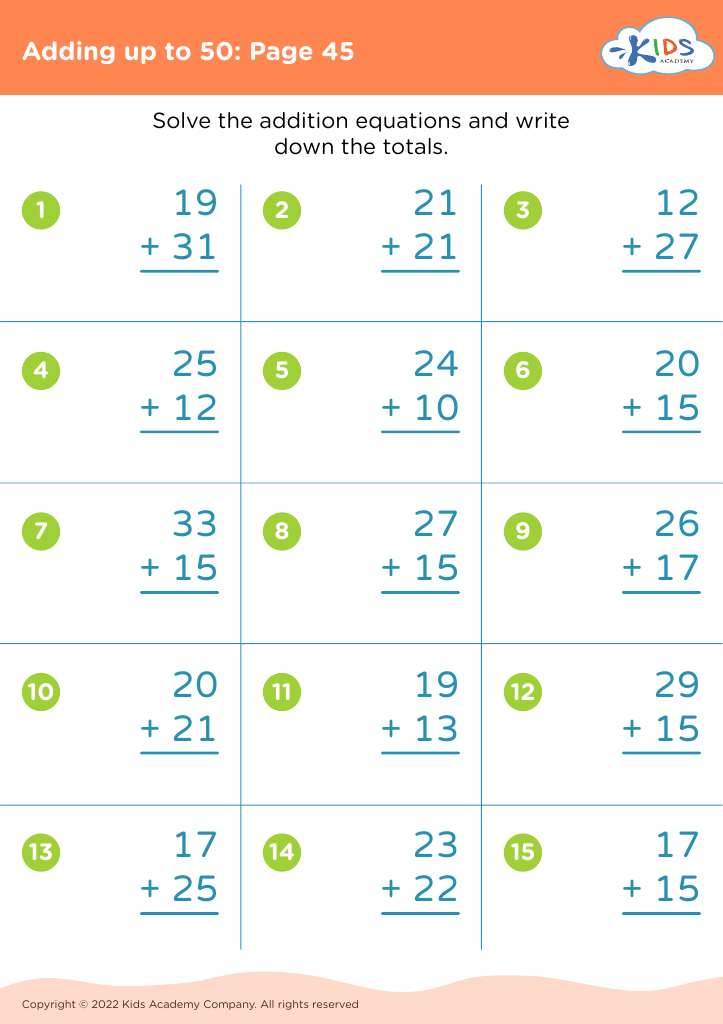
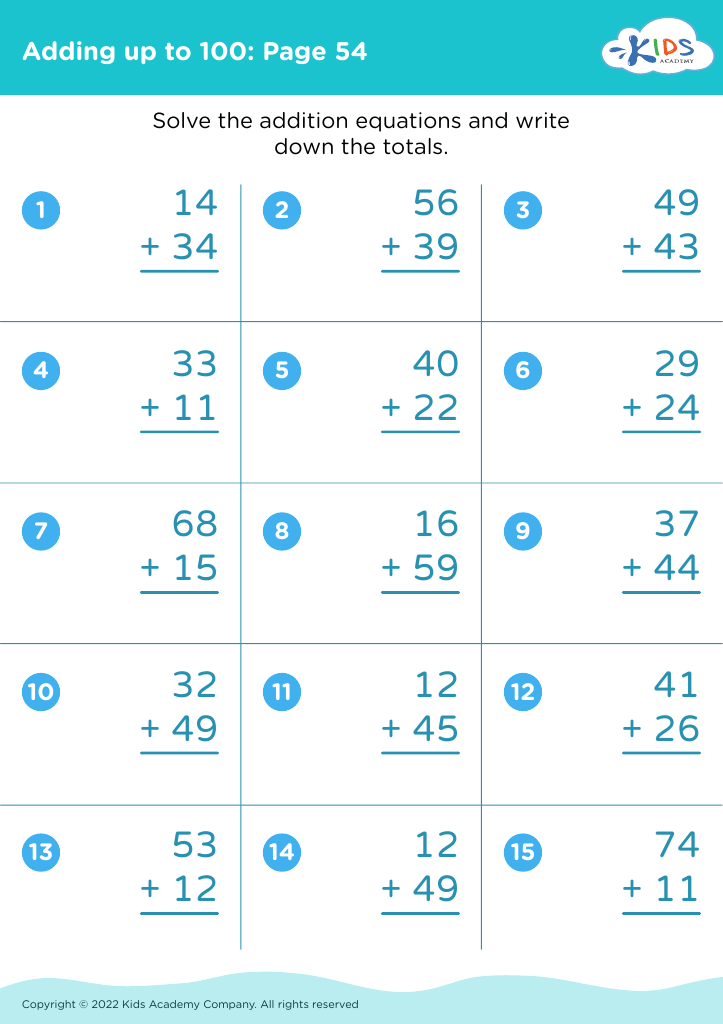
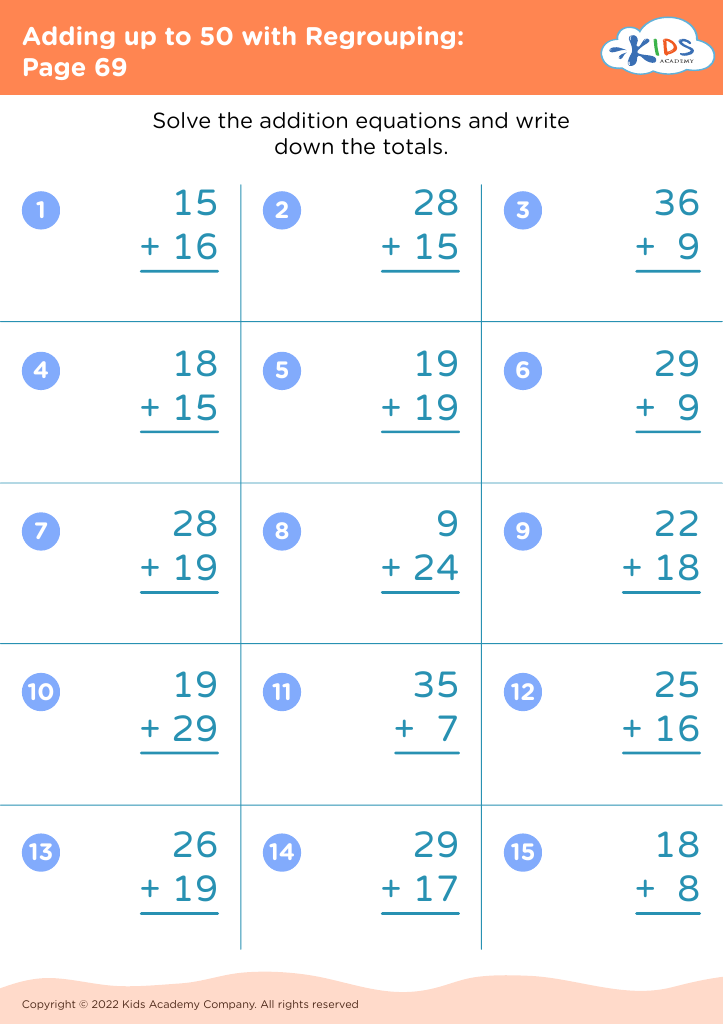
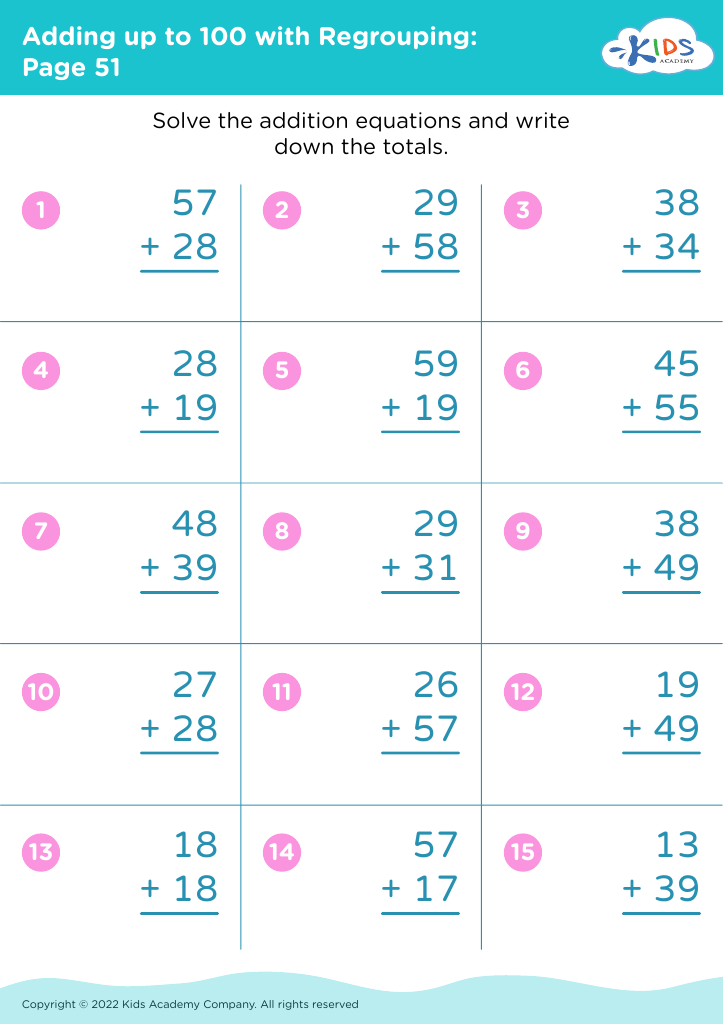
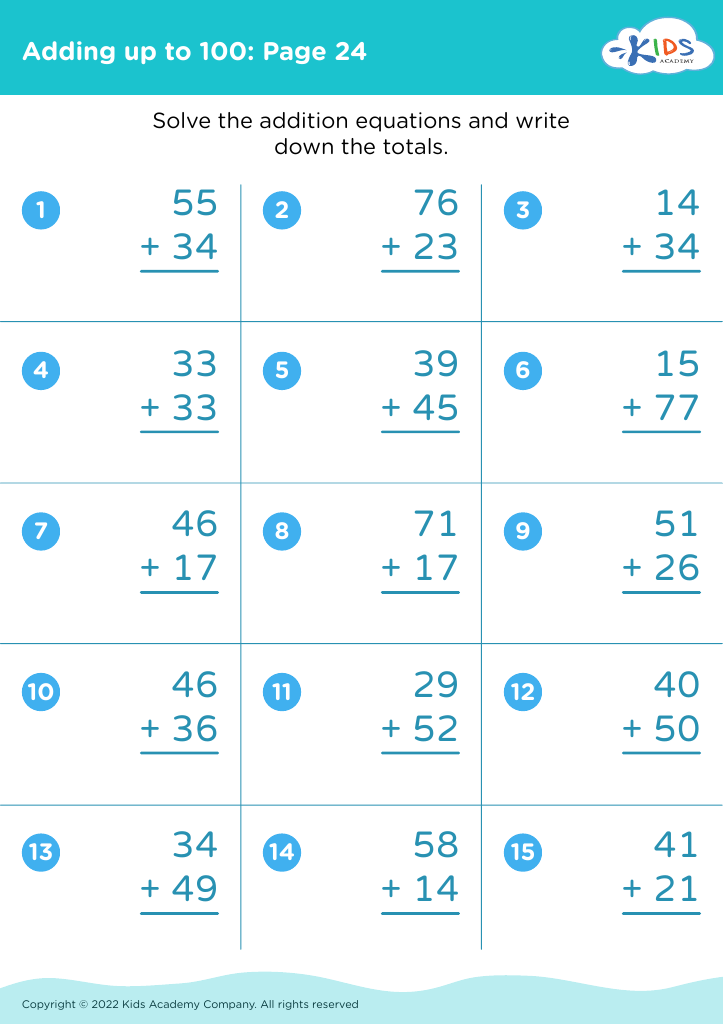
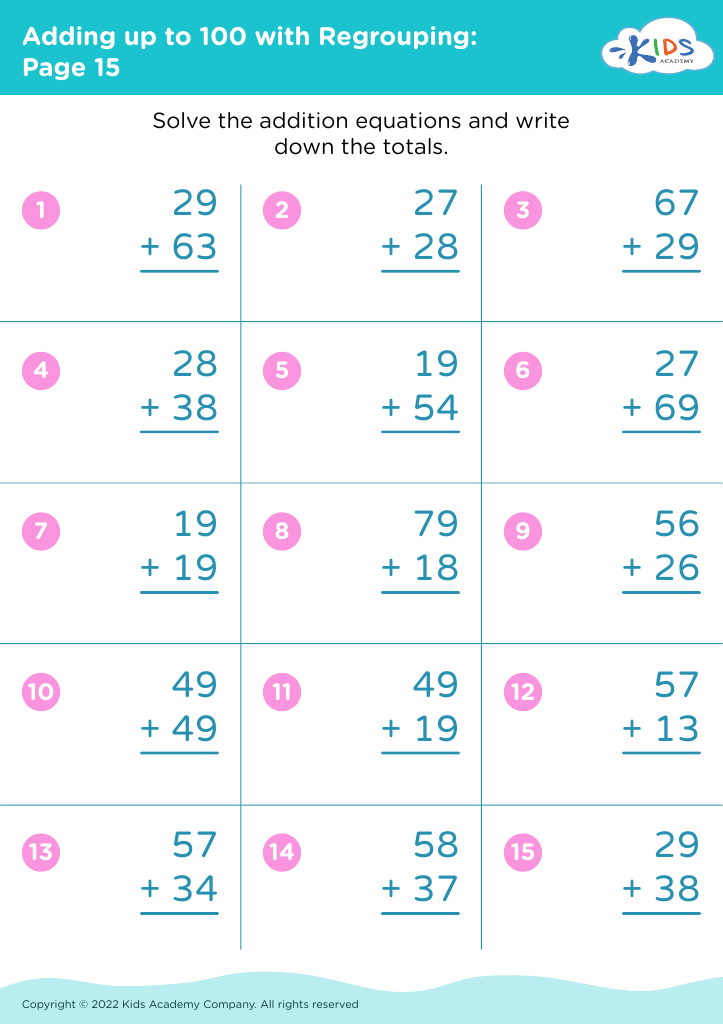
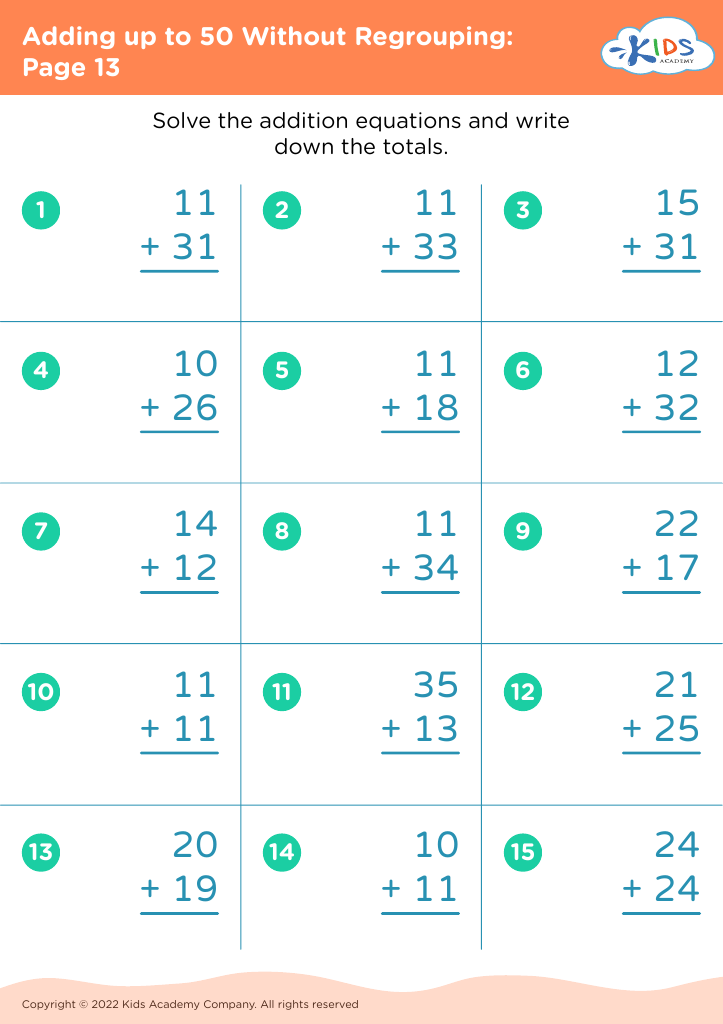
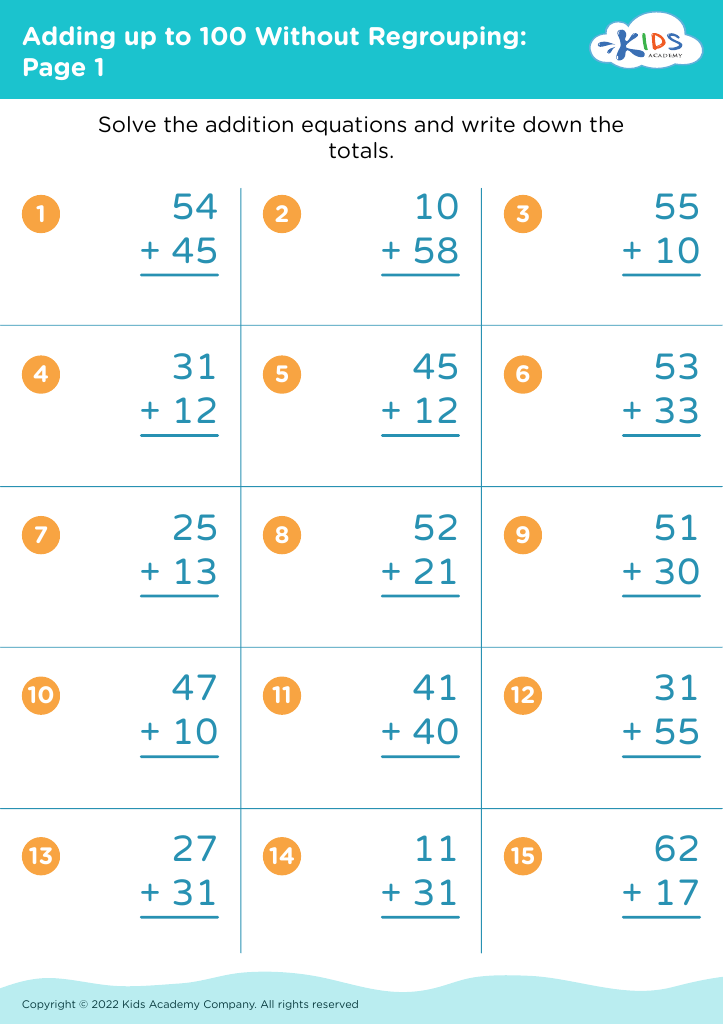
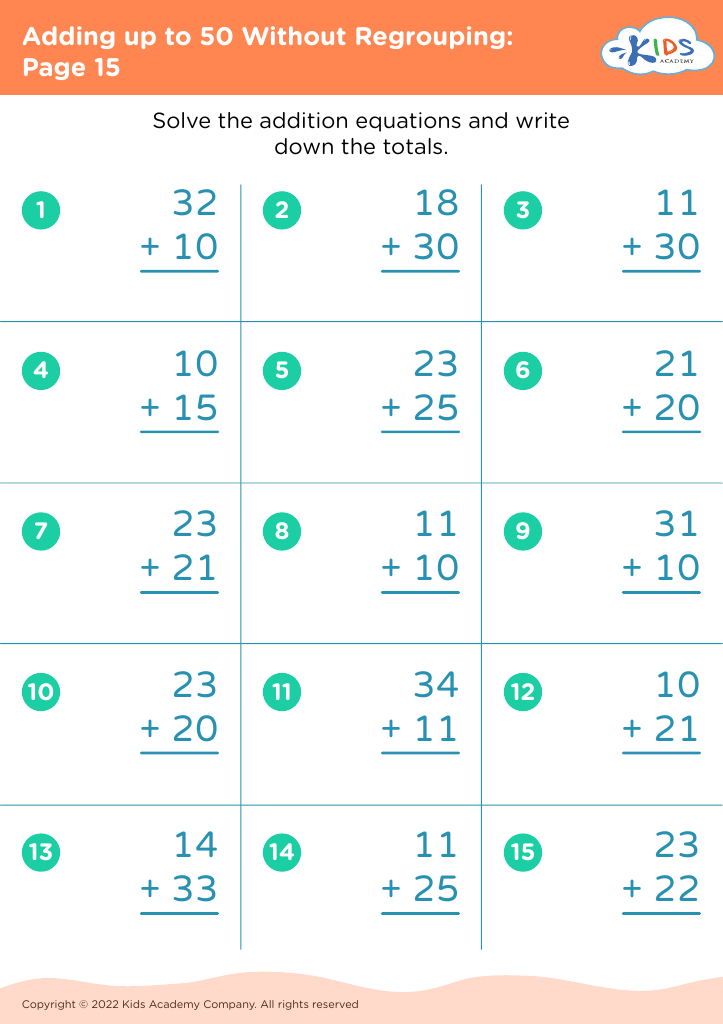
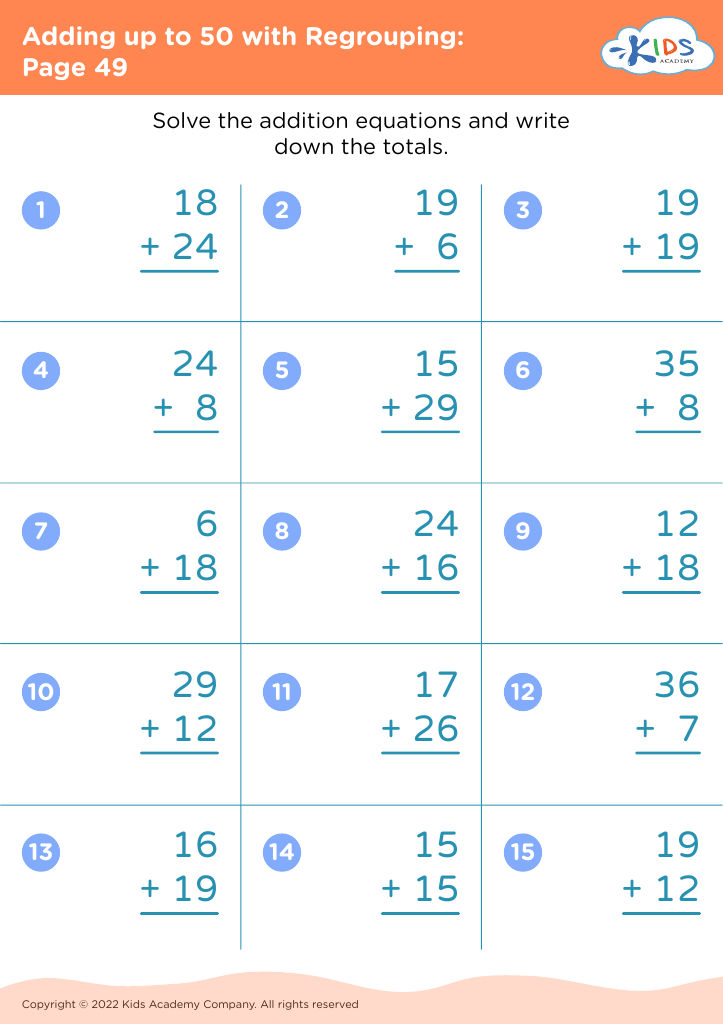
Enhance your child’s counting and addition skills with our engaging worksheets designed specifically for ages 6-9. These printable resources focus on making learning fun while developing foundational math abilities through colorful illustrations and interactive exercises. Each worksheet encourages children to practice counting objects, performing simple addition tasks, and reinforces their understanding of numbers. Ideal for parents and educators, these worksheets can be used for home practice or in the classroom, ensuring that young learners grow confident in their arithmetic skills. Download now to get started on a journey of mathematical discovery that enhances counting and addition abilities, setting them up for future success!
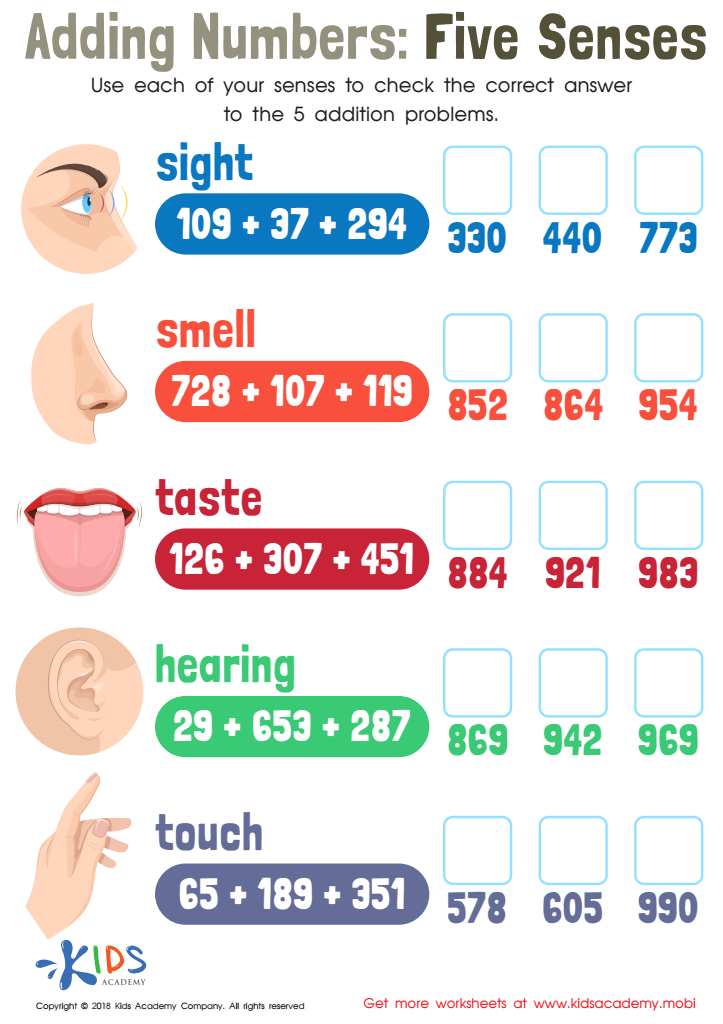
Adding Numbers: Five Senses Worksheet
 Assign to My Students
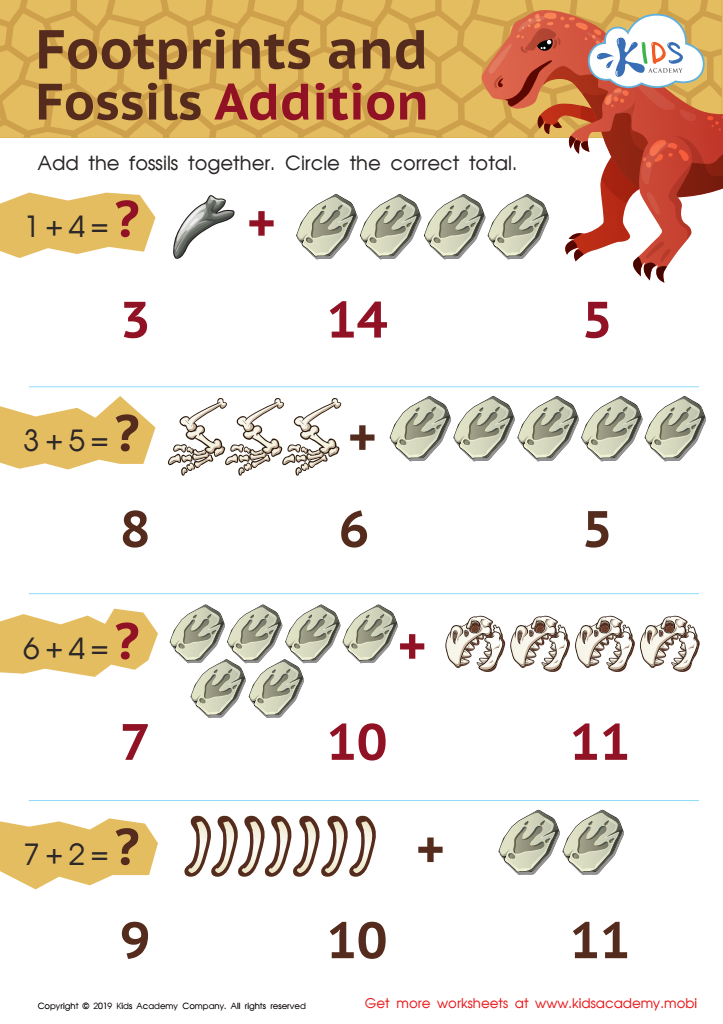
Footprints and Fossils Addition Worksheet
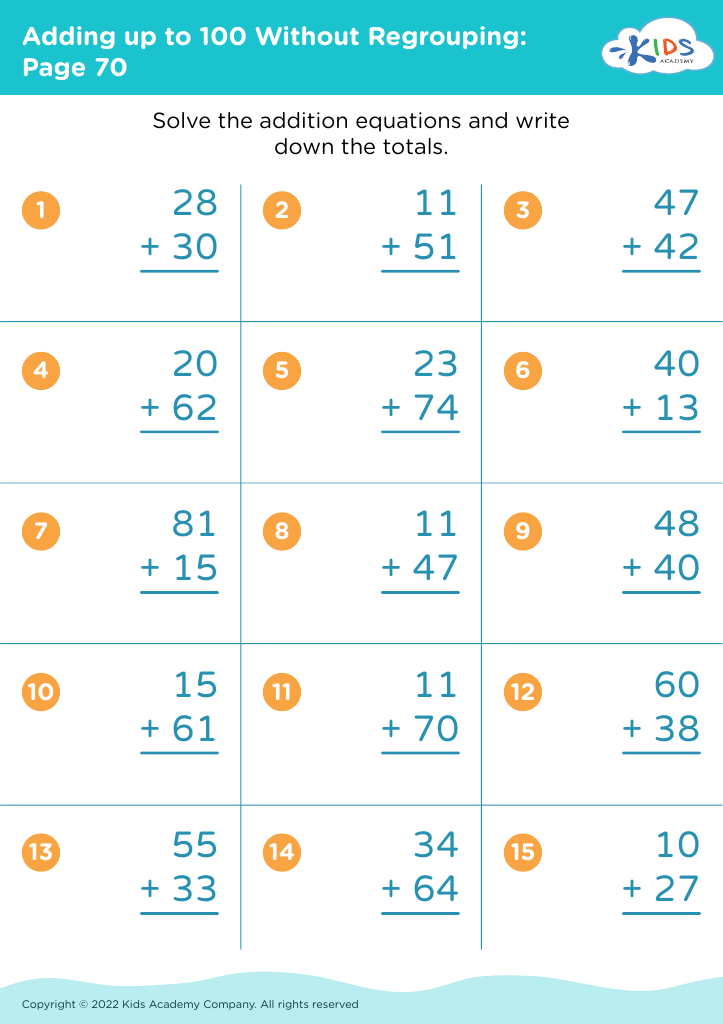








Enhancing counting skills and addition for children aged 6-9 is crucial for several reasons. This foundational math knowledge not only supports academic achievement but also encourages cognitive development and critical thinking. Mastering counting and addition helps children understand numerical relationships, fostering confidence in their problem-solving abilities.
Additionally, strong counting skills contribute to a child's overall mathematical proficiency, which will be essential as they encounter more complex concepts in higher grades. Early mastery of these skills also aids in daily life activities, from managing money to understanding time, thereby promoting independence.
Parents and teachers play a pivotal role in nurturing these skills through engaging activities such as games, practical exercises, and supportive learning environments. Enhancing these abilities at this stage can diminish math anxiety, enabling children to approach mathematics with a positive mindset as they grow older.
Moreover, counting and addition form the basis for other advanced mathematical concepts. By prioritizing these skills, parents and teachers set a sturdy groundwork not just for academic success, but for lifelong learning and numeracy. Ultimately, investing time and resources into developing counting and addition skills in children aged 6-9 is a critical step toward building their future success and confidence in mathematics.








