Fraction identification Addition Worksheets for Ages 6-9
5 filtered results
-
From - To
Discover our interactive Fraction Identification Addition Worksheets designed for ages 6-9. These worksheets combine fun and learning to help young students understand and identify fractions through engaging addition exercises. Perfectly tailored for early graders, the activities strengthen their mathematical foundations, enhancing visualization skills and fraction comprehension. With colorful graphics and thoughtfully crafted problems, kids remain motivated and confident as they explore fractions in an innovative way. Ideal for classroom use or at-home practice, our worksheets support structured learning and are accessible, printable resources to help children excel in math effortlessly. Dive into our collection and make learning fractions enjoyable!
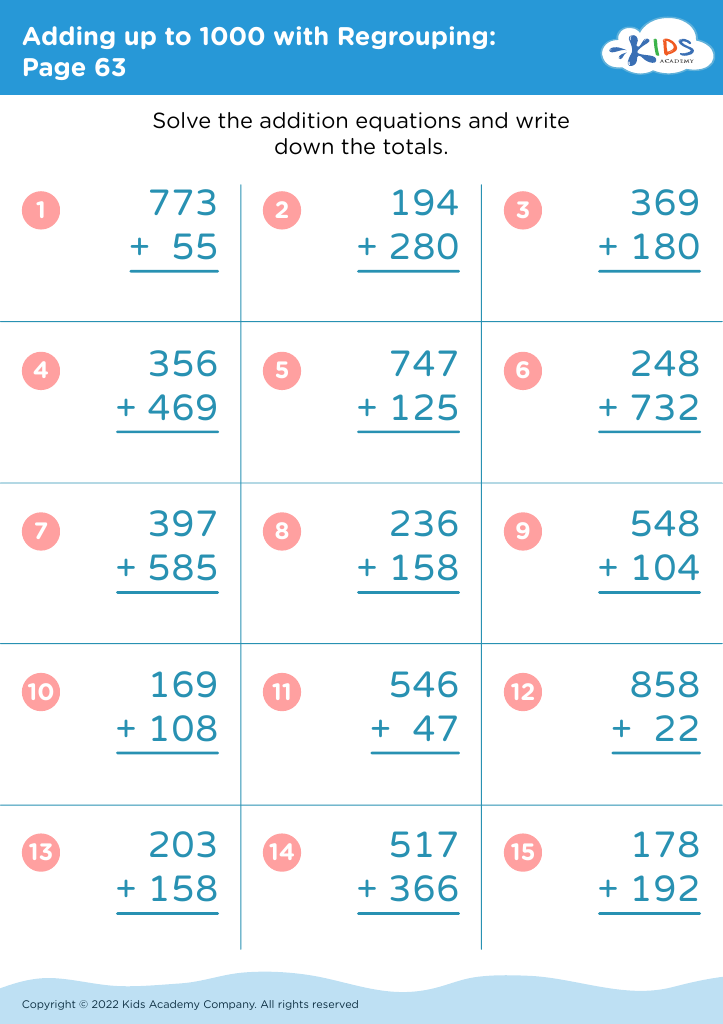
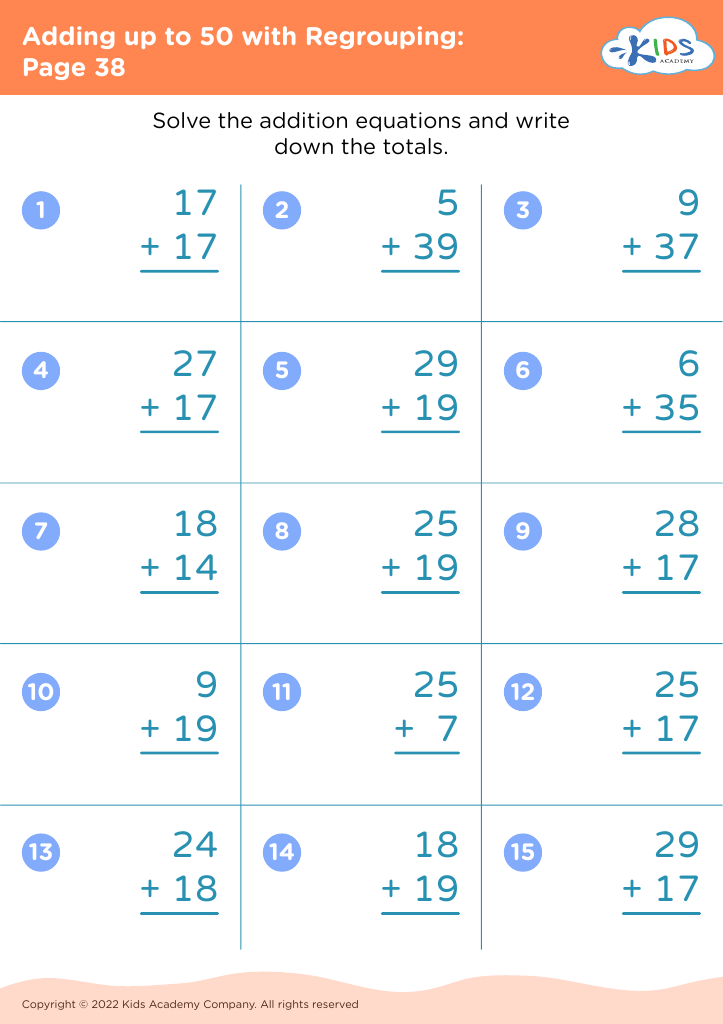
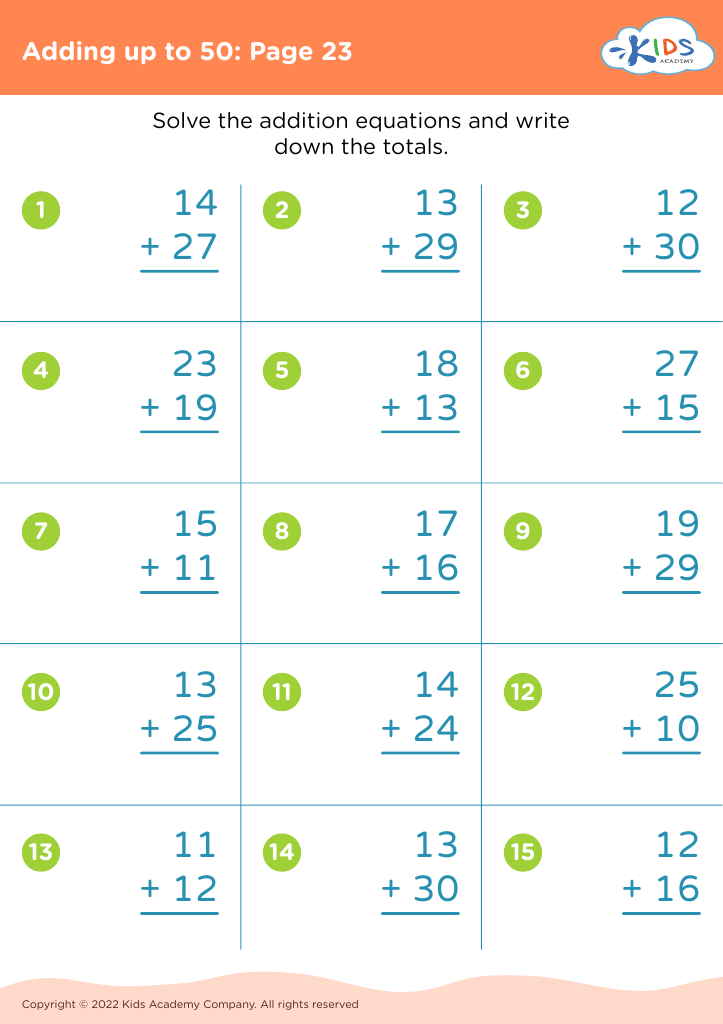
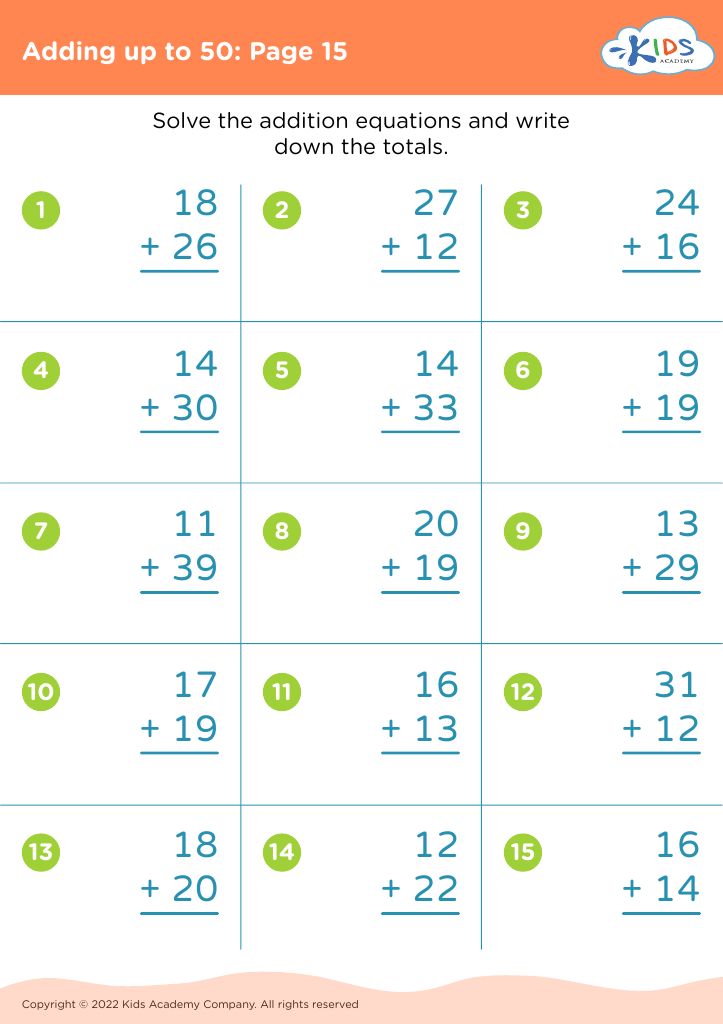
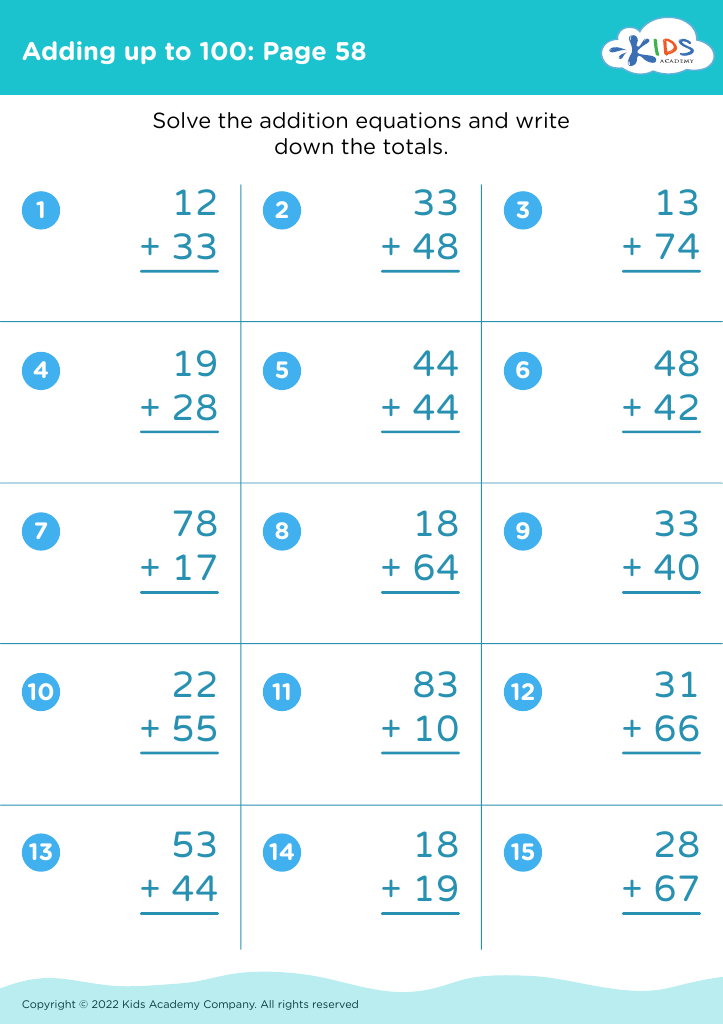








Fraction identification and addition are essential mathematical concepts for children aged 6-9 as they form the foundational skills for more advanced math topics in later grades. At this age, students typically shift from basic arithmetic to more complex problem-solving skills. Understanding fractions at an early age significantly influences their overall mathematical literacy and aptitude.
Firstly, grasping fractions helps young learners develop critical thinking and problem-solving abilities. By identifying and adding fractions, children improve their numerical comprehension and enhance their ability to understand part-whole relationships, which are vital for learning more advanced math concepts such as ratios, percentages, and algebra.
Secondly, early proficiency in fractions contributes to confidence in math. Children who master fractions tend to feel more accomplished and motivated to tackle complex topics. This confidence is crucial as it encourages perseverance and a positive attitude toward learning.
Lastly, fractions are not only prevalent in academic settings but also in everyday life. From measuring ingredients in a recipe to dividing a pizza among friends, fraction skills are practical and frequently used. Early mastery ensures that children can apply math in real-world scenarios, fostering both academic success and practical life skills.
Teachers and parents who prioritize fraction identification and addition help lay a strong mathematical foundation, preparing children for future academic and life challenges.








