Fraction simplification Addition Worksheets for Ages 6-9 - Page 3
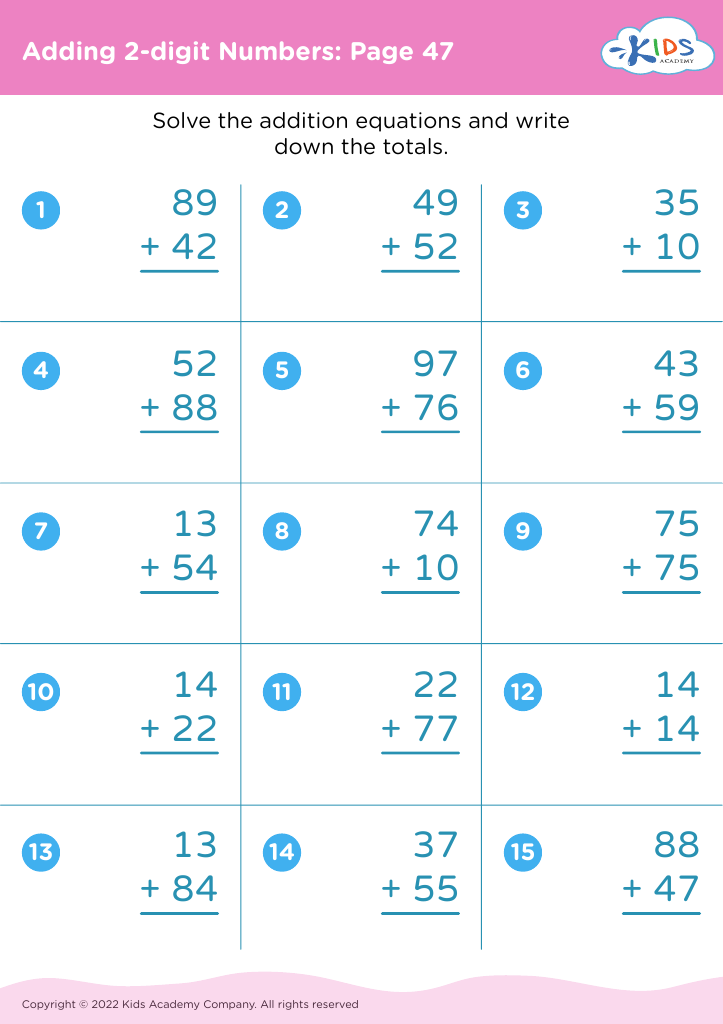
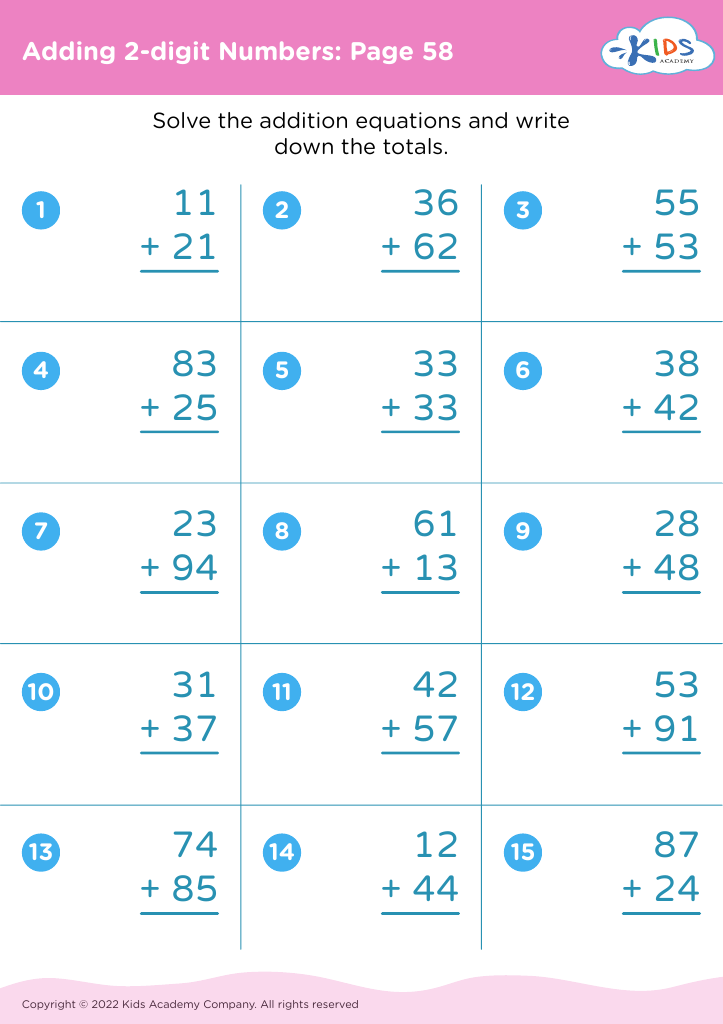
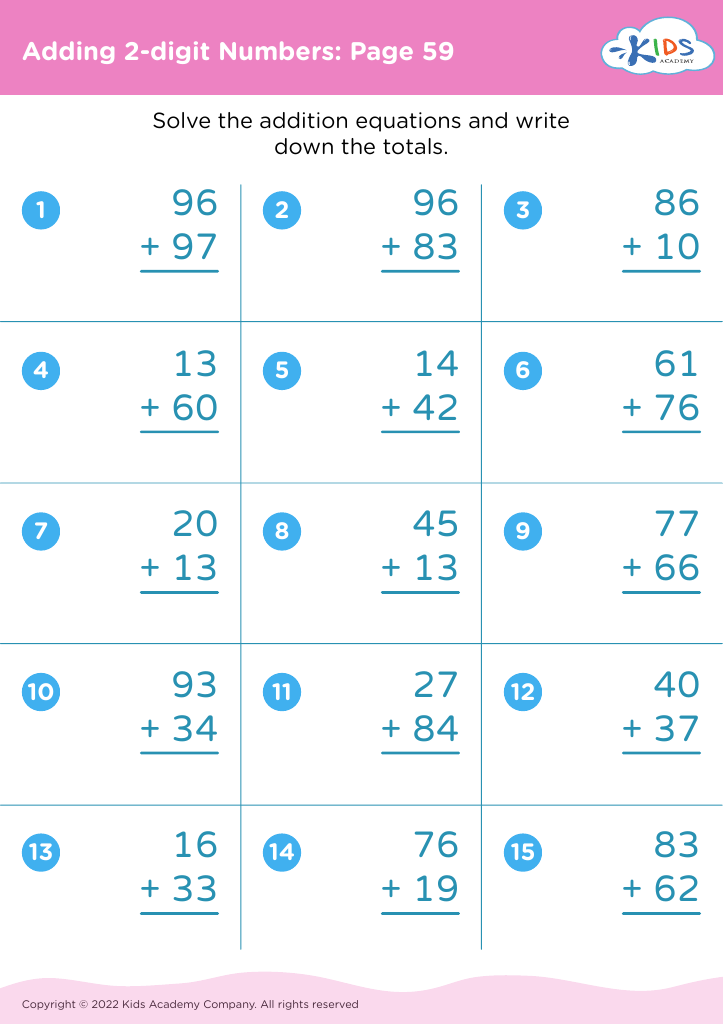
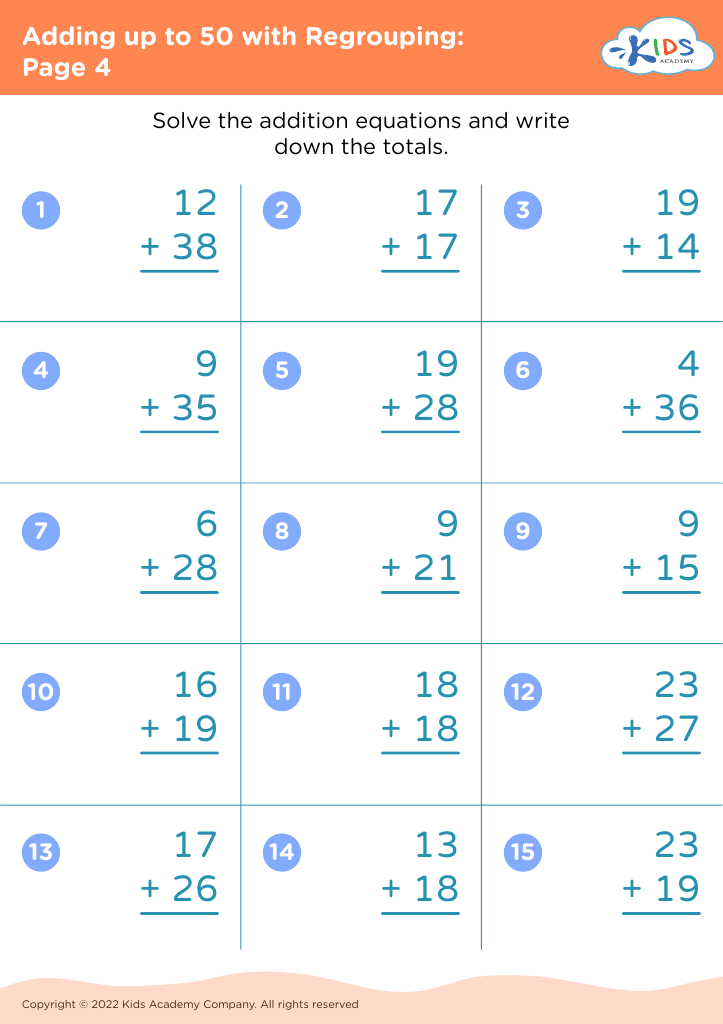







Teaching fraction simplification and addition to children aged 6-9 is crucial for several reasons. Firstly, understanding fractions lays the foundation for more advanced math concepts, such as ratios, percentages, and algebra, essential for their future academic success. Introducing these skills early helps students develop strong number sense and problem-solving abilities.
Simplifying fractions teaches children to recognize equivalent values, enhancing their understanding of proportions and relationships between numbers. This skill is not only critical for math but also applicable in everyday situations, such as dividing a pizza or adjusting a recipe. Addition of fractions further challenges them to apply their understanding in more complex scenarios. It encourages cognitive skills like logical reasoning and abstract thinking.
Moreover, early exposure to fractions fosters a positive attitude towards math by making it less intimidating. When students grasp these concepts early, they build confidence and are more likely to enjoy learning math in the future. Simplified teaching methods for this age group often incorporate visual aids and hands-on activities, making learning engaging and effective.
Parents and teachers should prioritize fraction simplification and addition as part of a holistic math education. It equips children with fundamental tools, prepares them for future learning, and instills confidence that will support their overall academic journey.








