
Handwriting practice Addition Worksheets for Ages 6-9
5 filtered results
Difficulty Level
Grade
Age
-
From - To
Subject
Activity
Standards
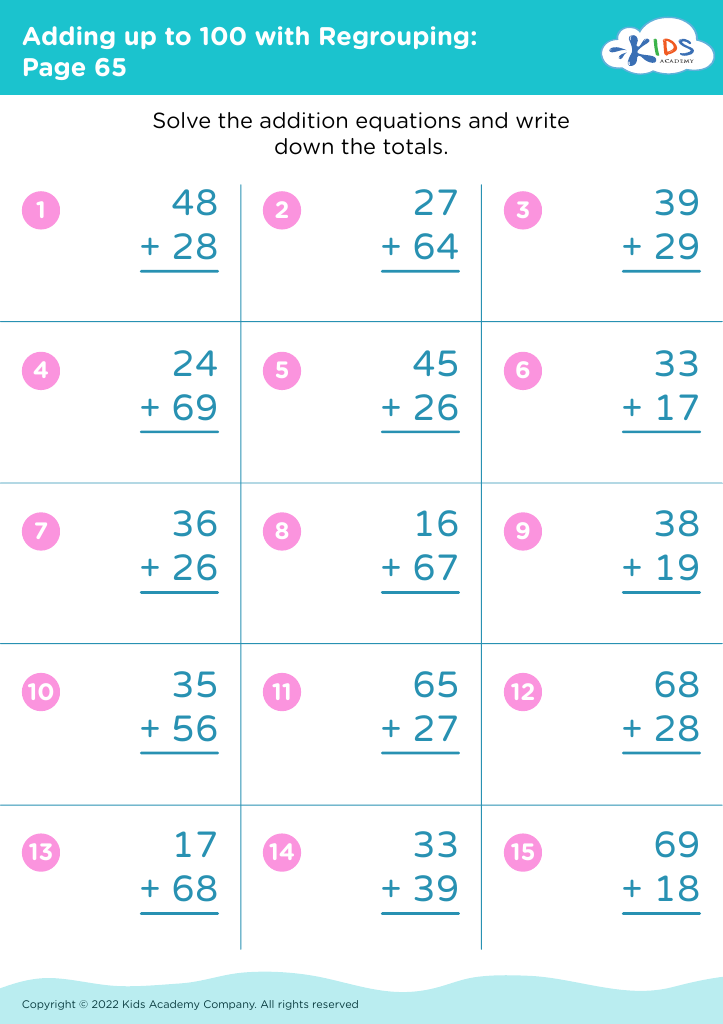
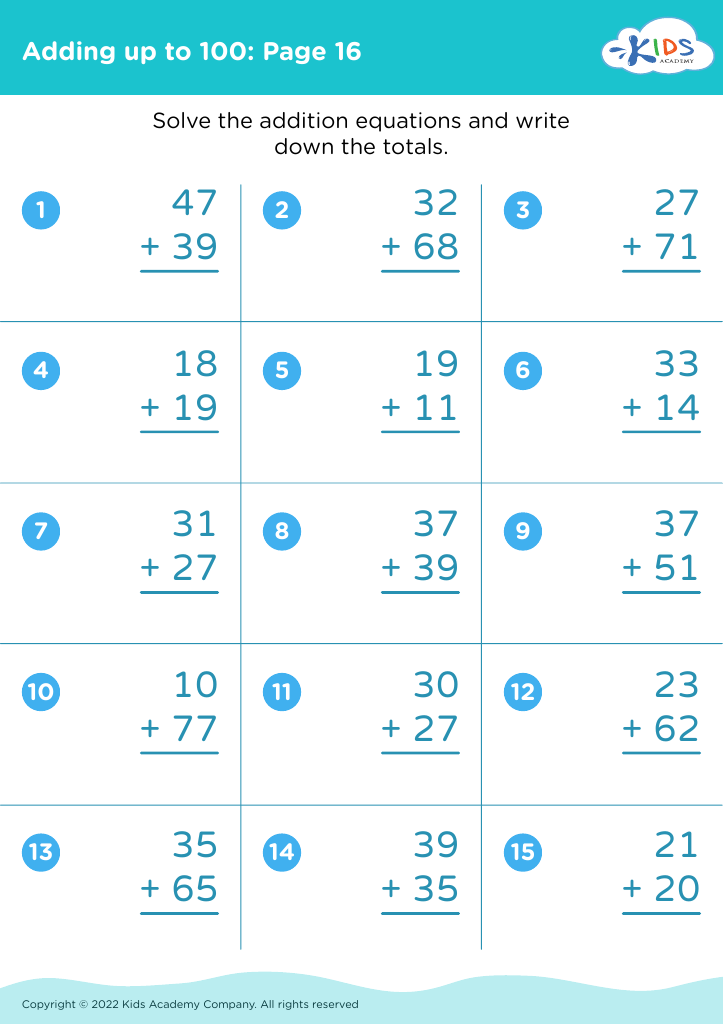
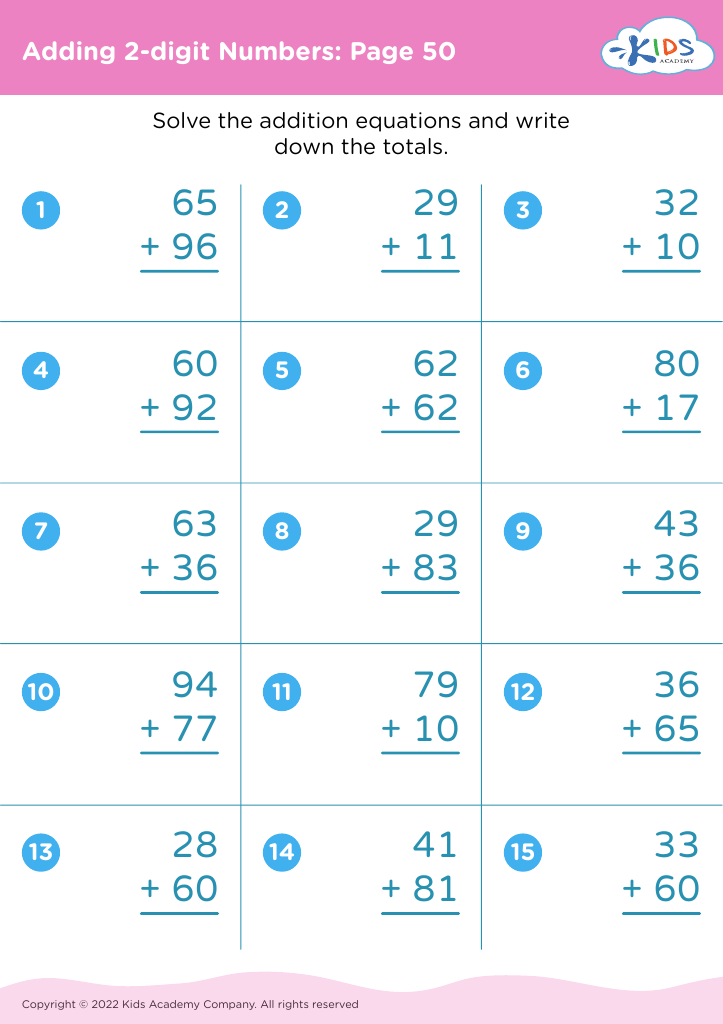
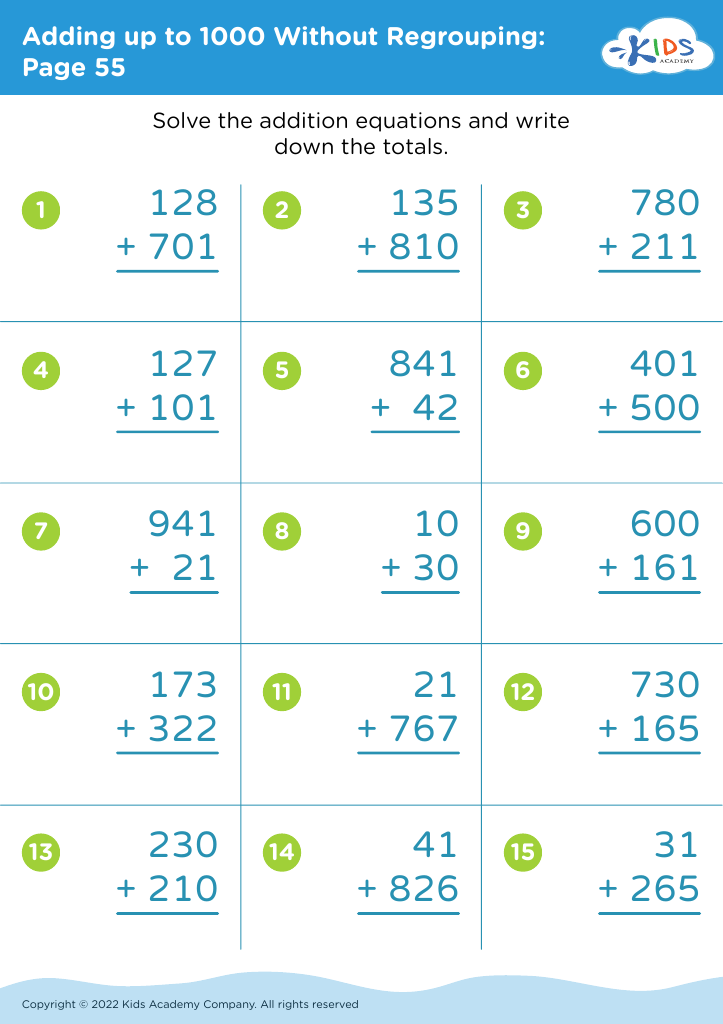
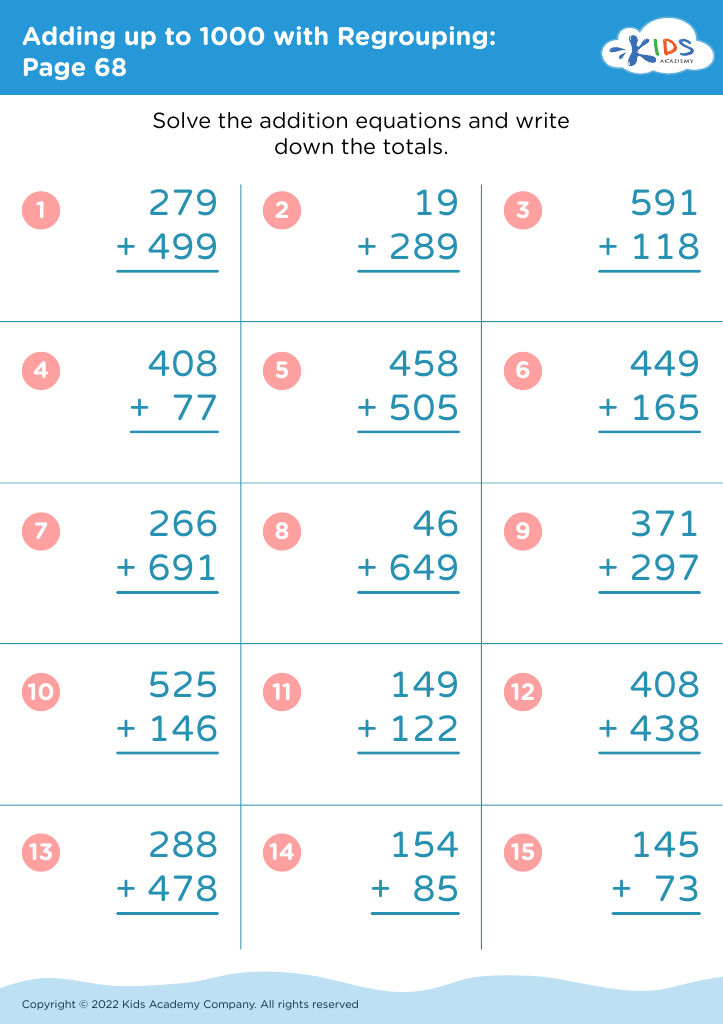
Enhance your child's math skills and handwriting with our unique "Handwriting Practice Addition Worksheets for Ages 6-9" at Kids Academy. These printable worksheets are designed to make learning addition fun and engaging while simultaneously improving penmanship. Each worksheet offers a variety of addition problems that cultivate essential math skills and exercises that boost fine motor control to refine handwriting. Our resources are perfect for young learners looking to practice basic arithmetic, ensuring they master addition in a supportive, interactive way. Ideal for both classroom and home use, give your child a head start with our dual-purpose educational worksheets today!
Favorites
With answer key
Interactive
Join Kids Academy for Free
Who is primarily going to use this learning content?








Handwriting practice and addition exercises form crucial building blocks for children's education, especially for ages 6-9. This developmental period is critical because children are fine-tuning their motor skills and cognitive abilities. First, handwriting practice hones fine motor skills, improving hand-eye coordination and finger dexterity, which are essential for daily tasks. Neat handwriting also fosters a sense of pride and self-discipline in students as they produce clear, legible work they can be proud of. Moreover, writing by hand is linked to enhanced memory and comprehension, enabling deeper learning across subjects.
Addition practice, on the other hand, lays the foundation for mathematical understanding and problem-solving abilities. By mastering basic addition, children build confidence and fluency in tackling more complex arithmetic in the future. The process of learning addition promotes logical thinking and develops the brain's numerical understanding.
Incorporating handwriting and addition practice in teaching ensures that students develop well-rounded skills. For parents and teachers, supporting these exercises means fostering robust academic growth that prepares children for the future. Encouraging consistent practice helps children master these fundamental skills, setting a positive trajectory for their educational and personal development. Classroom success and everyday competence are the ultimate benefits, marrying cognitive function and practical ability.








