
Improve counting Addition Worksheets for Ages 6-9
3 filtered results
Difficulty Level
Grade
Age
-
From - To
Subject
Activity
Standards
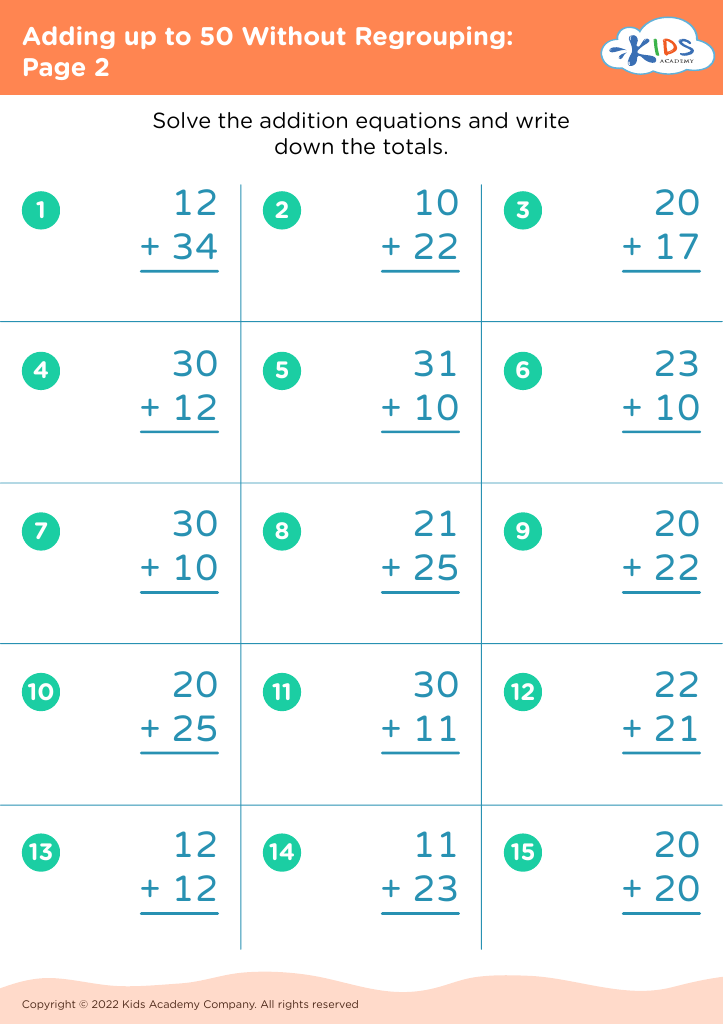
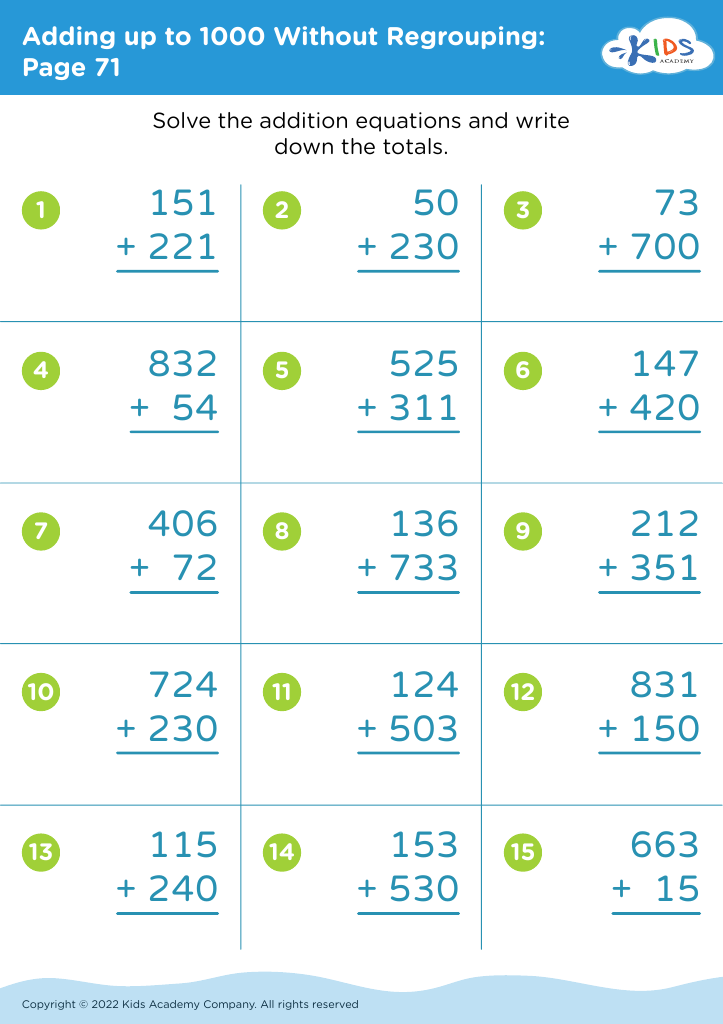
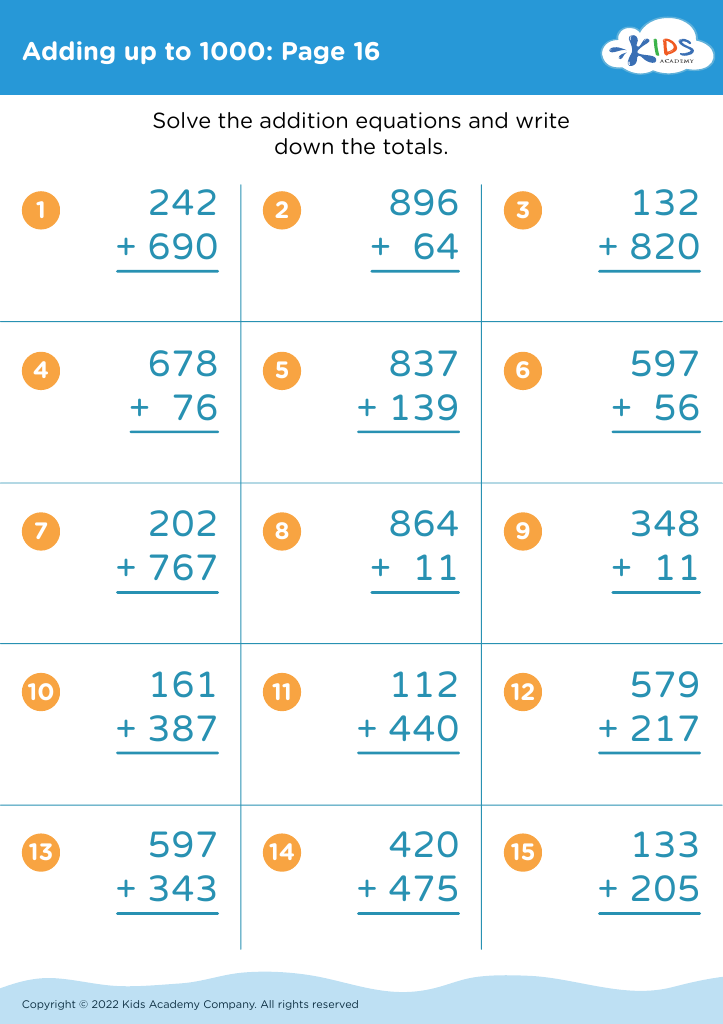
Enhance your child's math skills with our Improve Counting Addition Worksheets for ages 6-9! Designed to make learning engaging, these worksheets focus on developing essential counting and addition abilities in a fun and interactive way. Perfect for young learners, each activity encourages systematic practice through colorful visuals and relatable scenarios. Kids will build confidence in their math skills as they complete exciting exercises tailored to their age group. With a variety of formats to choose from, parents and teachers can easily supplement classroom learning at home. Explore our collection today and watch your child's math skills soar!
Favorites
With answer key
Interactive
Join Kids Academy for Free
Who is primarily going to use this learning content?








Improving counting and addition skills in children aged 6-9 is crucial for their overall mathematical development. At this age, children are building the foundational blocks for more complex math concepts. Mastering counting helps them understand number relationships and quantities, enabling them to navigate the world around them effectively.
Addition, in particular, is a core operation that not only contributes to their math proficiency but also enhances problem-solving skills. When children understand how to add, they can tackle everyday challenges, from simple calculations like sharing snacks to more advanced arithmetic they'll encounter in later grades.
Teachers and parents should prioritize these skills because they foster confidence in young learners. When children grasp these concepts well, it boosts their self-esteem and encourages a positive attitude toward math. Additionally, well-developed counting and addition skills support academic success, setting the stage for future learning in mathematics and related subjects.
Engaging children in math through fun activities and games can make learning enjoyable, ensuring that they develop a lasting interest in the subject. Investing time and effort in improving these skills leads to a stronger foundation for future academic achievement and real-life applications.








