Improving reading skills Addition Worksheets for Ages 6-9
4 filtered results
-
From - To
Enhance your child's reading and math skills with our "Improving Reading Skills Addition Worksheets" designed for ages 6-9. These engaging worksheets combine essential reading exercises with fun addition problems, fostering comprehension and numerical fluency. As children learn to decipher questions and instructions, they gain confidence in both reading and math. Each worksheet is crafted to captivate young learners, making education enjoyable and effective. Perfect for at-home practice or classroom use, these resources help develop critical thinking and problem-solving skills. Watch your child's academic abilities flourish and make learning a delightful adventure with our specially designed worksheets!
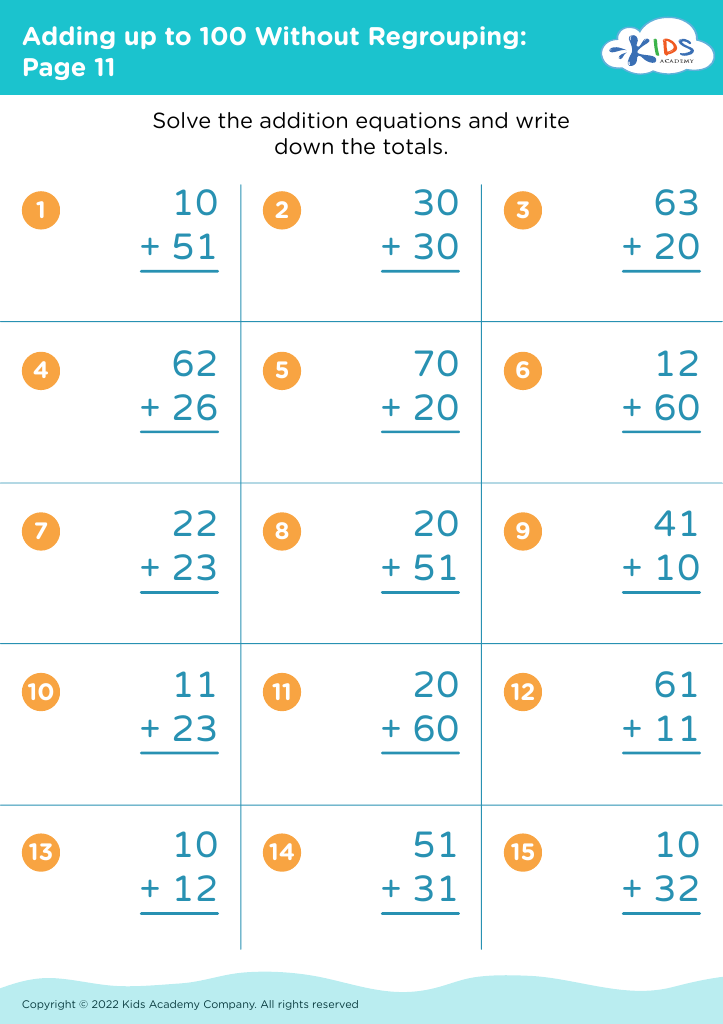
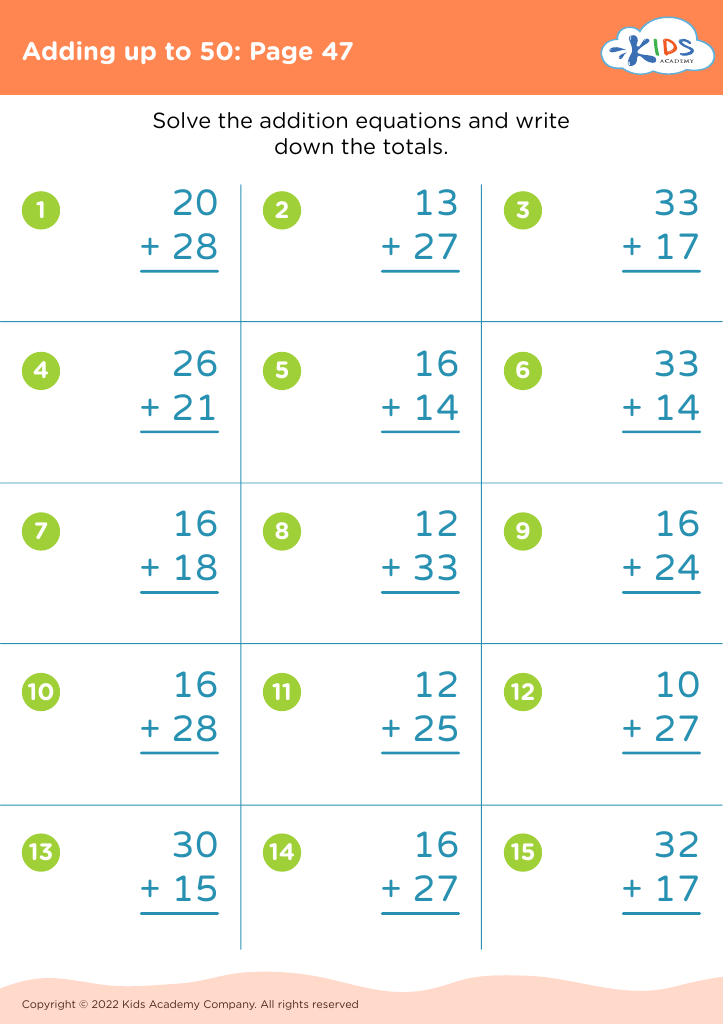
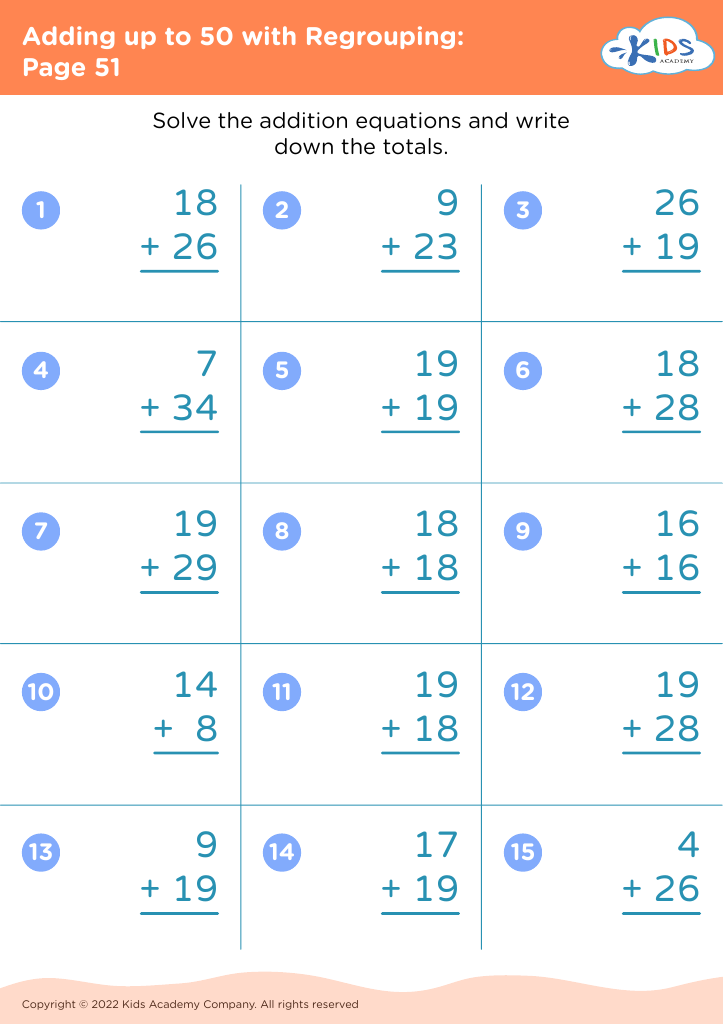
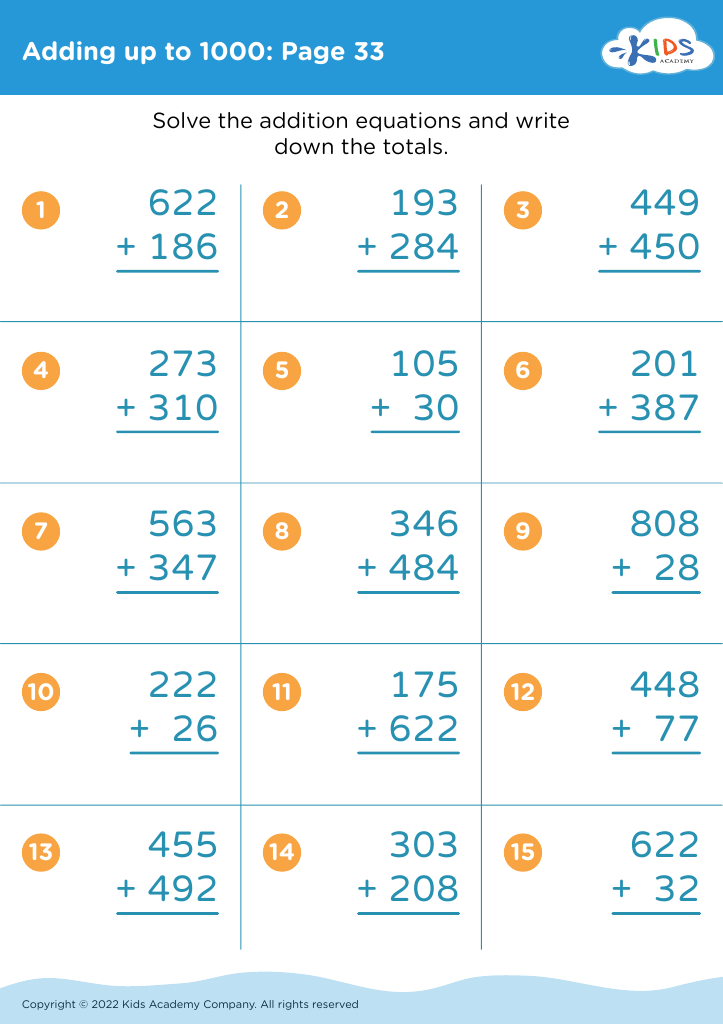








Improving reading skills and addition for children aged 6-9 is essential for several reasons. At this developmental stage, children are laying the foundation for their academic future. Strong reading abilities empower them to understand and engage with various subjects, not just language arts. Reading stimulates cognitive growth, enhances vocabulary, and fosters critical thinking—skills necessary for lifelong learning.
Moreover, numeracy skills such as addition are crucial for everyday life and further academic success. Children need to grasp basic math concepts early on to build confidence and competence as they progress to more complex calculations. Effective reading and math skills contribute significantly to overall academic performance and enjoyment of learning.
Additionally, engaging reading materials, coupled with fun addition activities, can ignite a child's curiosity and motivation. When parents and teachers prioritize these skills, they contribute to a child's self-esteem and a positive attitude toward education. Early intervention is paramount; if challenges are addressed promptly, children are more likely to succeed in school and develop a love for learning. Ultimately, fostering proficient reading and addition skills creates a strong foundation for children, allowing them to thrive in school and beyond.








