Practice writing numbers Addition Worksheets for Ages 6-9
6 filtered results
-
From - To
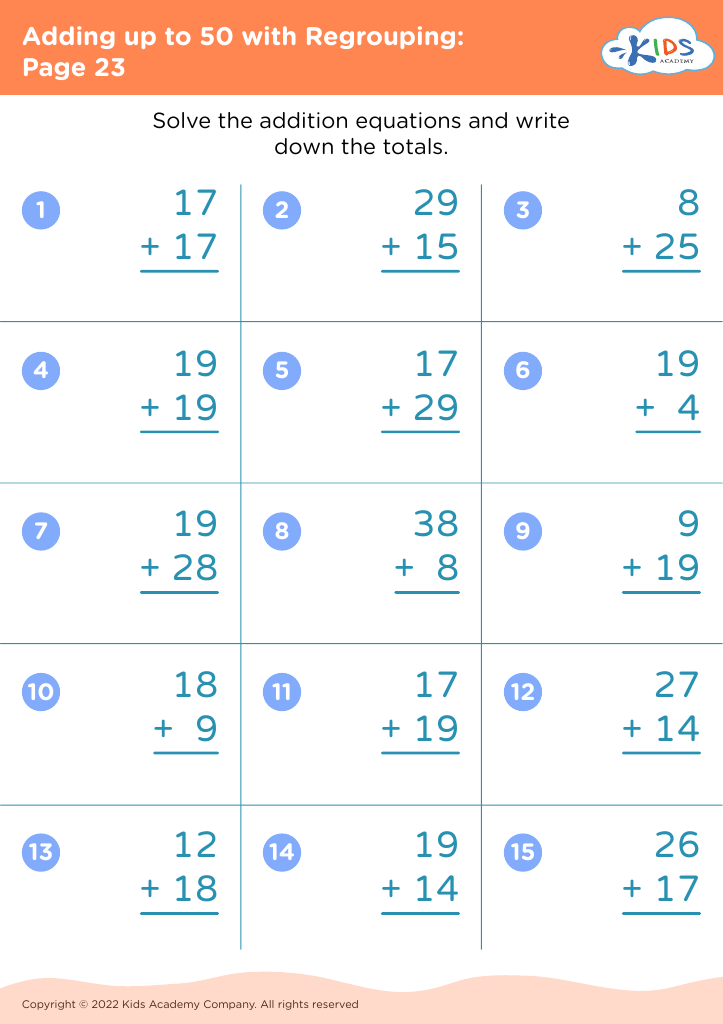
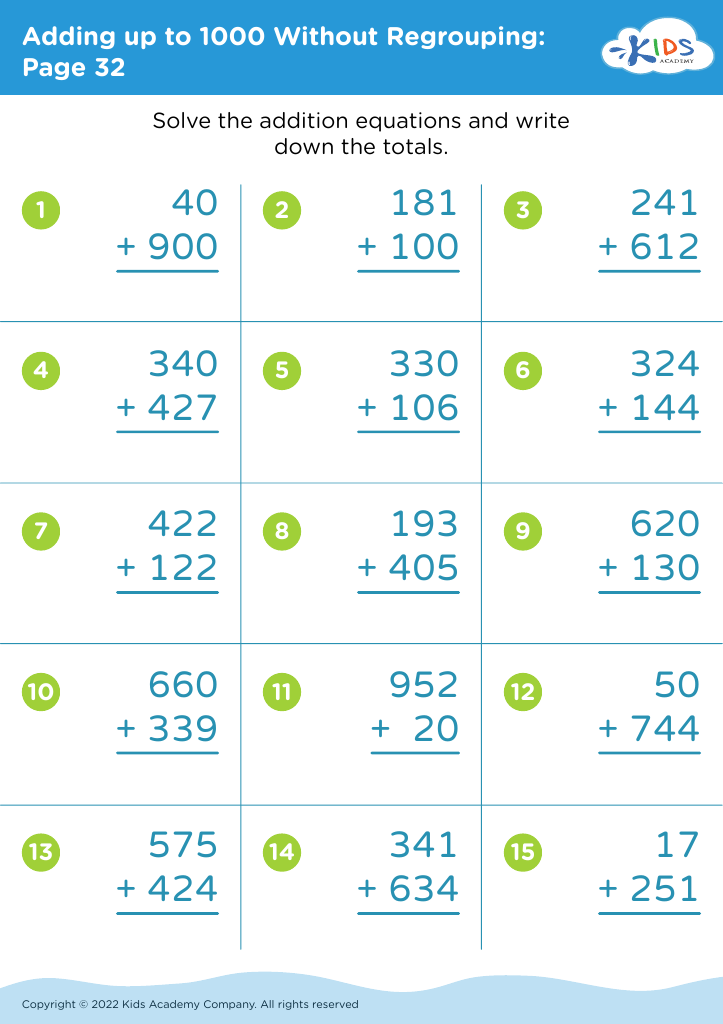
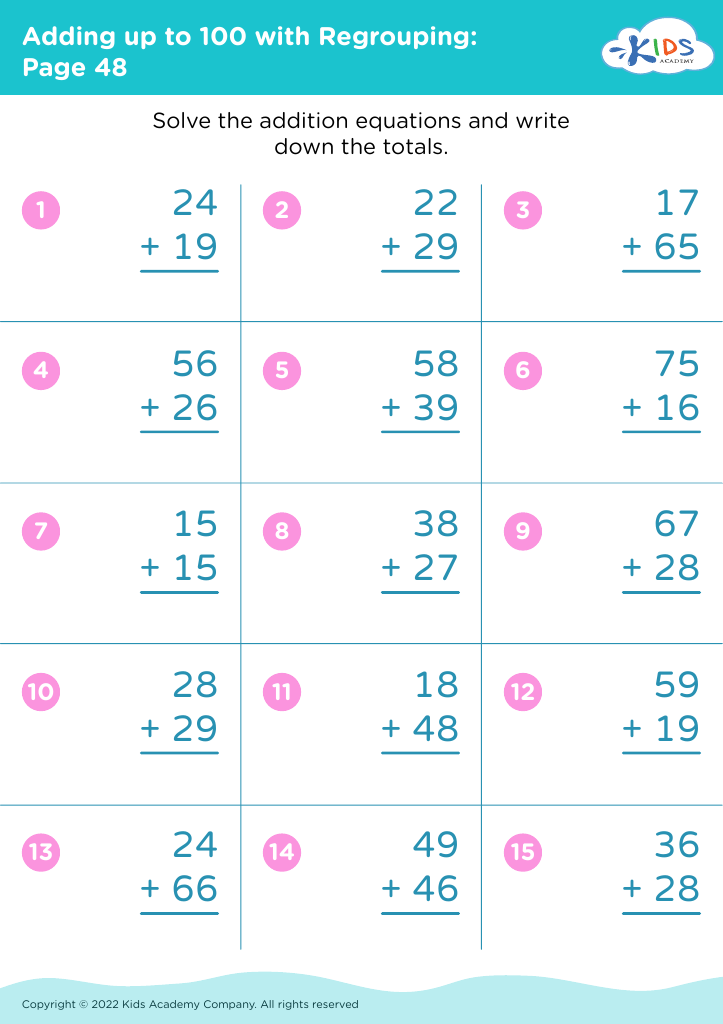
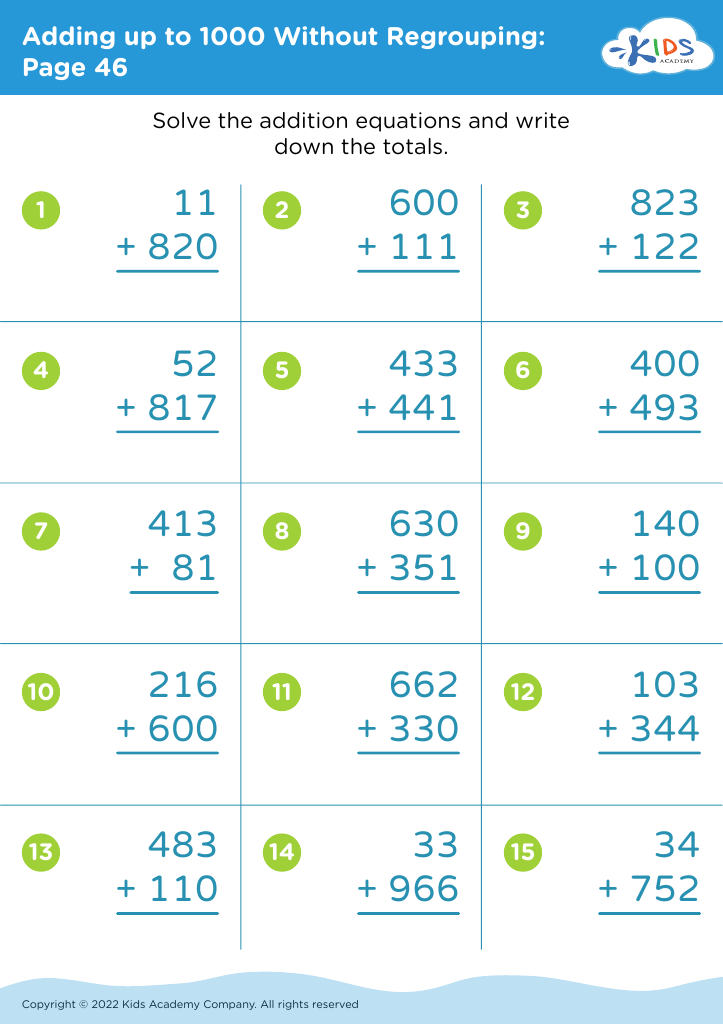
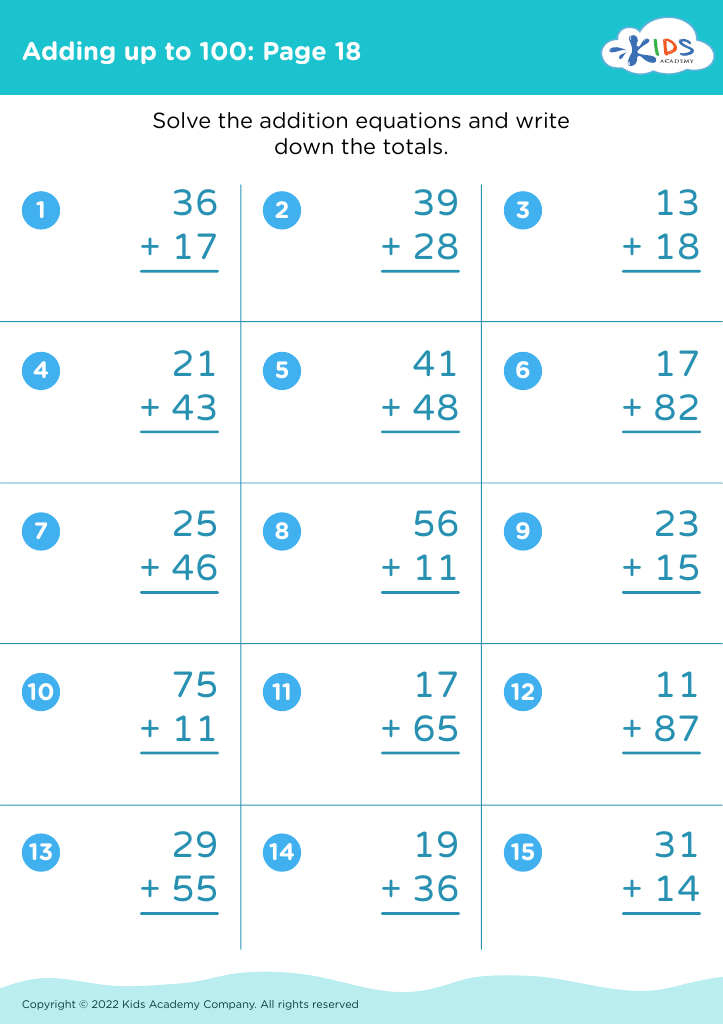
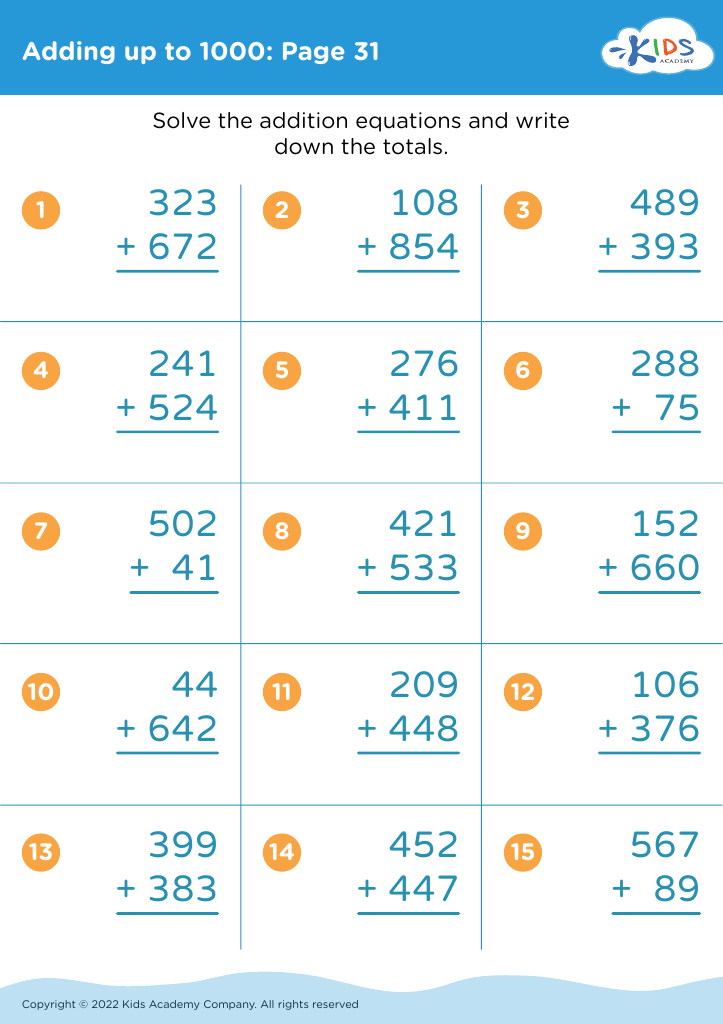
Enhance your child's math skills with our engaging Practice Writing Numbers Addition Worksheets designed specifically for ages 6-9. These worksheets offer fun and interactive ways to help young learners practice their addition skills while improving their number writing abilities. With a variety of exercises tailored to different skill levels, your child will gain confidence as they master basic addition concepts. Each worksheet is carefully crafted to capture attention and provide a hands-on approach to learning. Perfect for classroom use or at-home learning, these worksheets will make practicing math enjoyable and effective. Start your child's math journey today with our printable resources!





.jpg)


Practice writing numbers, particularly in the context of addition, is crucial for children aged 6 to 9 for several reasons. Firstly, mastering number formation and basic addition lays the foundation for future mathematical skills. As children begin to grasp the concepts of addition, they enhance their ability to solve problems, which is vital in everyday life as well as in academic settings.
Secondly, writing numbers helps reinforce fine motor skills. The act of physically writing encourages better control over their hand movements, which is essential for overall handwriting and later complex writing tasks. This practice also improves concentration, focus, and attention to detail.
Additionally, engaging in number-writing and addition practice supports cognitive development. It nurtures critical thinking and reasoning capabilities, as children learn to recognize patterns and relationships between numbers. This is essential for building confidence in their mathematical abilities.
Finally, routine practice fosters a sense of discipline and persistence, teaching children the value of practice and effort. For parents and teachers, providing consistent opportunities for such learning activities not only boosts academic readiness but also strengthens a child's enthusiasm for mathematics, fostering a lifelong love for learning.








