Telling time Addition Worksheets for Ages 6-9
3 filtered results
-
From - To
Unlock the fun of learning with our Telling Time Addition Worksheets for children ages 6-9! Designed to enhance math skills combined with time-telling, these engaging worksheets provide a creative way to explore addition through relatable contexts. Kids will practice adding numbers while solving time-related problems, reinforcing their understanding of hours, minutes, and the clock. Our worksheets promote critical thinking, number recognition, and improve overall math confidence, making them ideal for home practice or classroom use. Watch your child develop essential life skills as they master addition and learn to tell time fluently. Explore, learn, and enjoy math like never before!
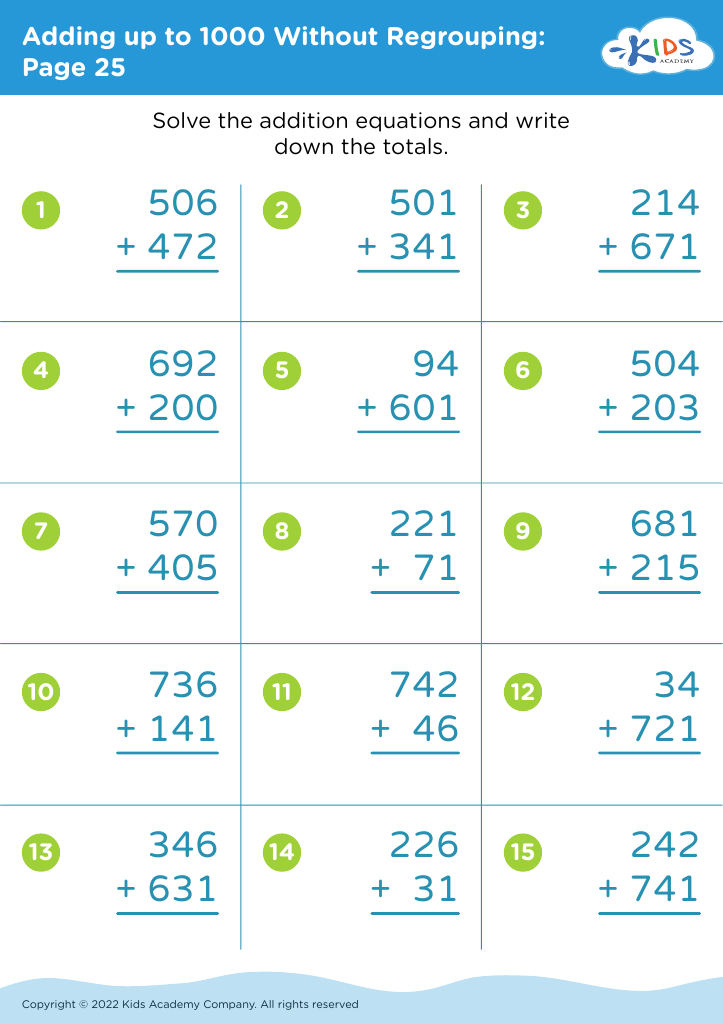
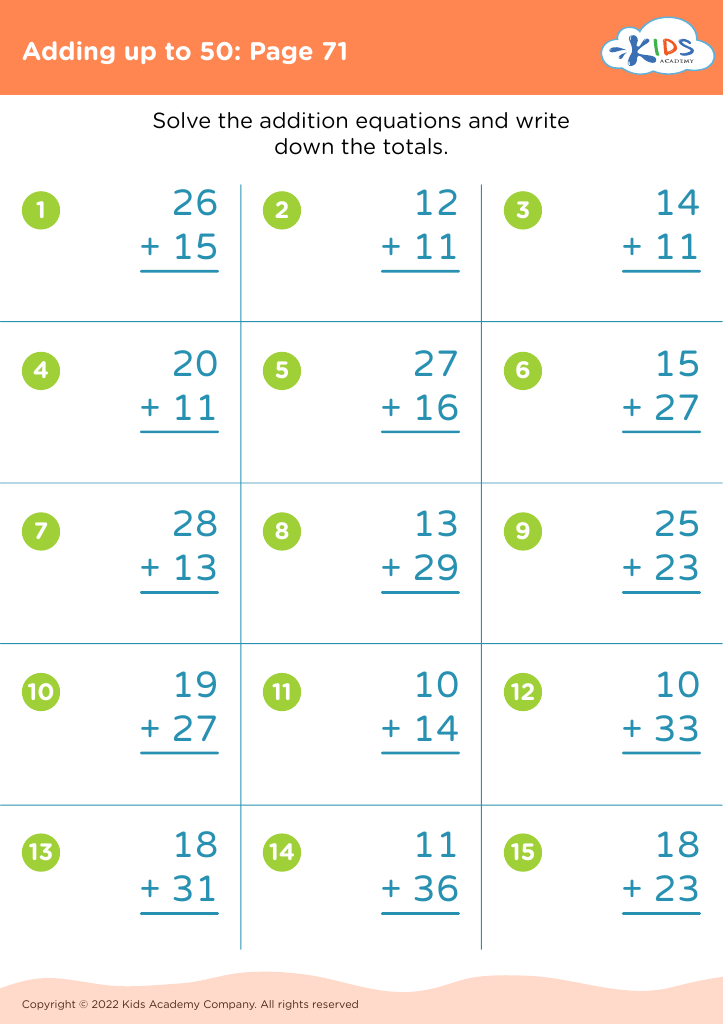
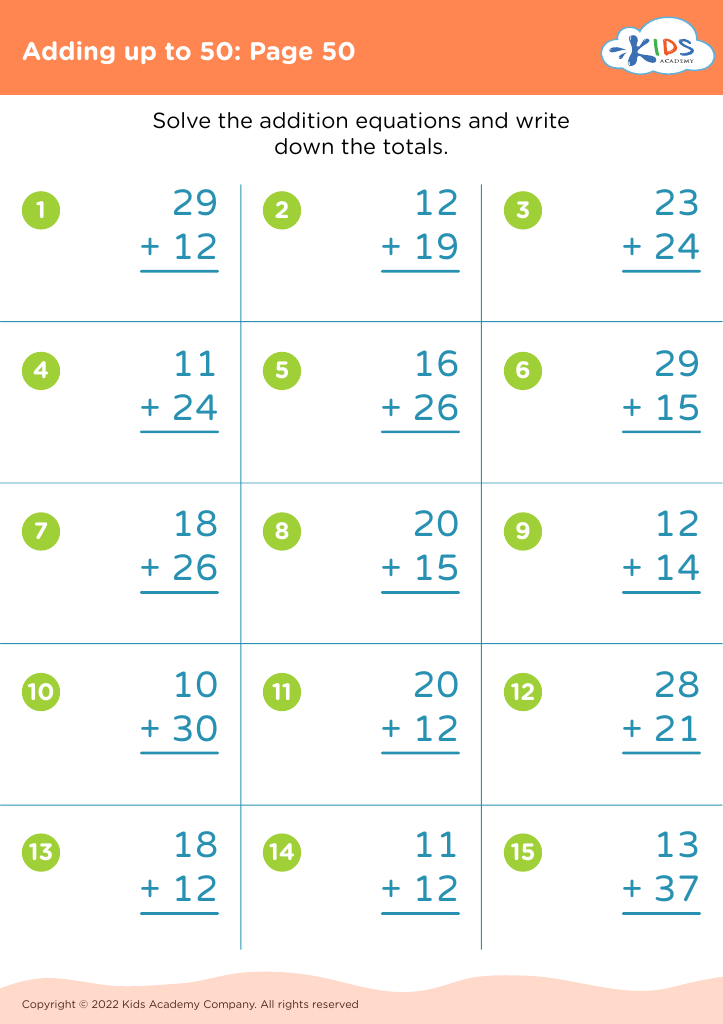








Teaching time and basic addition to children ages 6-9 is crucial for several reasons. First, mastering the concepts of telling time helps children develop essential life skills. Understanding how to read clocks not only builds their autonomy but also aids them in planning their daily activities effectively. This skill fosters time management which is vital in both academic settings and life outside of school.
Moreover, addition forms a foundational element of mathematics that underpins many future learning experiences. Children in this age range are naturally curious and eager to problem-solve. Engaging them with fun, relatable addition activities reinforces numerical fluency while building confidence. Additionally, when teachers or parents integrate telling time with addition—such as calculating how many minutes until an event starts or how long an activity lasts—they create meaningful, real-world applications for math.
Lastly, by combining both subjects, educators and parents can cultivate critical thinking and reasoning skills, allowing children to grasp the interconnectedness of concepts. This multidimensional approach enriches their learning experience, preparing them for more complex topics in the future, and ultimately instilling a love for math and time management in their lives.








