Understand patterns Addition Worksheets for Ages 6-9
6 filtered results
-
From - To
Explore our "Understand Patterns Addition Worksheets" designed for children aged 6-9! These engaging worksheets focus on helping young learners grasp the concept of addition through patterns, making math fun and accessible. Through various exercises, kids will identify numerical patterns and use them to solve addition problems, enhancing their problem-solving and critical thinking skills. Perfect for both classroom and home learning, our worksheets feature colorful graphics and clear instructions to keep students motivated. Foster your child's mathematical abilities and build a strong foundation for future math success. Start your journey with patterns in addition today, and watch their confidence soar!
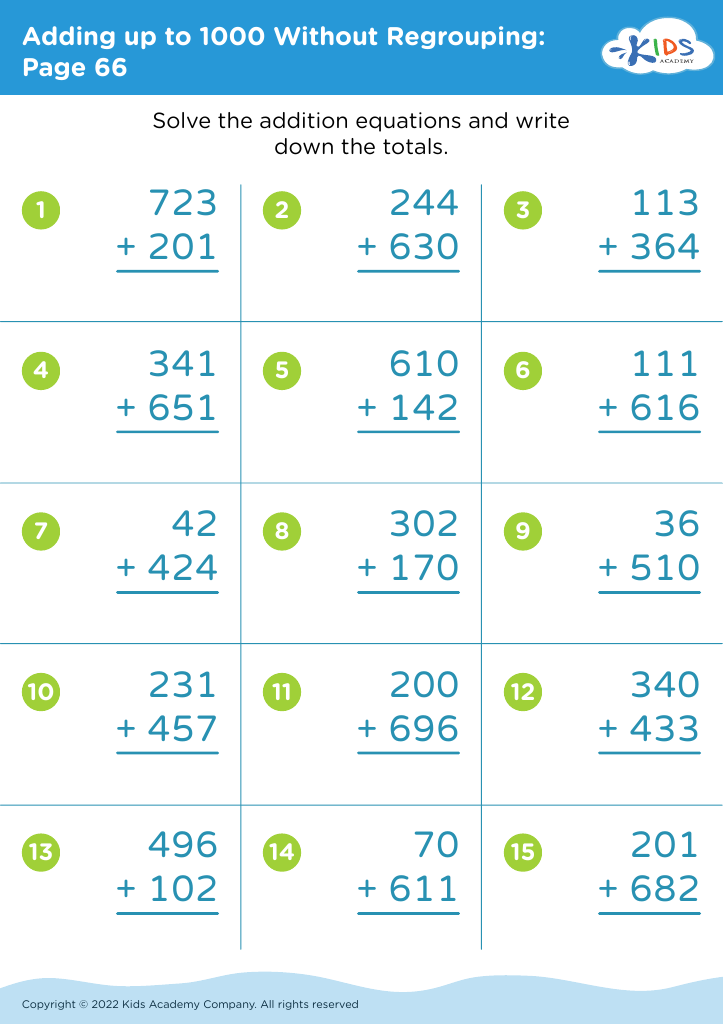
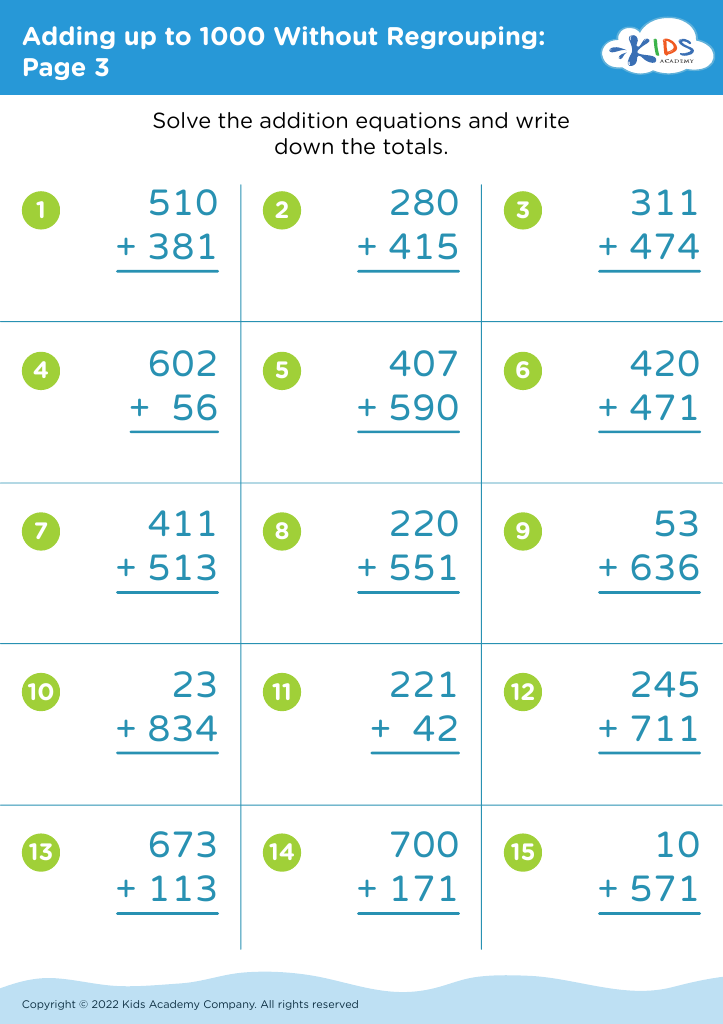
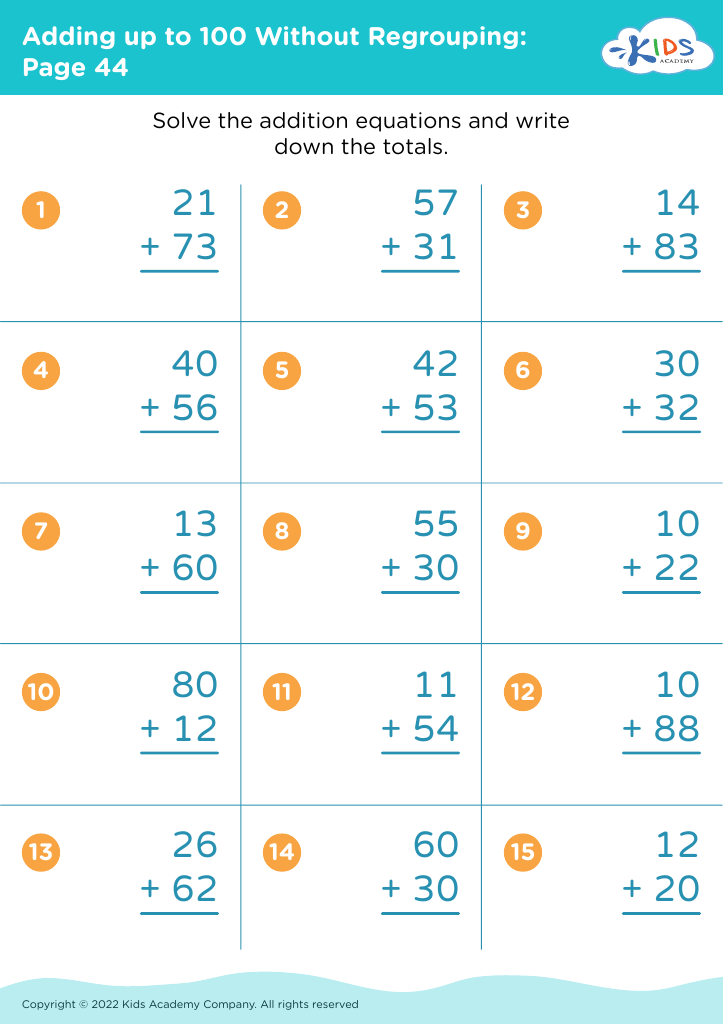
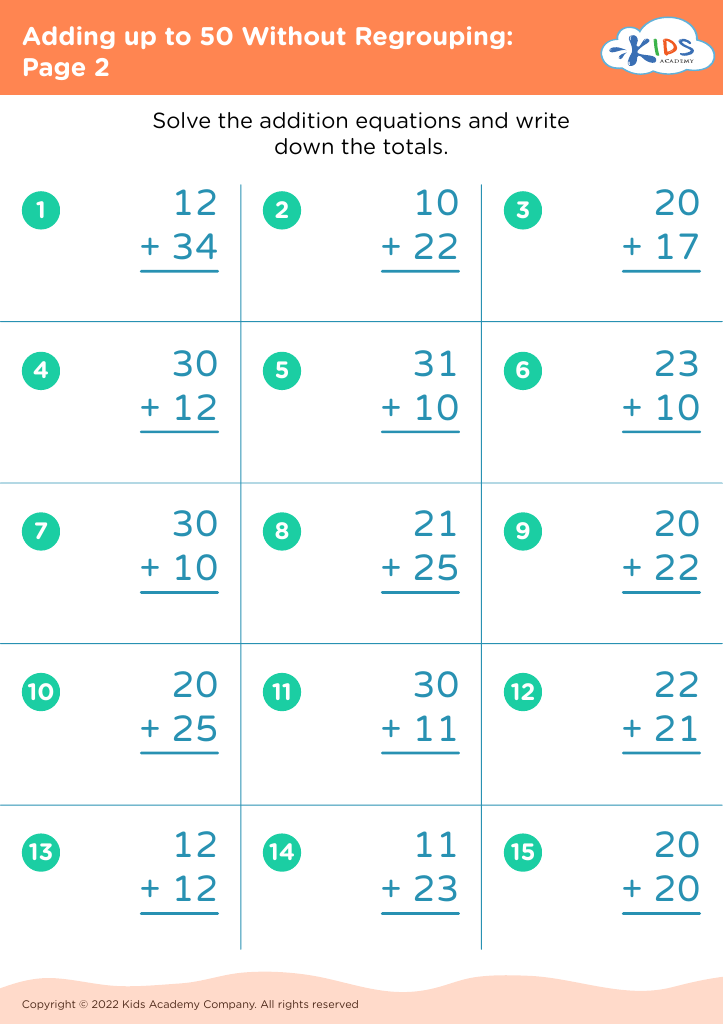
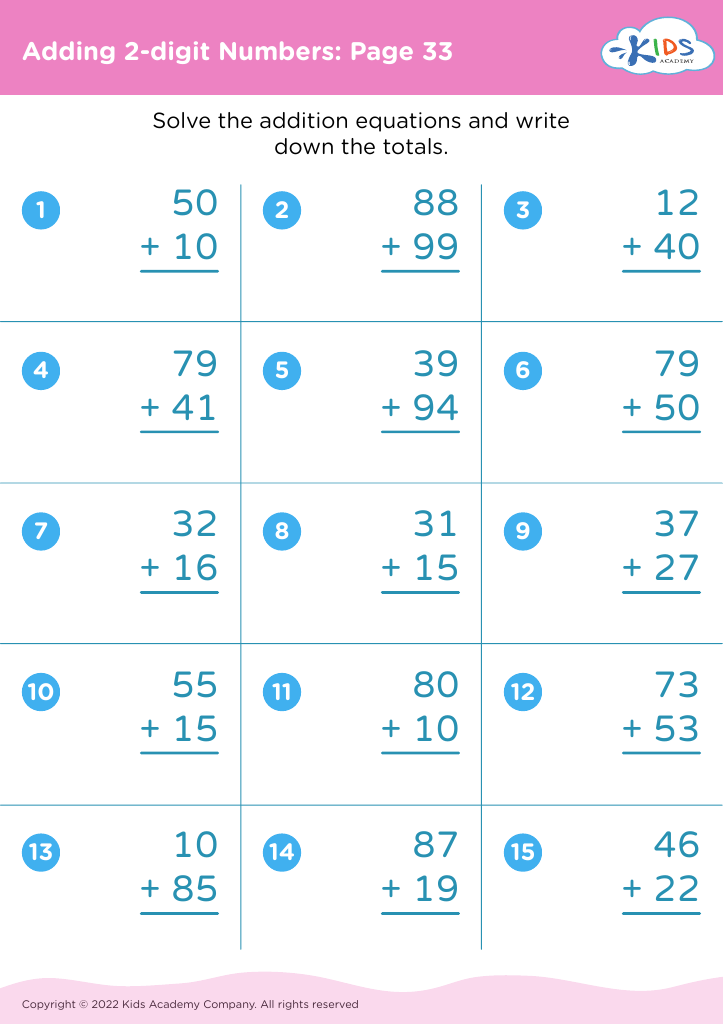
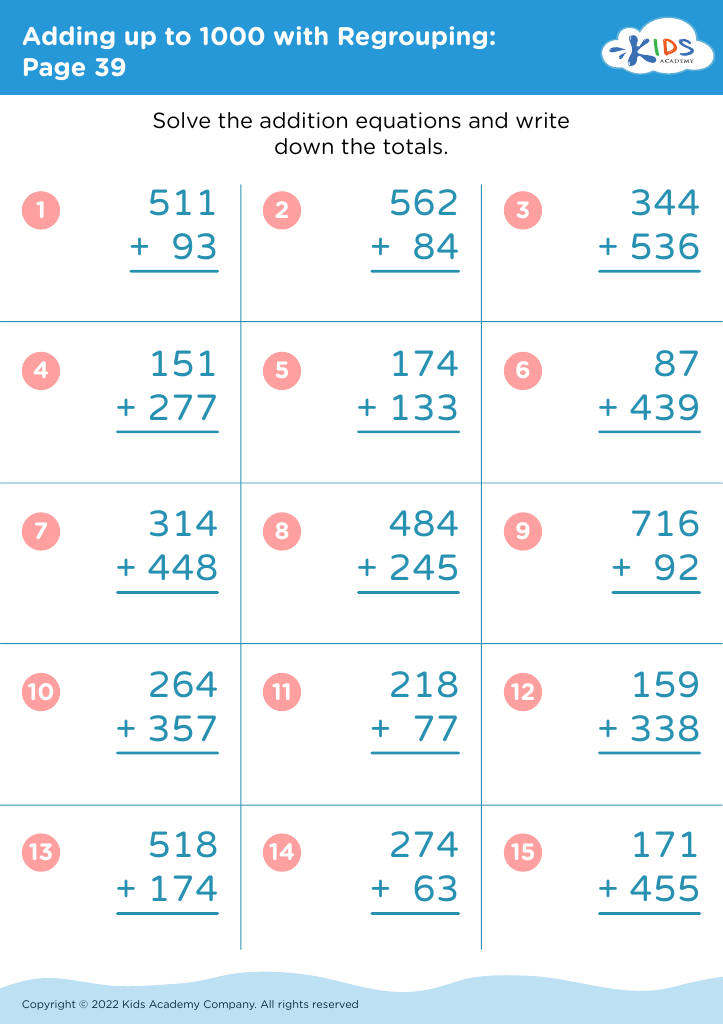








Understanding patterns in addition is crucial for children aged 6-9 as it lays the foundation for their mathematical development. At this age, children are essentially building their arithmetic skills, and recognizing patterns helps them to see connections between numbers, enabling them to solve problems more efficiently. Patterns enhance their ability to predict and create rules, making math more intuitive and less reliant on rote memorization.
Moreover, recognizing patterns cultivates critical thinking and analytical skills. When children observe how numbers relate—like in even and odd number sequences—they can make broader connections in math and even in life. This understanding fosters a deeper appreciation for mathematics, making it engaging rather than intimidating.
Teachers play a pivotal role in guiding students through these patterns via interactive activities, games, and real-life applications. Likewise, parents can reinforce these concepts at home by using everyday examples, solidifying the learning experience.
Ultimately, a strong grasp of addition patterns contributes not just to better grades, but also to the development of problem-solving skills essential for future academic and personal success. Thus, supporting children in recognizing these patterns during early learning is a valuable investment in their overall cognitive development.








