Understanding quantity Addition Worksheets for Ages 6-9
9 filtered results
-
From - To
Explore our "Understanding Quantity Addition Worksheets" tailored for children aged 6-9! These engaging worksheets are designed to help young learners grasp the concept of quantity through fun and interactive exercises. By using visual aids, colorful illustrations, and relatable scenarios, children will build their addition skills while developing a strong foundation in numerical understanding. Our resources encourage practice in comparing quantities, recognizing patterns, and solving addition problems, fostering both confidence and competence in math. Ideal for classroom use or at-home learning, these worksheets inspire a love for mathematics while making learning enjoyable and effective! Start your child’s math journey today!
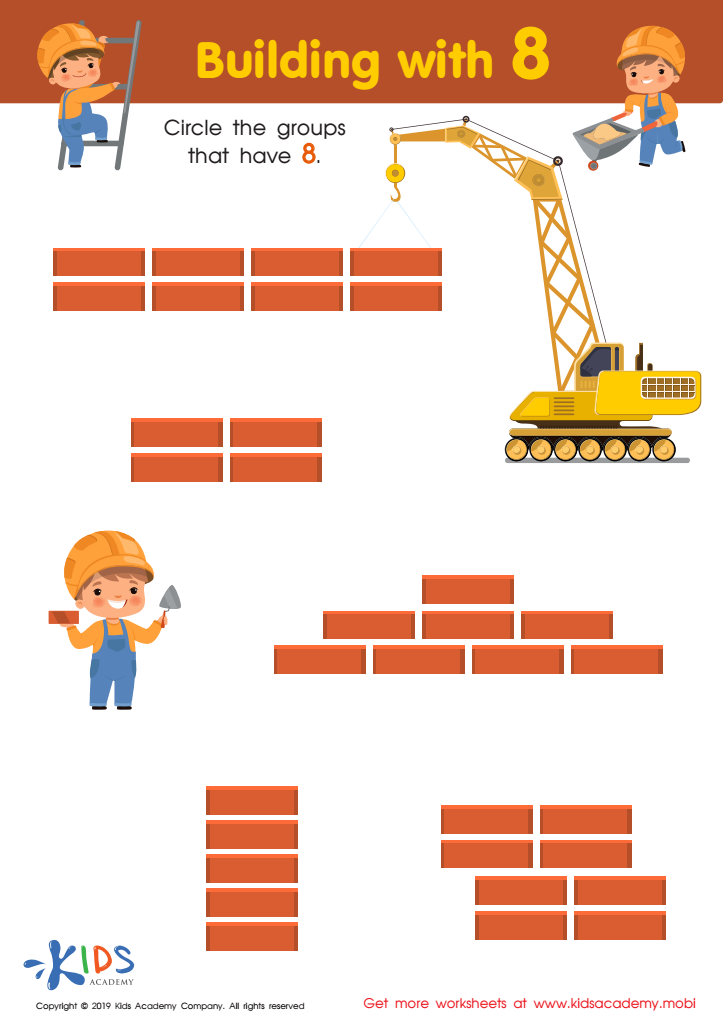
Building with 8 Worksheet
 Assign to My Students
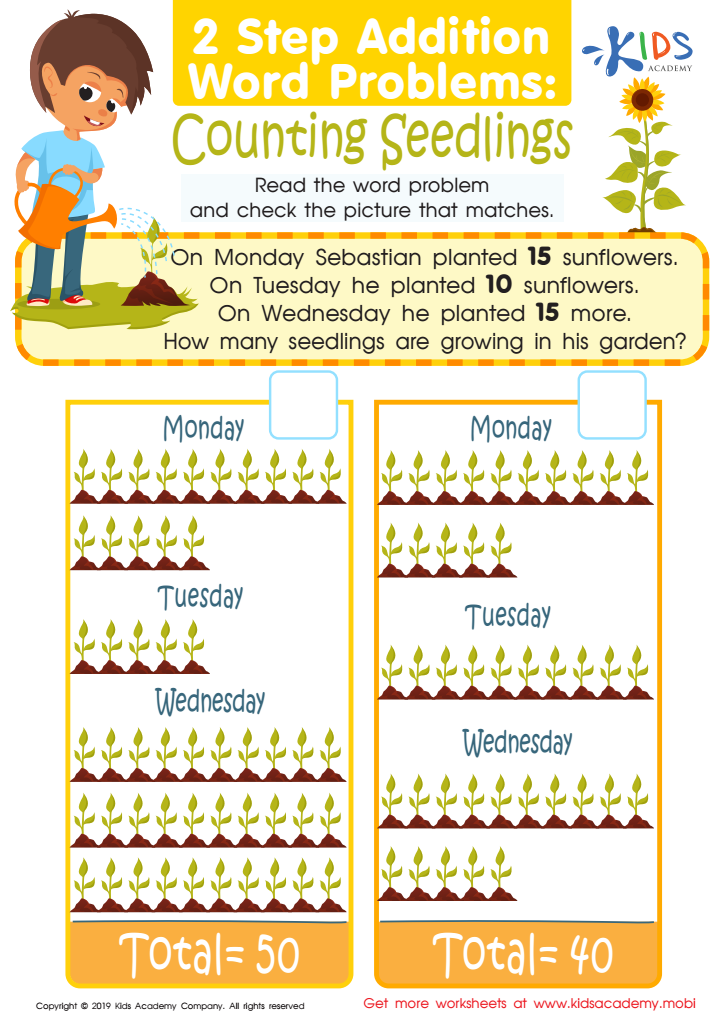
Counting Seedlings Worksheet
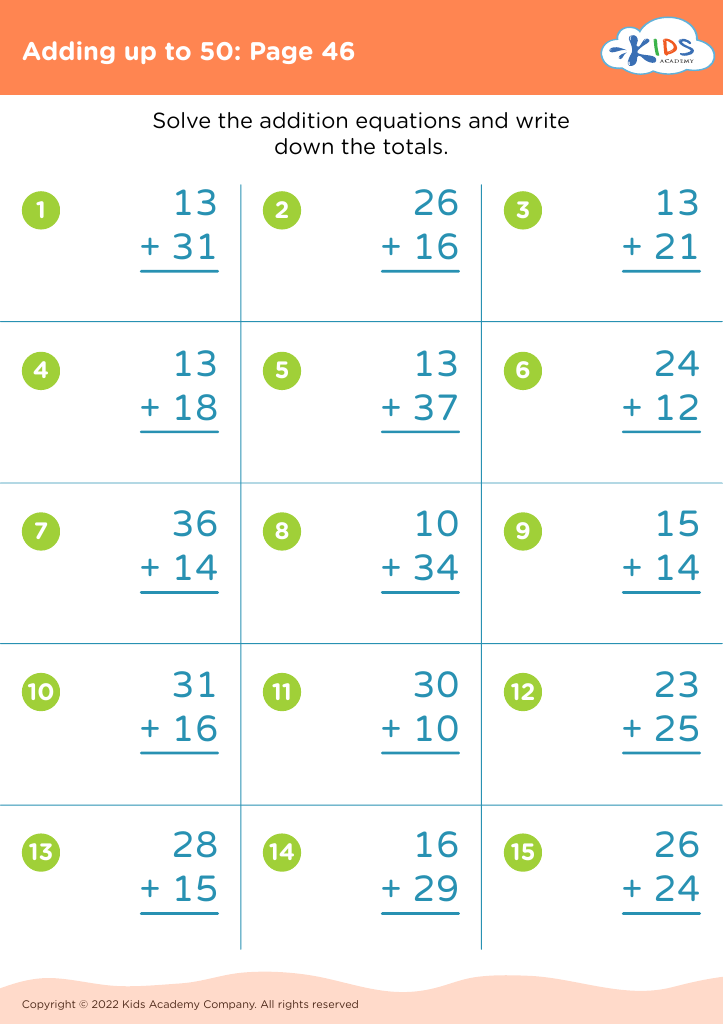
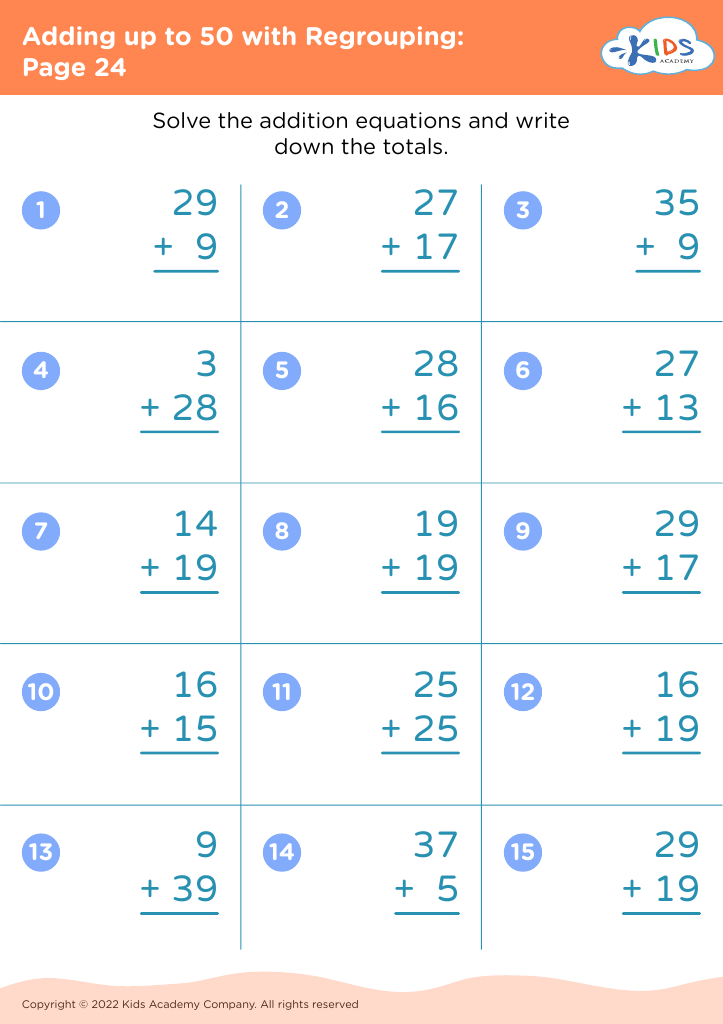
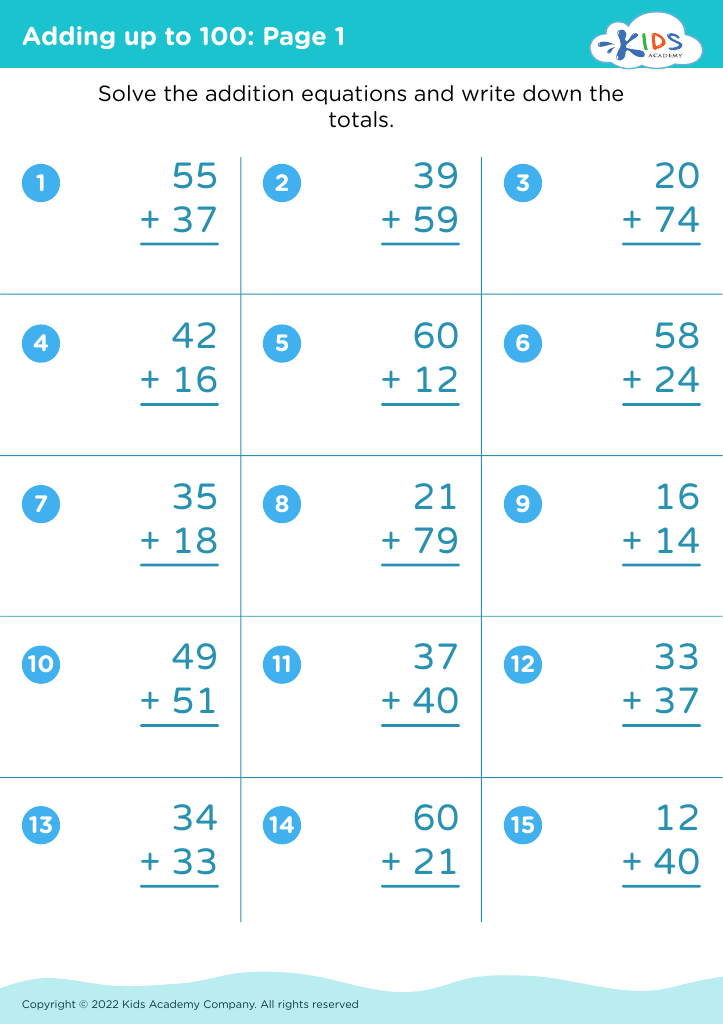
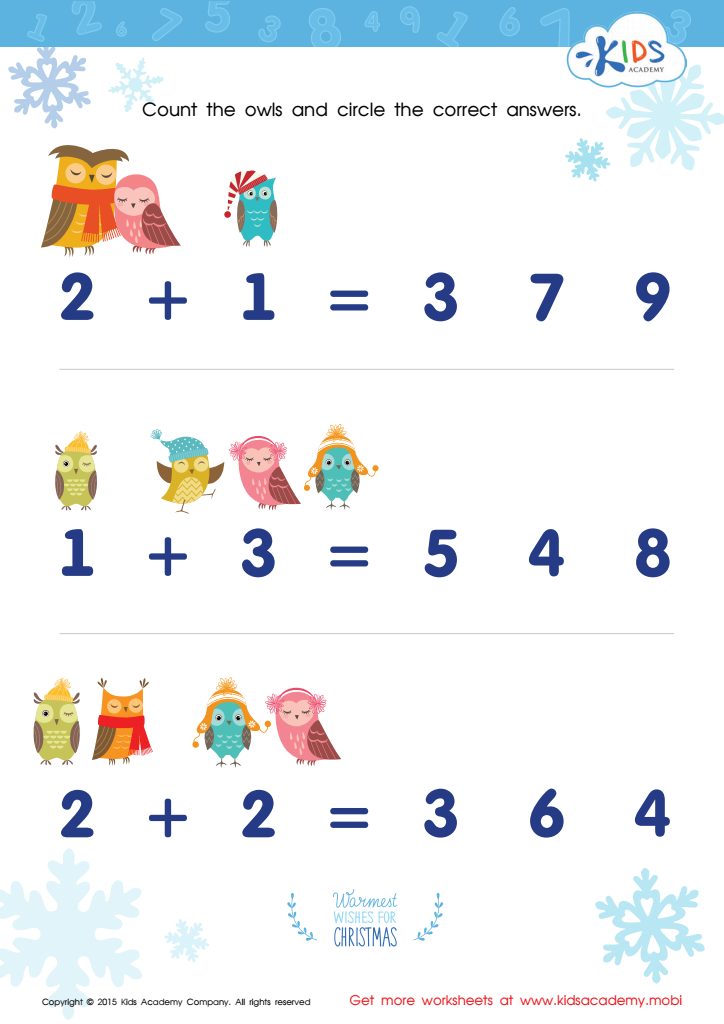
Count Little Owls Worksheet


.jpg)




Understanding quantity addition is a fundamental skill for children aged 6-9 that forms the basis for more advanced mathematical concepts. During this developmental phase, children are beginning to grasp the idea of numbers, relationships, and operations, which makes it crucial for parents and teachers to engage with this concept actively. Mastering addition helps children develop critical thinking and problem-solving skills, teaches them how to manipulate numbers, and builds their confidence in handling math tasks.
In this age group, children move from conceptualizing numbers as isolated entities to understanding the interplay between them. Learning about quantity through addition fosters cognitive connections; it teaches kids to visualize quantities, recognize patterns, and understand the concept of 'more' or 'less.' Furthermore, this understanding is vital not only in academic settings but also in everyday life, equipped them to deal with practical scenarios—they learn to manage money, compare quantities during shopping, or measure ingredients while cooking.
Moreover, foundational math skills like addition encourage cooperative play and communication as children begin to share ideas and strategies with classmates or siblings. By nurturing this understanding, parents and teachers can help cultivate a love for mathematics, preparing children for future success in the subject and life skills they’ll use forever.








