Understanding sequencing Addition Worksheets for Ages 6-9
7 filtered results
-
From - To
Unlock your child's potential with our "Understanding Sequencing Addition Worksheets" designed for ages 6-9! These engaging worksheets help young learners grasp the fundamental concept of sequencing in addition. By fostering skills in recognizing patterns and order, children will develop a strong mathematical foundation. Each activity is created to be fun and interactive, encouraging kids to practice addition in a supportive environment. Whether in the classroom or at home, our resources are perfect for reinforcing math skills and boosting confidence. Dive into a world of learning today and watch your child excel in addition with sequential thinking!
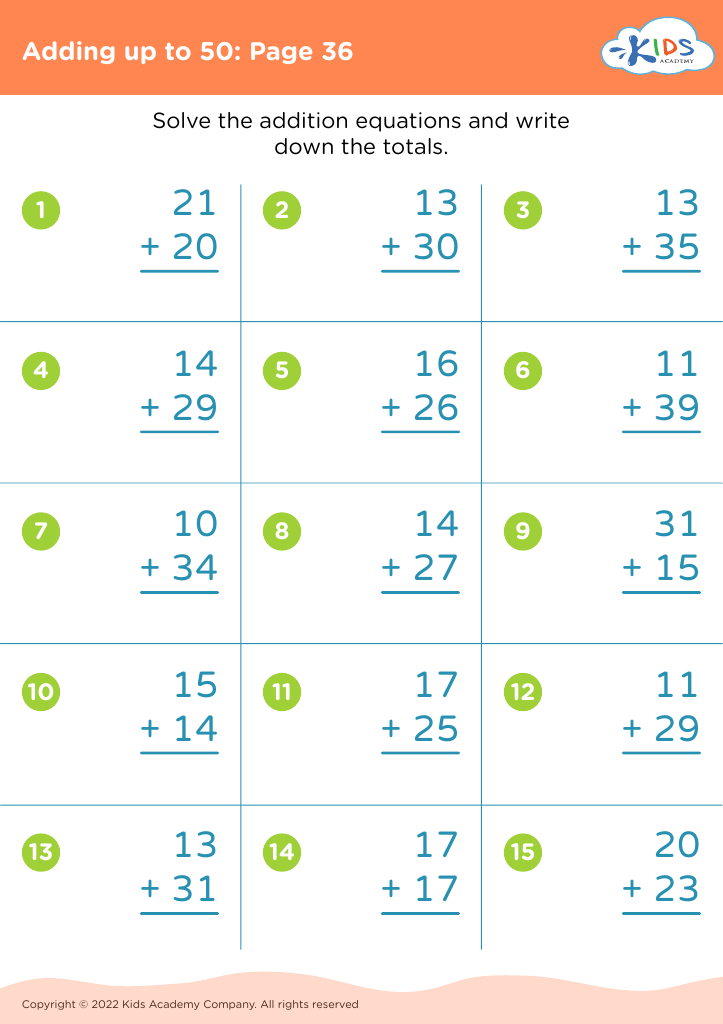
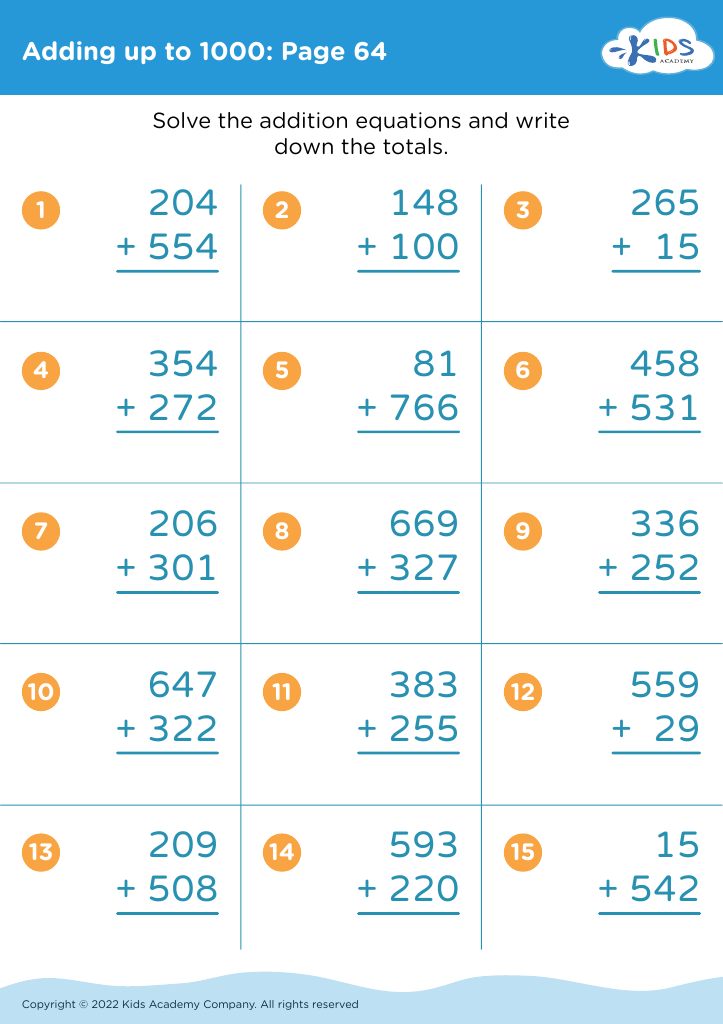
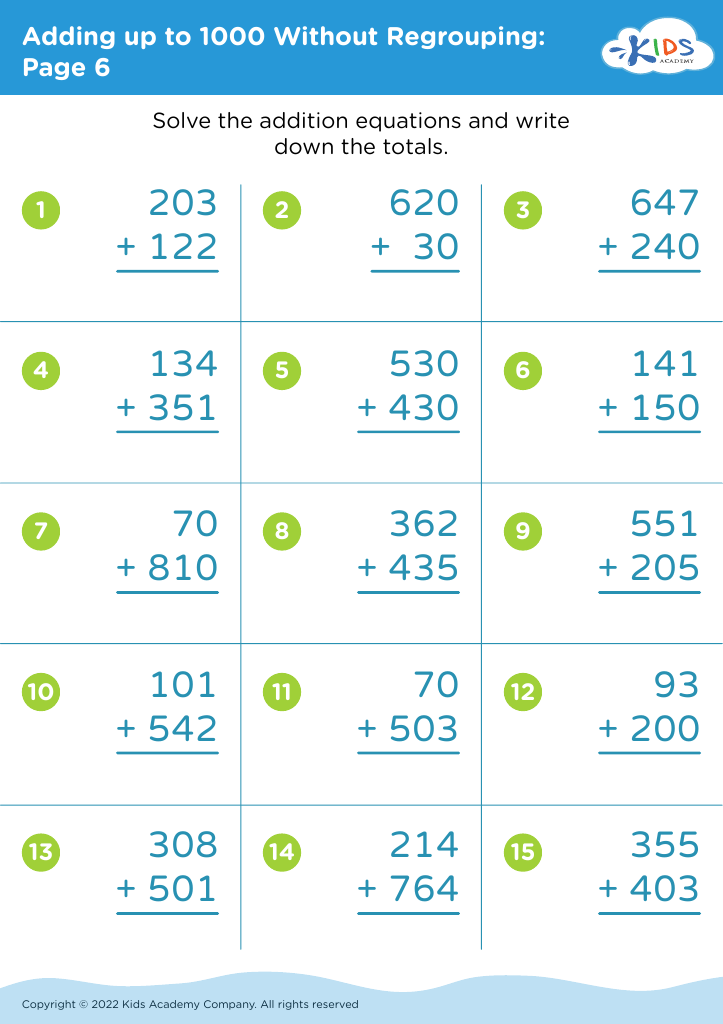
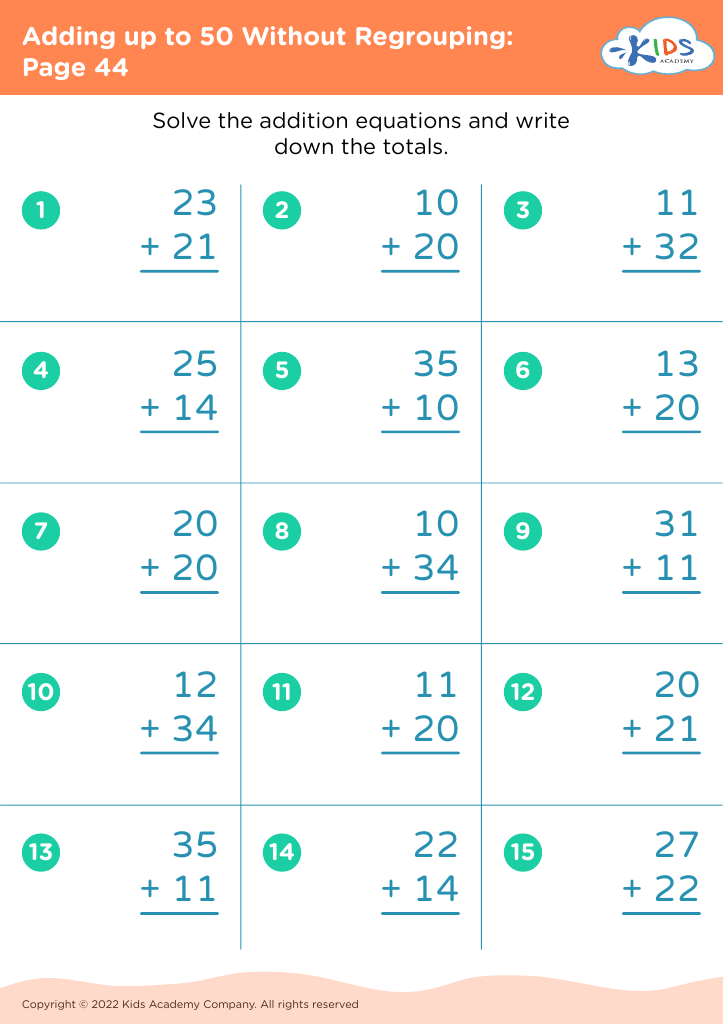
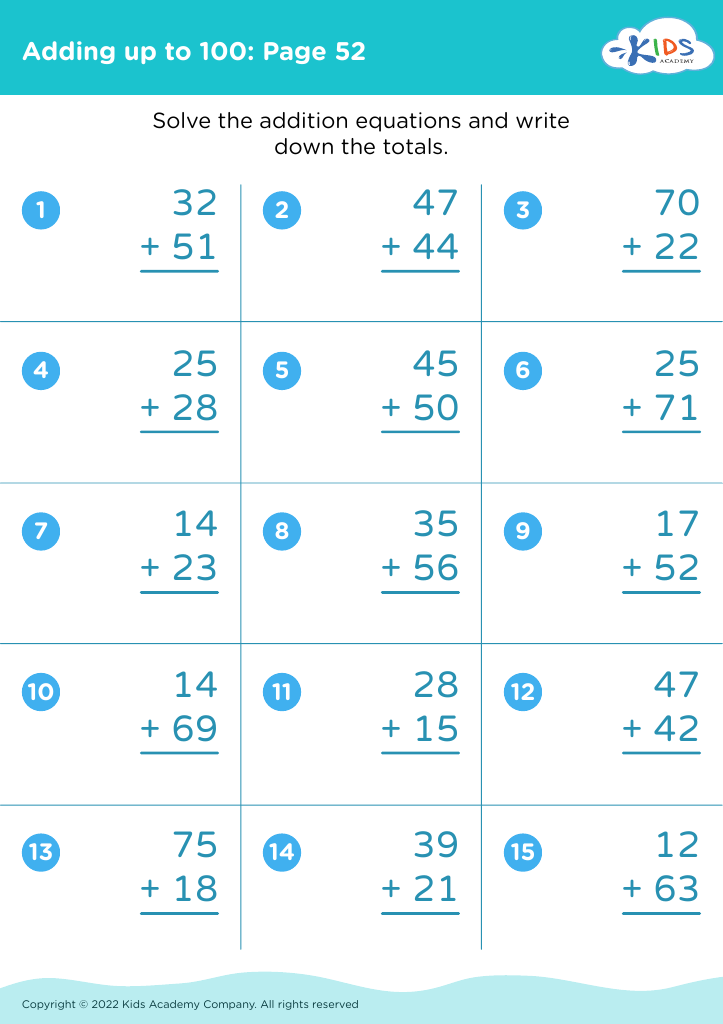
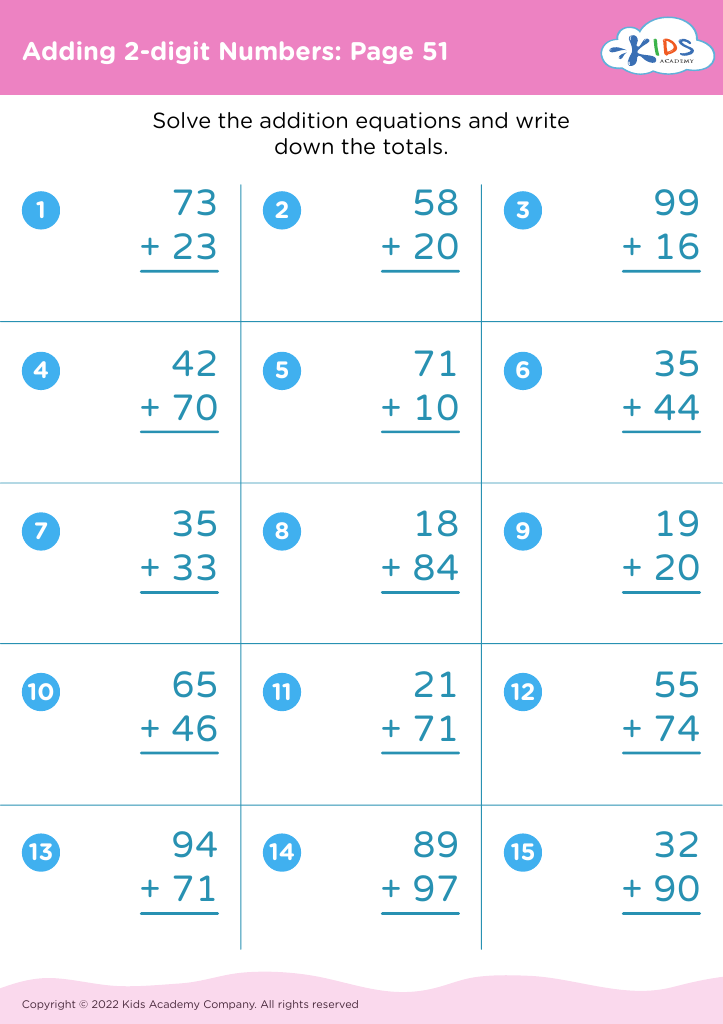
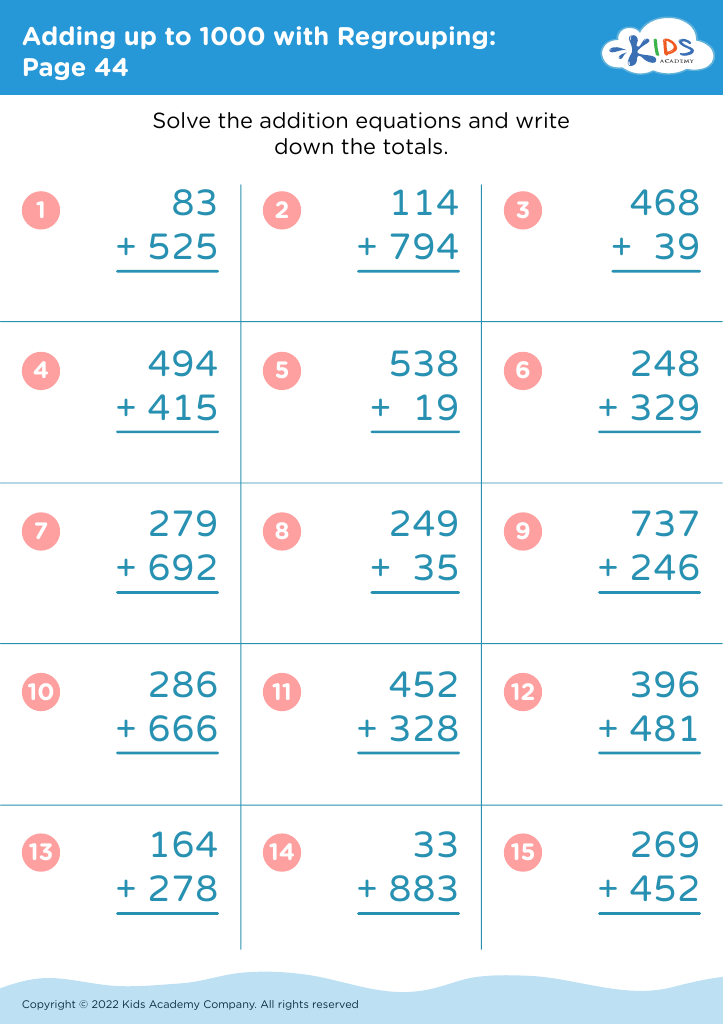








Understanding sequencing in addition is crucial for children aged 6-9, as it lays the foundation for their mathematical reasoning and problem-solving skills. At this stage, children are developing a more sophisticated understanding of numbers and how they interact. By grasping the concept of sequencing, they learn the order in which numbers should be added, which helps them perform calculations more efficiently and makes them more confident in their math abilities.
Sequencing adds depth to their understanding of addition beyond rote memorization of sums. It encourages them to visualize numbers and see patterns, which is essential when they encounter larger numbers or concepts like carrying over in multi-digit addition. Recognizing sequences also cultivates critical thinking, as children learn to approach math problems methodically, fostering their ability to strategize and develop solutions.
Moreover, a clear grasp of sequencing can enhance their cognitive skills and support interdisciplinary learning, as these concepts can be applied in various subjects, from science to language arts. Parents and teachers should prioritize this understanding not only to improve math performance but also to nurture a lifelong love for learning and exploration, as children relate mathematical concepts to real-life scenarios and experiences.








