Visual Learning Addition Worksheets for Ages 6-9
3 filtered results
-
From - To
Discover engaging Visual Learning Addition Worksheets designed specifically for children ages 6-9. These worksheets utilize colorful visuals and interactive elements to help young learners grasp fundamental addition concepts in a fun and stimulating way. Tailored to enhance visual recognition and problem-solving skills, each worksheet fosters a love for math while building confidence in arithmetic. With a variety of creative exercises, kids can enjoy hands-on learning that connects math to real-life scenarios. Perfect for both classroom and home use, our resources support diverse learning styles and are ideal for reinforcing key concepts. Unlock your child's potential with our exciting addition worksheets today!
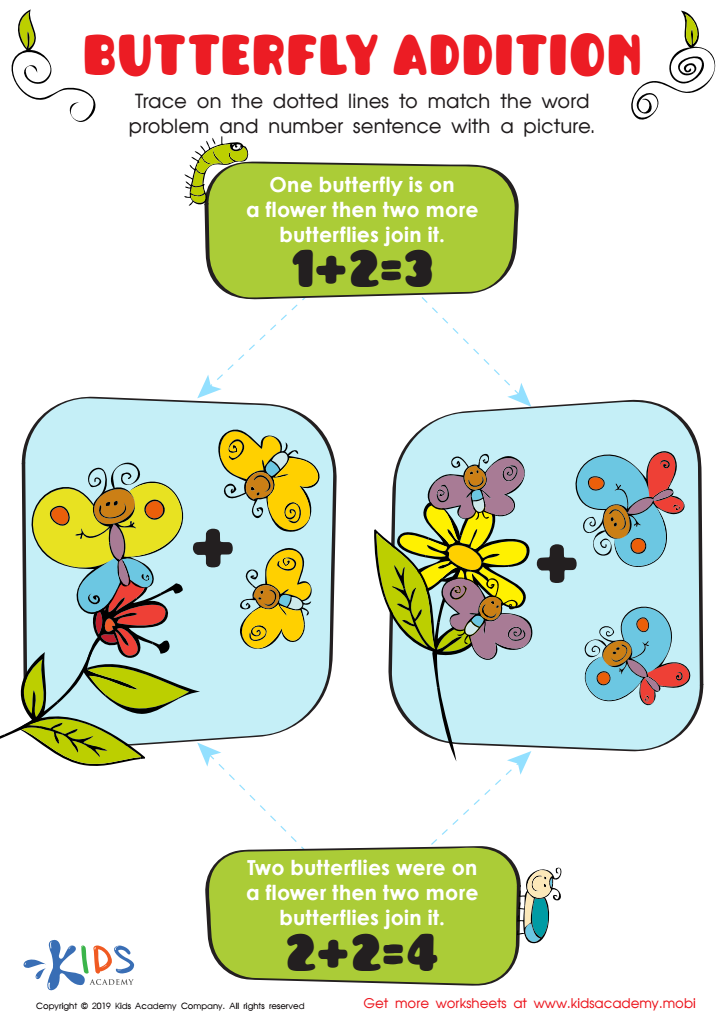
Butterfly Addition Worksheet
 Assign to My Students
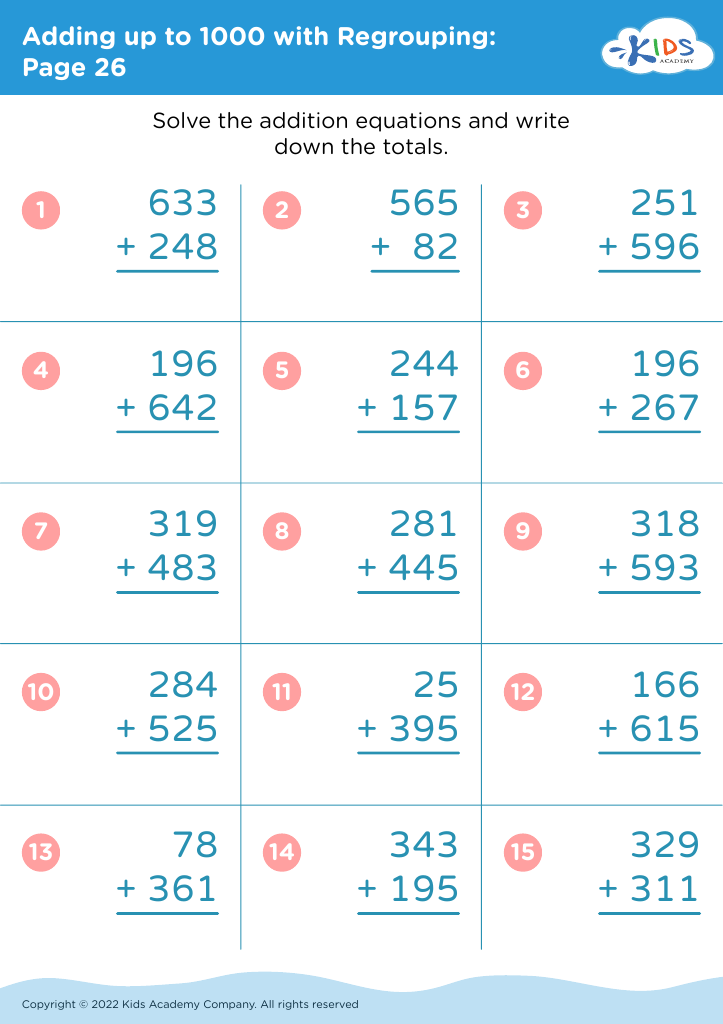
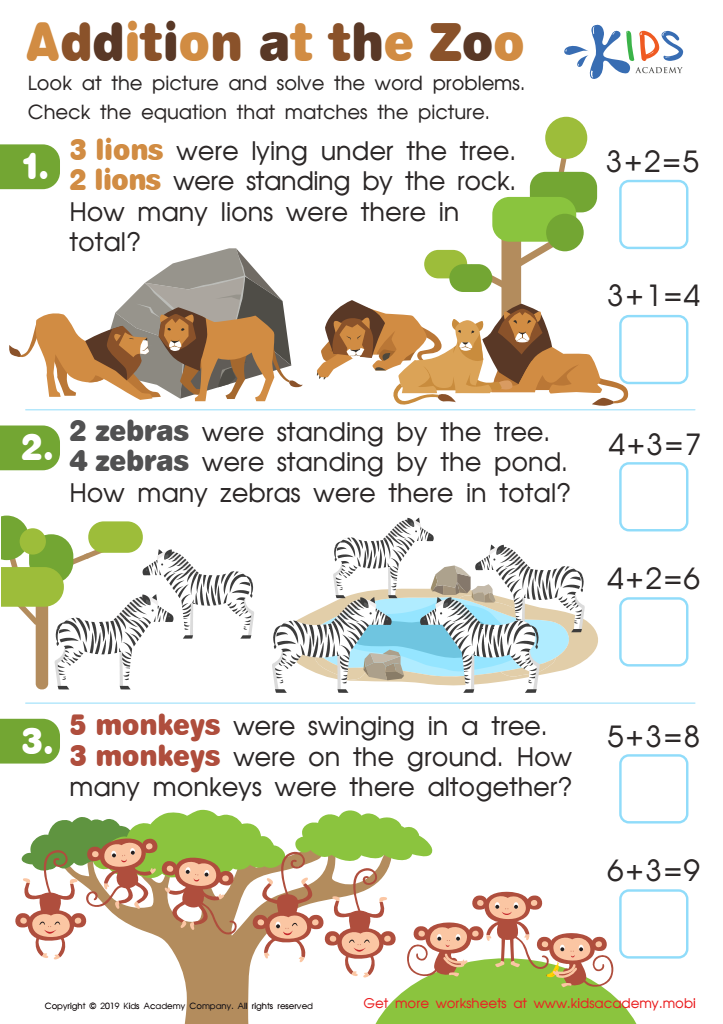
Addition at the Zoo Worksheet








Visual learning is a crucial pedagogical approach for children aged 6-9, particularly in the context of addition, as this age group is developing fundamental mathematical skills. At this developmental stage, learners benefit significantly from visual aids such as number lines, manipulatives, and pictorial representations of numbers. These tools not only make abstract concepts more tangible but also cater to diverse learning styles, helping children who may struggle with traditional teaching methods.
Furthermore, visual learning promotes engagement and retention. By using visuals, children can grasp relationships between numbers and understand how addition operates in a more intuitive manner. For instance, visualizing the process of combining groups of objects helps solidify their understanding of addition as combining quantities.
Parents and teachers play an essential role in fostering this approach. By incorporating visual methods in teaching practices and homework, they enhance children's problem-solving skills and boost their confidence in math. Additionally, supporting children in playing math-related games that utilize visual learning can make learning fun and less intimidating. Ultimately, focusing on visual learning for addition nurtures a solid mathematical foundation, empowering students to tackle more complex concepts in the future.








