Vocabulary development Addition Worksheets for Ages 6-9
5 filtered results
-
From - To
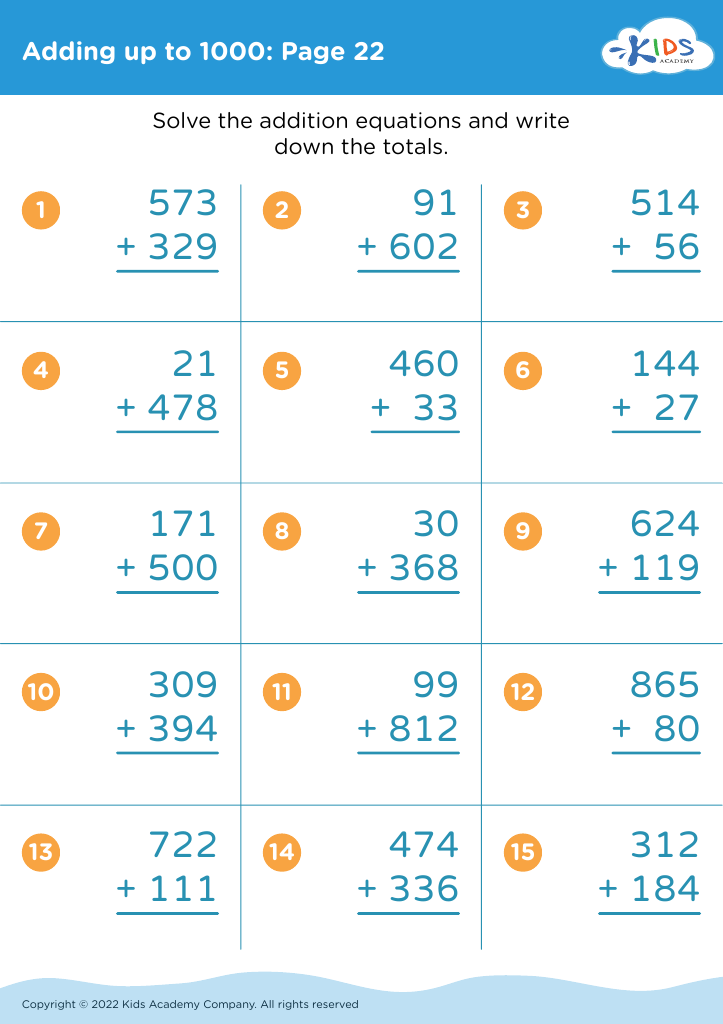
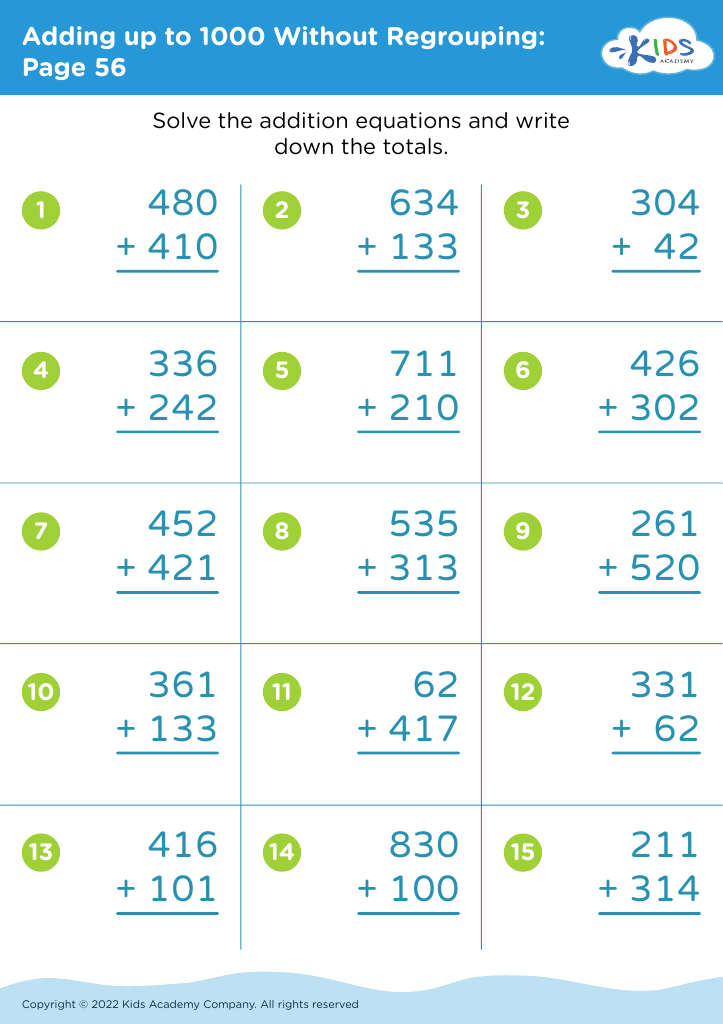
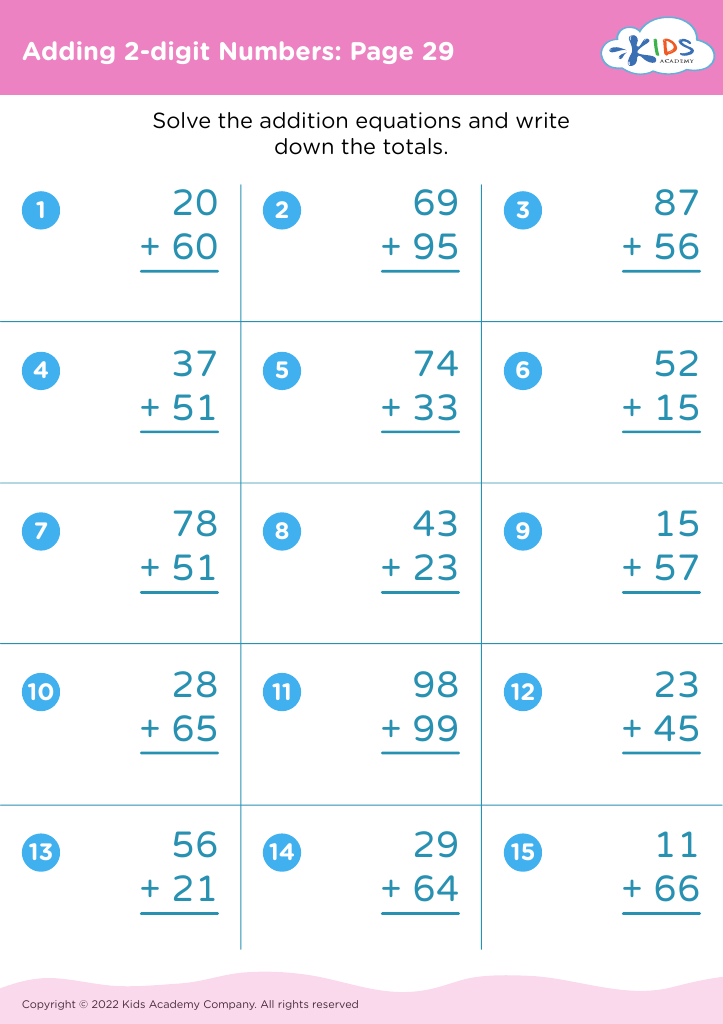
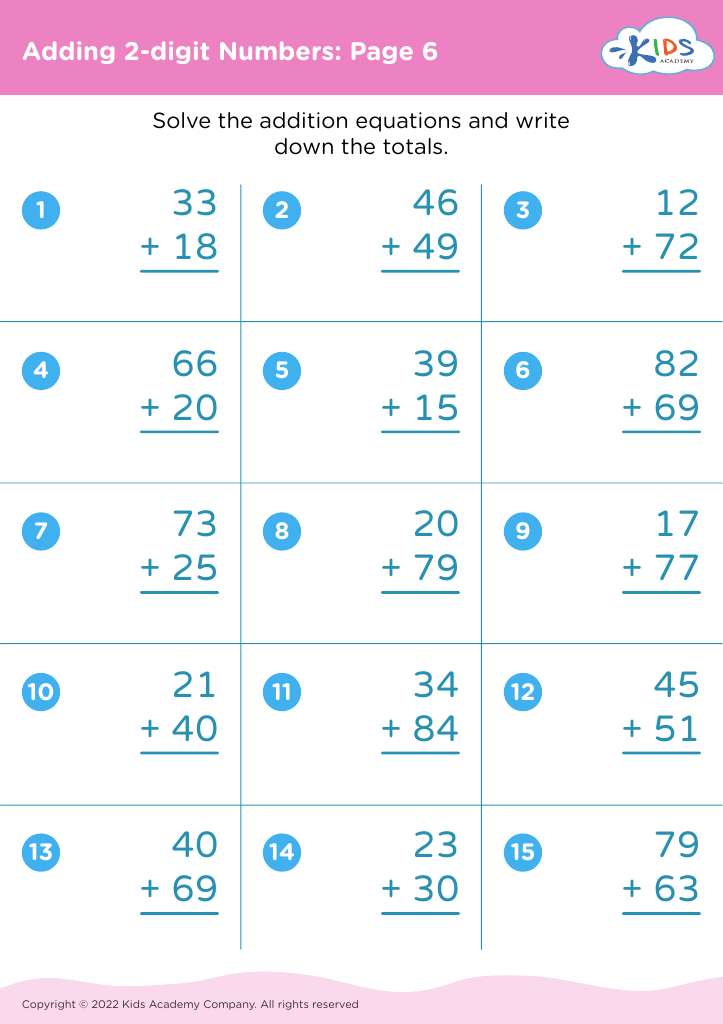
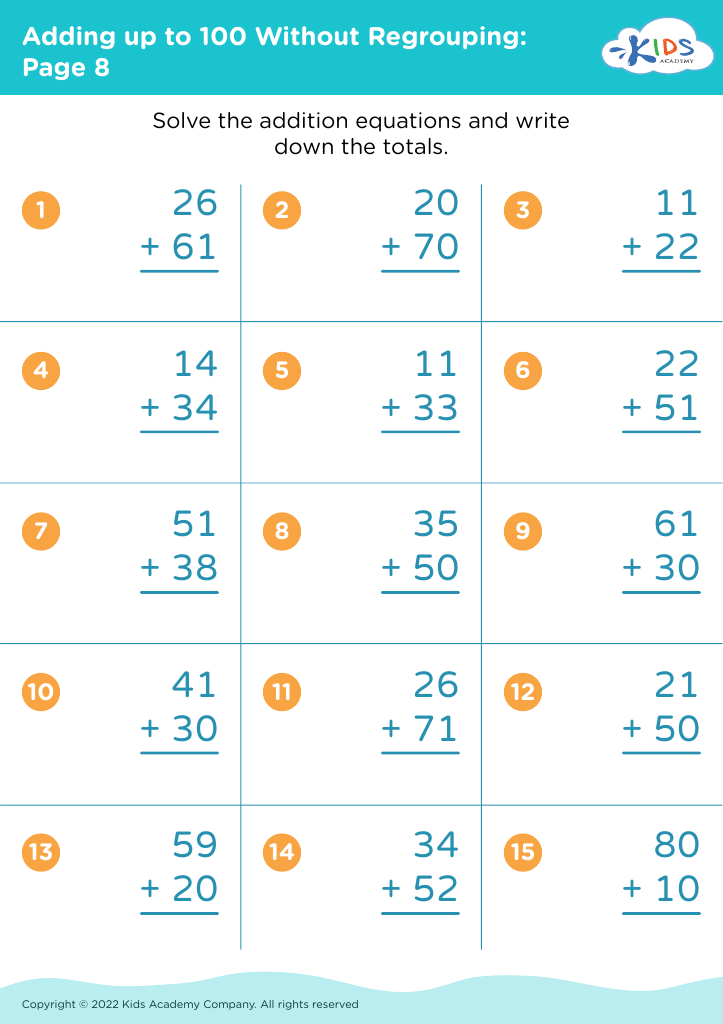
Enhance your child's vocabulary and math skills with our engaging Vocabulary Development Addition Worksheets designed specifically for ages 6-9. These worksheets provide a fun and interactive approach to learning addition while introducing essential terminology, helping young learners connect mathematical concepts with the right words. Your child will explore vocabulary through various activities, improving both their language and arithmetic skills simultaneously. Ideal for use at home or in the classroom, our printable resources cater to different learning styles, making learning enjoyable and effective. Empower your child's educational journey with these exciting worksheets that foster confidence and comprehension in mathematics!








Vocabulary development is crucial for children aged 6-9 as it lays the foundation for effective communication and literacy skills. During these formative years, children are expanding their language use significantly, transitioning from simple phrases to more complex sentences. A robust vocabulary not only enhances their reading comprehension but also aids in writing and critical thinking skills.
Parents and teachers should prioritize vocabulary development because it directly influences academic success across all subjects. Strong vocabulary skills enable children to understand and engage with more complex texts, boosting confidence and motivation to learn. Furthermore, it facilitates better expression of thoughts and feelings, aiding social interactions and emotional intelligence.
In an increasingly diverse world, a rich vocabulary helps children appreciate different cultures and perspectives, fostering empathy and inclusiveness. By integrating vocabulary-building activities—such as reading diverse books, playing word games, and encouraging conversation—adults can create an enriching environment that piques children's interest in language. Ultimately, investing time in vocabulary development not only equips children with essential skills for school but also prepares them for lifelong learning and personal growth, making it imperative for parents and teachers to take an active role in this aspect of education.








