
Historical Knowledge Arrays Worksheets for Ages 6-9
4 filtered results
Difficulty Level
Grade
Age
-
From - To
Subject
Activity
Standards
Discover our "Historical Knowledge Arrays Worksheets for Ages 6-9," expertly crafted to merge history and math for young learners. These engaging worksheets introduce children to key historical events while strengthening their understanding of arrays. Through visually appealing activities, kids can practice their multiplication skills, boost their critical thinking, and deepen their appreciation for history. Perfect for classroom use or supplemental learning at home, these worksheets offer a fun, interdisciplinary approach that keeps children motivated and eager to learn. Empower your child with a strong foundation in both math and history using our innovative resources.
Favorites
With answer key
Interactive
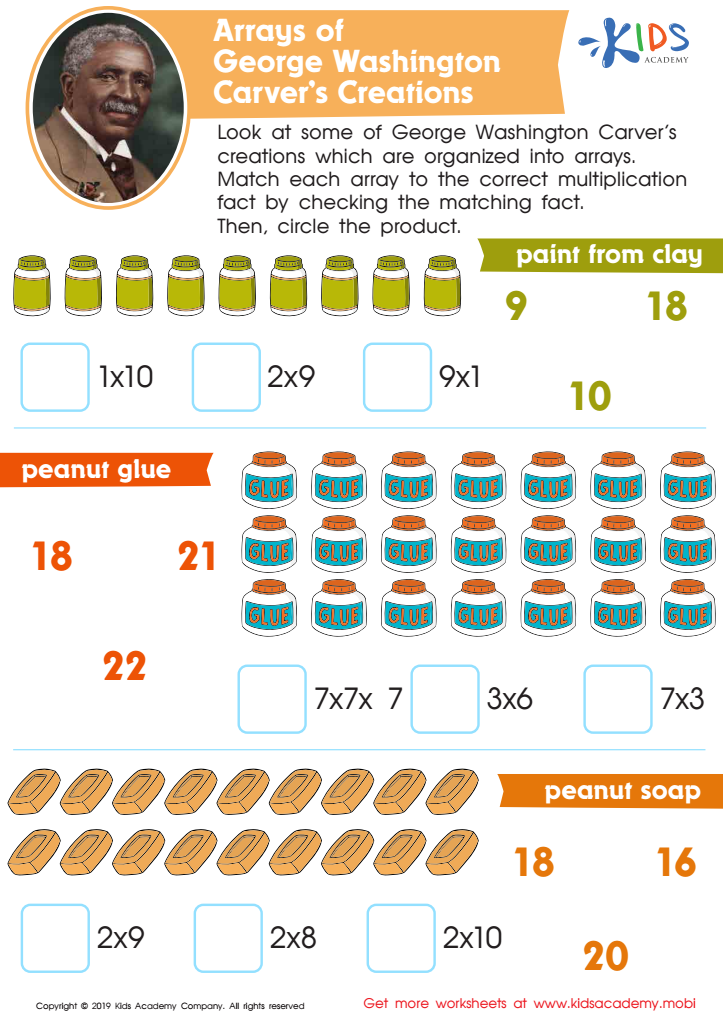
Arrays of George Washington Carver’s Creations Worksheet
Remind your child of what George Washington Carver created. Can they tell you? This worksheet has arrays with his creations. Match the array to the multiplication fact and help your child to circle the product.
 Assign to My Students
Arrays of George Washington Carver’s Creations Worksheet
Worksheet
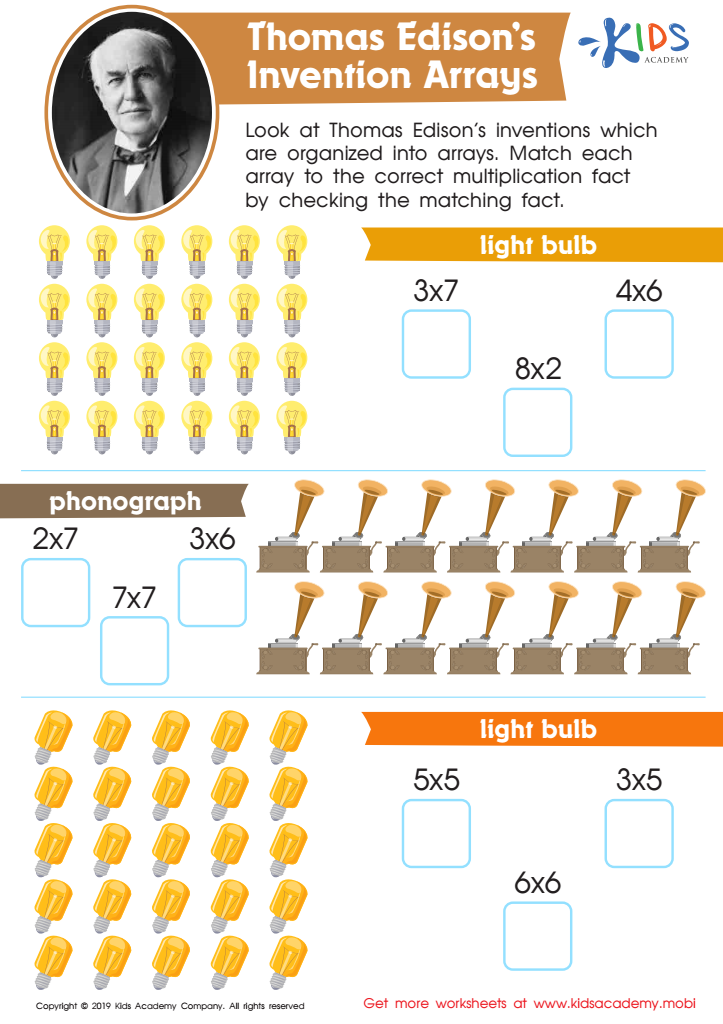
Thomas Edison’s Invention Arrays Worksheet
Test your students' knowledge on history by asking them what Thomas Edison invented. If they get the right answer, provide more information on other inventors. Check out this printout of Edison's light bulb inventions laid out in arrays. Get them to match each array to the correct multiplication fact.
Thomas Edison’s Invention Arrays Worksheet
Worksheet
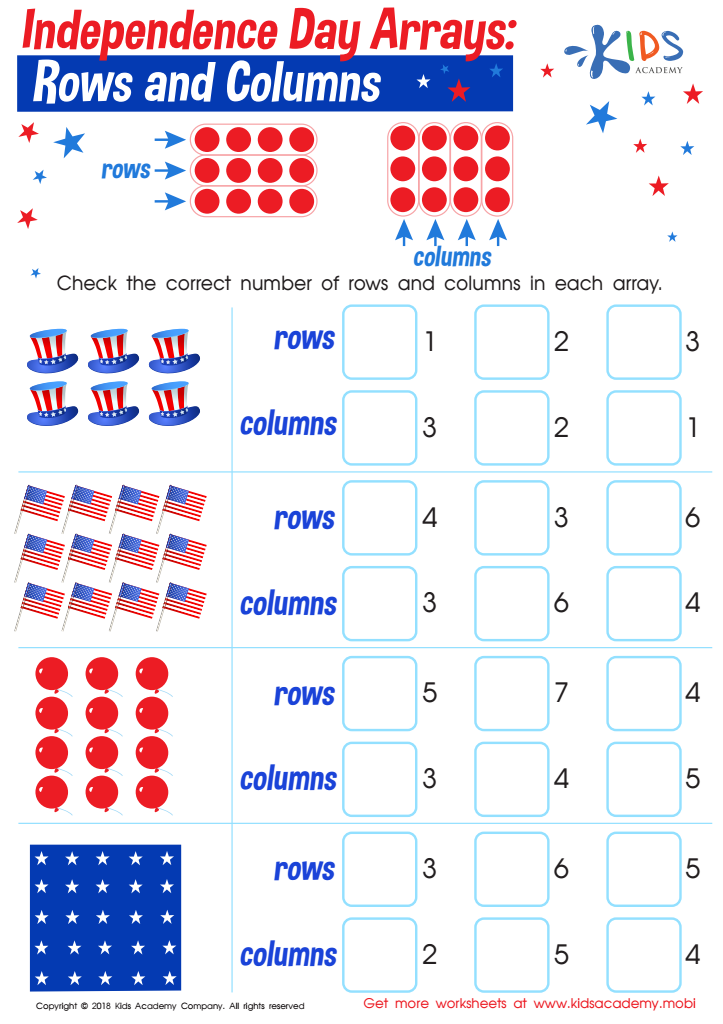
Independence Day Arrays: Rows and Columns Worksheet
Does your child know when Independence Day is? They might love the family picnics and fireworks, or they may not understand the significance of the holiday. After this worksheet, they'll comprehend it better. Help them look at the images and count the number of rows and columns in each array.
Independence Day Arrays: Rows and Columns Worksheet
Worksheet
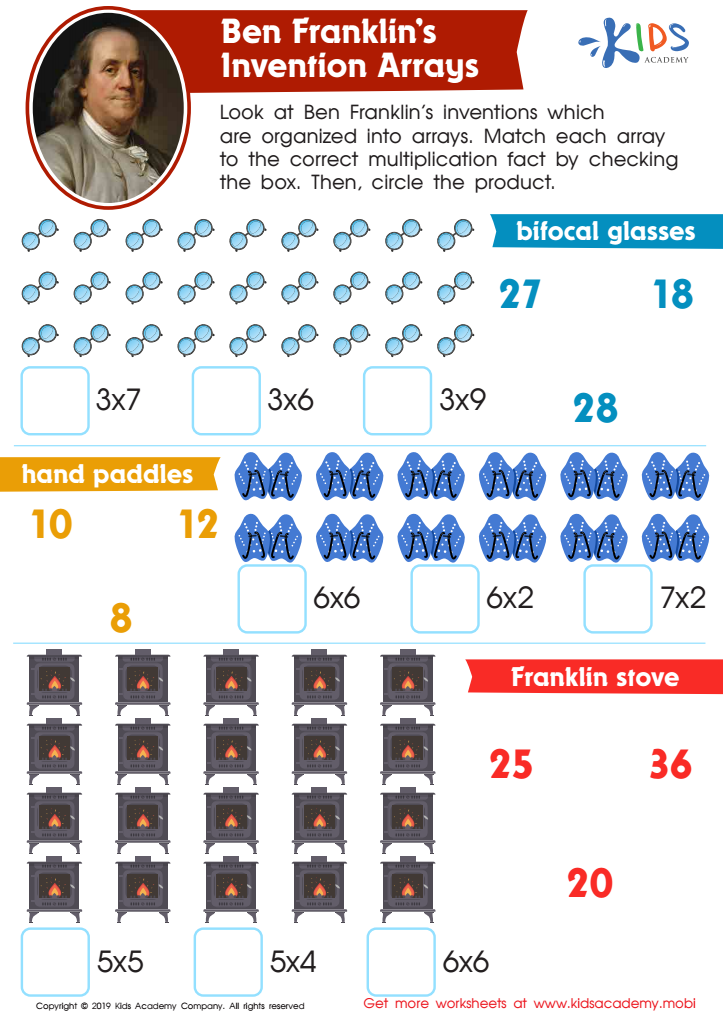
Ben Franklin’s Invention Arrays Worksheet
Have your child guess some of the inventors of the popular items we use today. For instance, the light bulb was invented by Thomas Edison. Look at Ben Franklin's inventions and help your kids match the arrays to the correct multiplication fact. Check the box and circle the product.
Ben Franklin’s Invention Arrays Worksheet
Worksheet
Join Kids Academy for Free
Who is primarily going to use this learning content?







Parents and teachers should care about Historical Knowledge Arrays for children aged 6-9 because it lays the foundation for a well-rounded education, promoting cognitive development and cultural awareness from an early age. Introducing historical concepts in a structured yet engaging manner helps children build critical thinking and analytical skills. By understanding chronology, causation, and the significance of key historical events, young learners start to form connections between past and present, creating a more comprehensive worldview.
Studying history also fosters empathy and perspective-taking as children learn about diverse peoples and societies. Recognizing similarities and respecting differences enriches their social and emotional development. Moreover, engaging with stories from the past stimulates curiosity and nurtures a lifelong love of learning.
Equipping children with historical knowledge enhances their ability to participate meaningfully in civic life. It fosters an understanding of collective identities and shared human experiences, crucial in forming a coherent sense of community and citizenship. This early exposure ultimately empowers children to become informed, reflective, and responsible adults.
Supporting the development of Historical Knowledge Arrays in children makes education a truly transformative journey, ensuring they grow into informed individuals capable of contributing thoughtfully to society. Thus, parents and teachers should passionately champion this educational pillar.








