Multiplication practice Arrays Worksheets for Ages 6-9
4 filtered results
-
From - To
Boost your child's math skills with our engaging Multiplication Practice Arrays Worksheets, designed for ages 6-9! These worksheets provide interactive and hands-on activities that help students visualize multiplication concepts through arrays. Kids can learn to organize numbers in rows and columns, making it easier to understand the multiplication process. Ideal for classroom or home use, our colorful and fun worksheets promote critical thinking and problem-solving. Parents and educators can harness these resources to enhance math fluency and build confidence in young learners. Join us in making math fun and effective with our thoughtfully crafted multiplication practice activities!
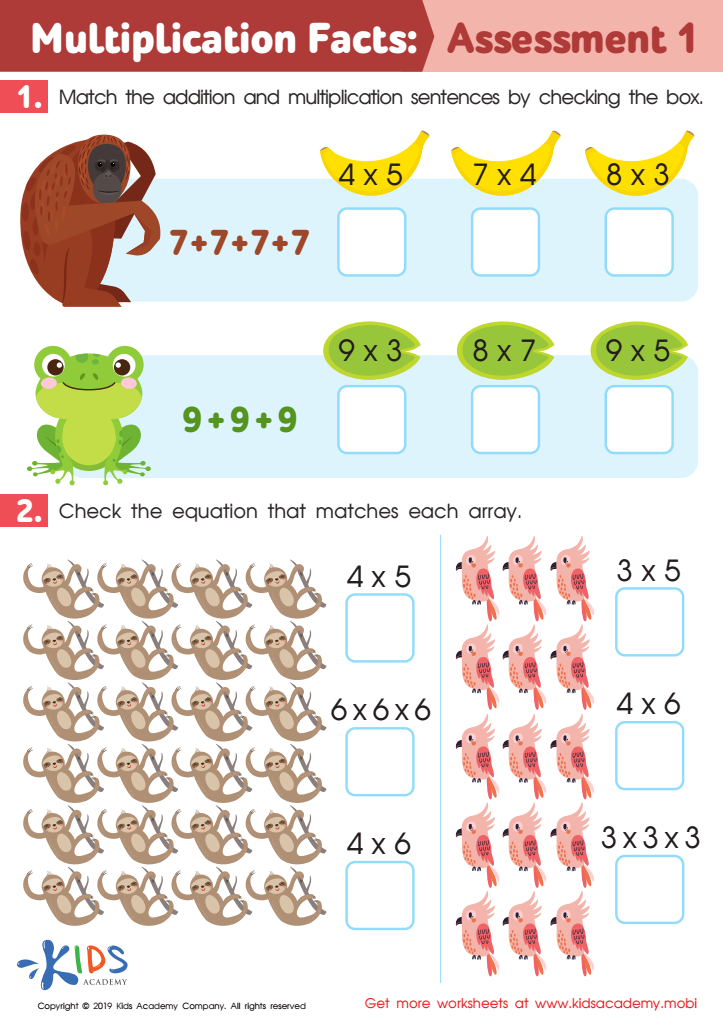
Multiplication Facts: Assessment 1 Worksheet
 Assign to My Students
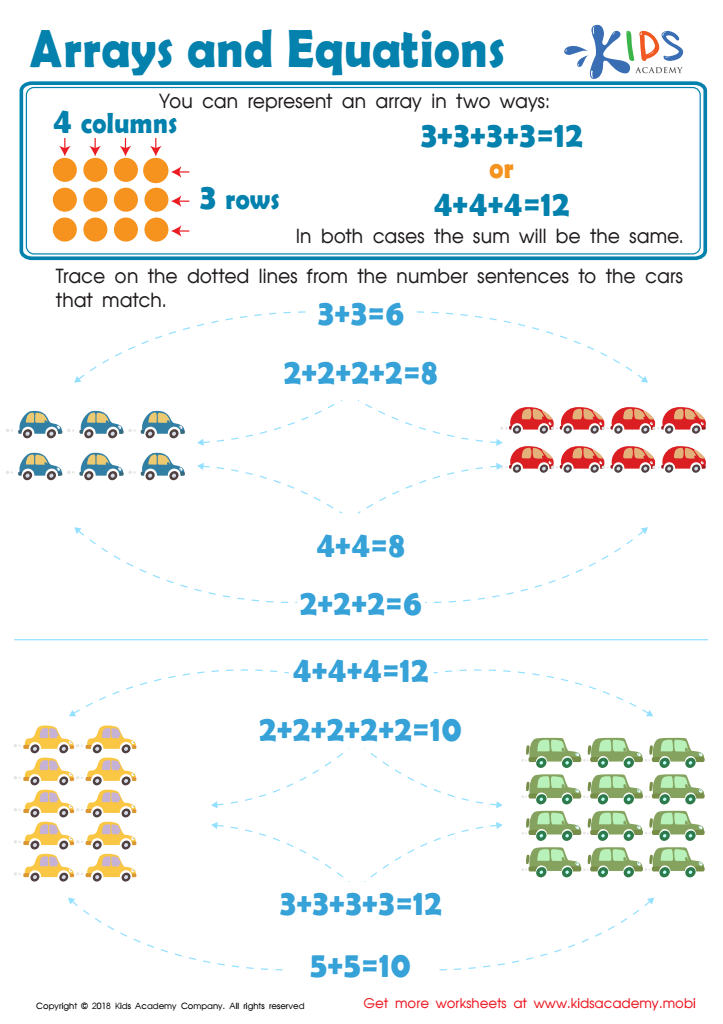
Arrays and Equations Worksheet
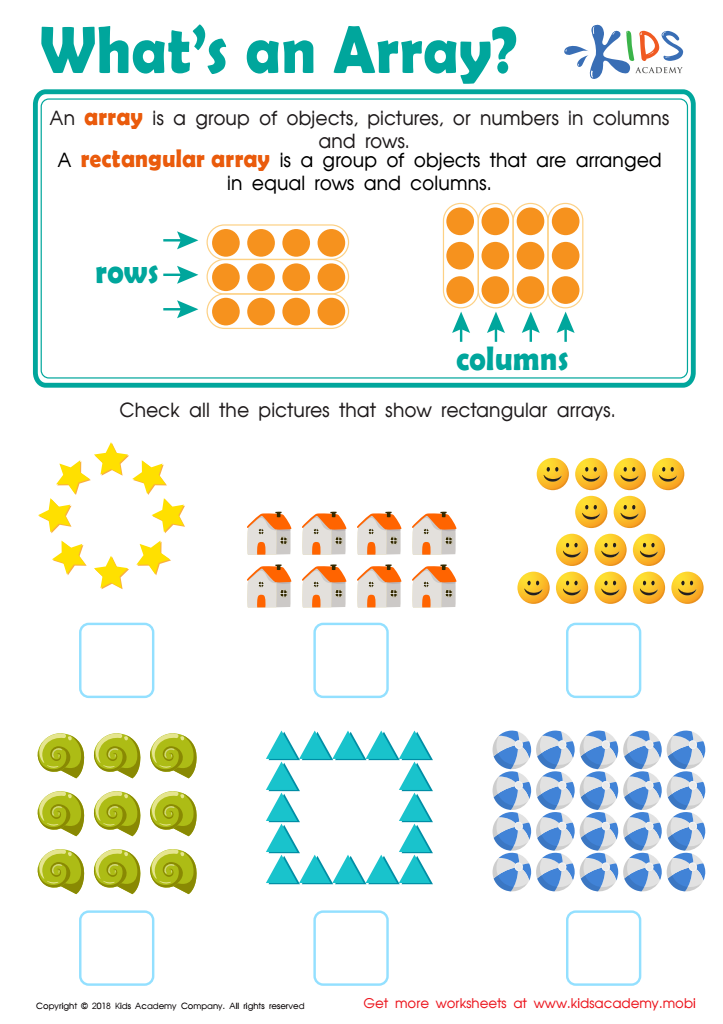
What's an Array? Worksheet
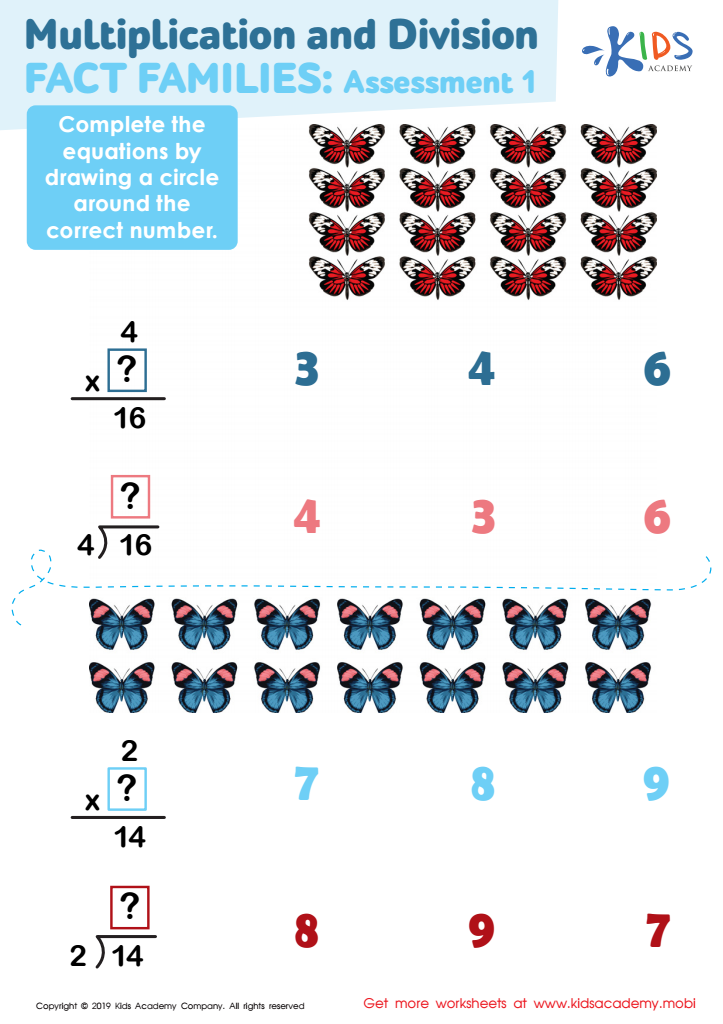
Multiplication and Division Fact Families Assessment 1 Worksheet








Multiplication practice using arrays is an essential tool for children ages 6-9, as it builds a solid foundation in mathematics. Arrays help children visually understand the concept of multiplication by representing numbers in rows and columns. This visual approach connects multiplication to real-life scenarios, such as counting items in groups, making math relatable and accessible.
Parents and teachers should care about array-based multiplication practice because it enhances students’ problem-solving and critical-thinking skills. By engaging with arrays, children learn to recognize patterns and develop strategies for multiplication, including the commutative property (e.g., 3 x 4 is the same as 4 x 3). Additionally, arrays lay the groundwork for more complex mathematical concepts, such as factors and area, that they will encounter in higher grades.
Furthermore, this practice encourages collaboration and communication as children work together to create and solve array problems, building social skills. By incorporating arrays into learning, parents and teachers promote a positive mathematics experience, helping children gain confidence in their abilities. In the long run, this foundational skill paves the way for academic success and a favorable attitude towards math, setting the stage for lifelong learning.








