Understanding patterns Basic Times Tables up to 12 Worksheets for Ages 6-9
3 filtered results
-
From - To
Help your child master multiplication with our specialized worksheets, designed for ages 6-9. Our "Understanding Patterns: Basic Times Tables up to 12" materials provide engaging exercises that make learning times tables both enjoyable and effective. By recognizing repeating patterns and relationships between numbers, young learners build a solid foundation in math. These worksheets cater to developing minds, aiding in memorization and boosting confidence. Perfect for homeschoolers, classrooms, or extra practice at home, our resources support children’s journeys in becoming multiplication masters. Watch your child thrive as they discover the fun and logic in learning times tables up to 12.
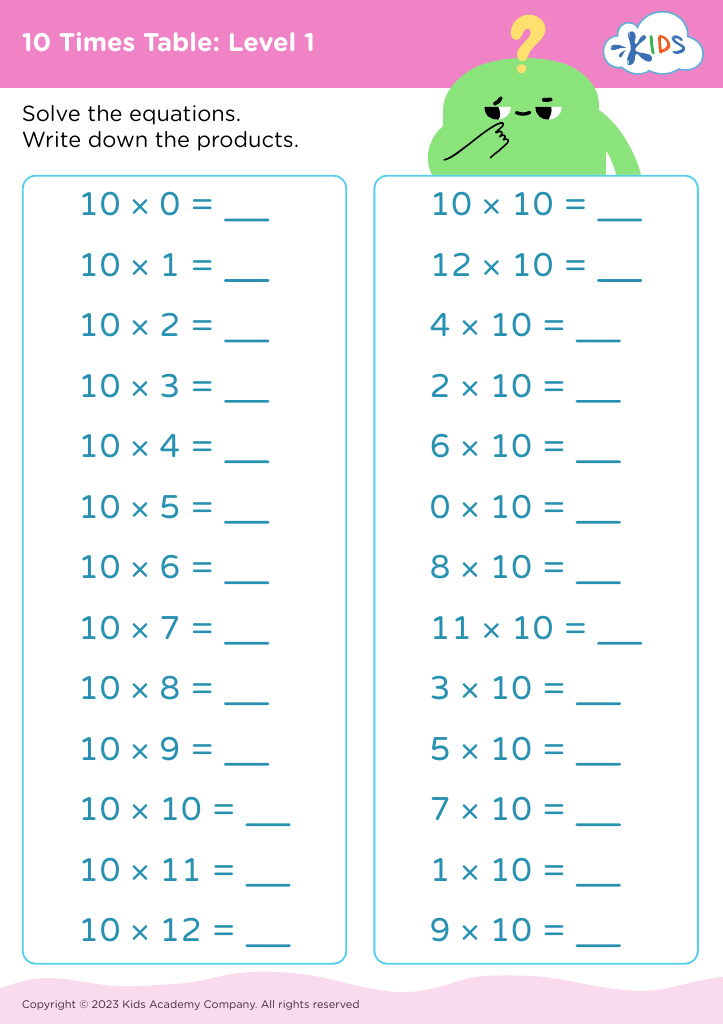
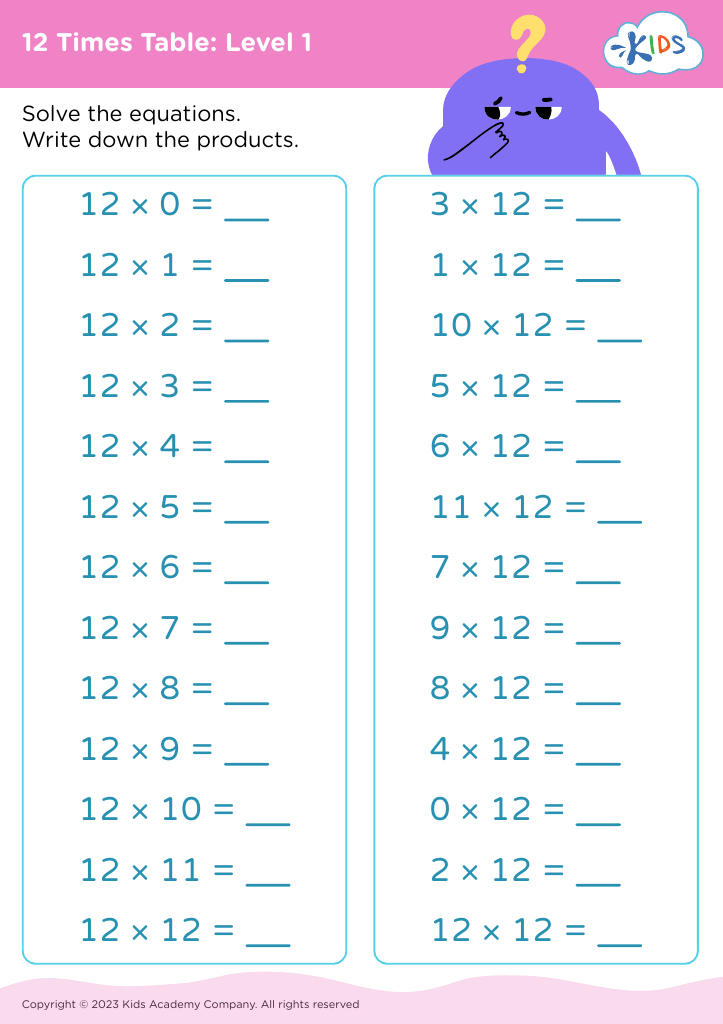
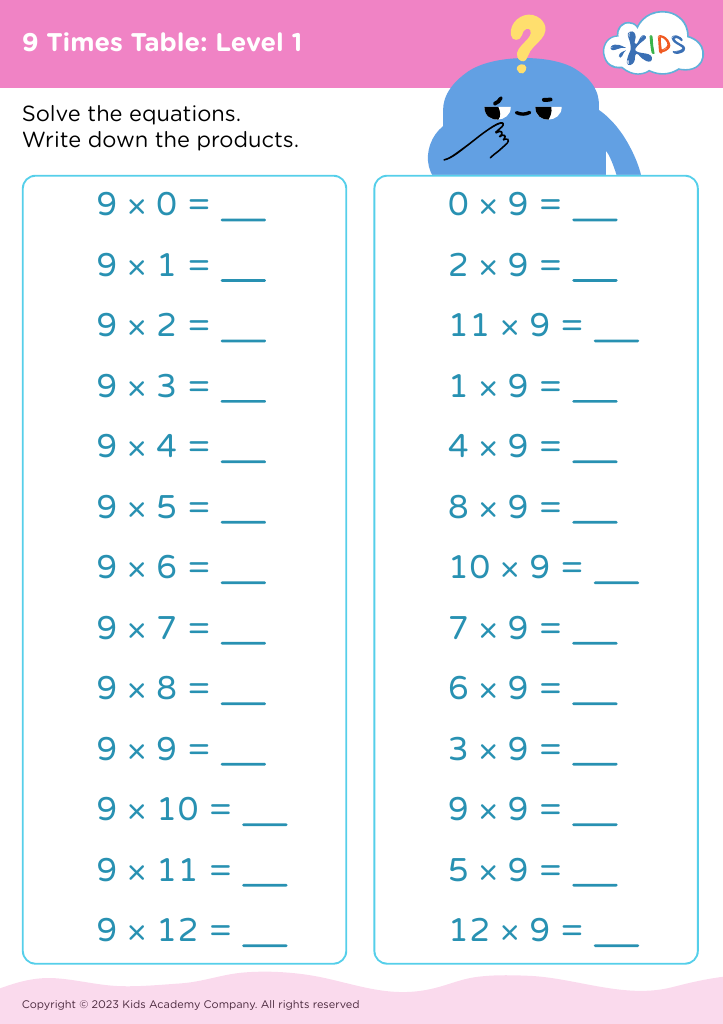


Understanding patterns and basic times tables up to 12 is crucial for children aged 6-9 as it lays a strong foundation for their future mathematical learning. At this age, children are particularly adept at grasping and remembering patterns, making it an ideal time to introduce them to the basic building blocks of multiplication.
Firstly, learning times tables helps children develop number sense, which is an intuitive understanding of how numbers work. This, in turn, improves their ability to perform arithmetic operations more comfortably and accurately. Being conversant in multiplication tables up to 12 boosts a child's confidence, creating a more positive attitude towards mathematics as a whole.
Secondly, times tables are fundamental to more complex mathematical concepts introduced in later years, such as division, fractions, and algebra. If children have to spend time and cognitive resources figuring out basic multiplications, they will likely struggle with these more advanced topics.
Additionally, recognizing patterns within times tables can help children develop critical thinking and problem-solving skills. For example, noticing that all the products of multiplying by 5 end in either 0 or 5, or observing that the table of 9 has a unique and descending pattern, enhances logical thinking.
As a result, both parents and teachers have a key role in ensuring students master their times tables, as this knowledge serves as a foundation for efficient and effective learning in future mathematical endeavors, helping garner long-term academic success.








