Addition skills Money Worksheets for Ages 6-9
3 filtered results
-
From - To
Enhance your child's understanding of money and addition with our engaging Addition Skills Money Worksheets designed for ages 6-9. These worksheets provide a fun and interactive way for young learners to practice basic addition while exploring coins and their values. Through a variety of activities, children will develop essential math skills, build confidence in their abilities, and learn the importance of money management. Whether at home or in the classroom, our easy-to-use worksheets make learning math enjoyable and effective. Encourage your child to master addition in a financial context and watch their skills flourish with this comprehensive resource.
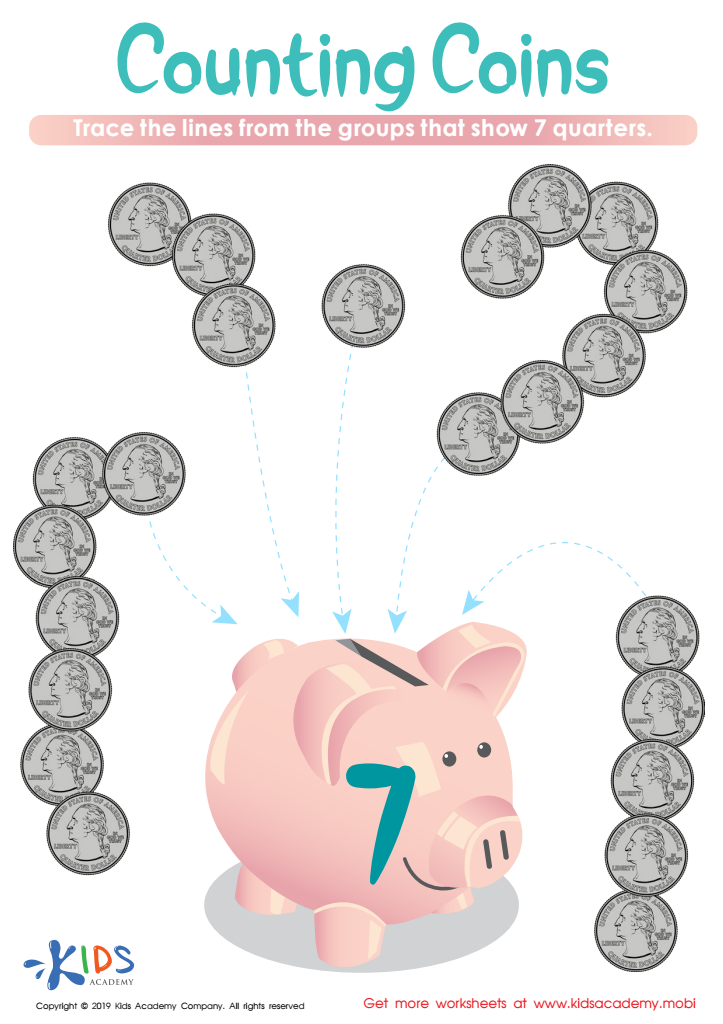
Counting Coins Worksheet
 Assign to My Students
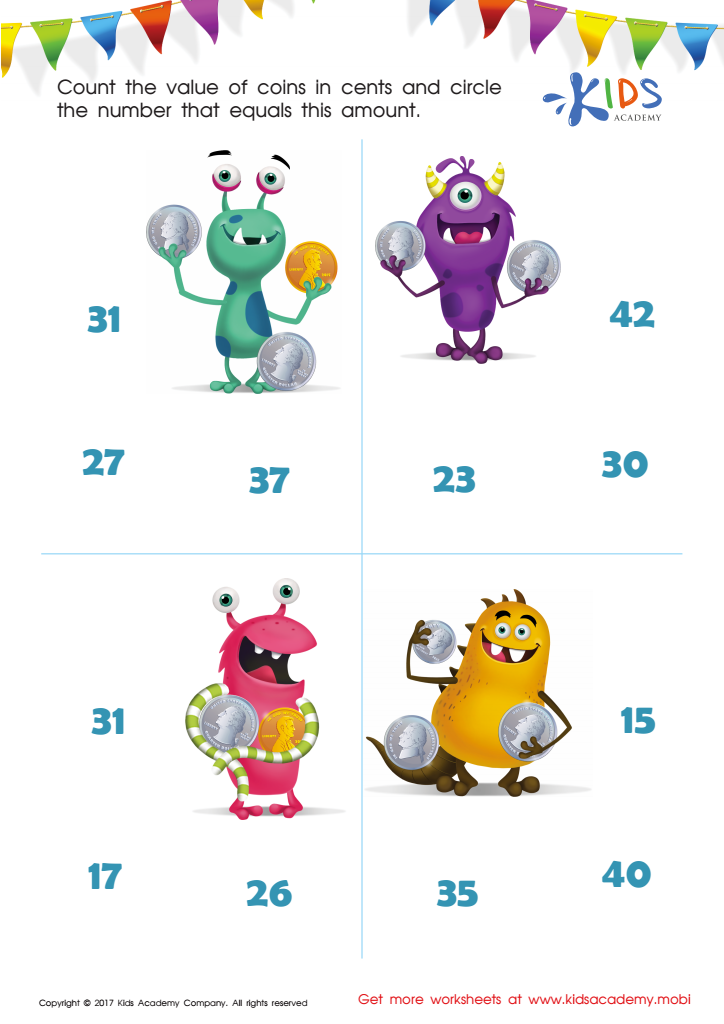
How Many Coins Money Worksheet

Shopping for Sweets Worksheet


.jpg)





Addition skills related to money are crucial for children aged 6-9 as they lay the foundation for both mathematical proficiency and real-world financial literacy. During this formative stage, children are naturally curious about money and often encounter it in various contexts—such as shopping or playing games. By teaching addition skills specifically related to money, parents and teachers help children understand not only how to calculate totals but also the value of money and the importance of budgeting.
Moreover, mastering addition through practical applications fosters critical thinking and problem-solving skills. Students learn to add prices, calculate change, and compare costs, which empowers them to make informed decisions in everyday situations. This hands-on experience strengthens their numeracy skills while making mathematics feel relevant and engaging.
Encouraging these skills can also build confidence and independence. As children develop proficiency in calculating how much they have or how much they need, they gain a sense of autonomy in their financial interactions. Ultimately, a solid grasp of addition related to money sets youngsters up for future financial success and empowers them to engage responsibly with their resources as they grow.








