Understanding currency Money Worksheets for Ages 6-9
3 filtered results
-
From - To
Discover "Understanding Currency Money Worksheets for Ages 6-9" designed to make learning about money fun and interactive. These printable activities help children grasp the value of coins and bills, enhancing their counting, addition, and subtraction skills. With engaging visuals and age-appropriate challenges, kids practice identifying different currencies, making change, and understanding the basics of financial literacy. Our worksheets are perfect for both classroom and at-home learning, providing a solid foundation in money management. Empower your young learners with the tools they need to navigate the world of currency confidently! Explore now and watch their skills grow.
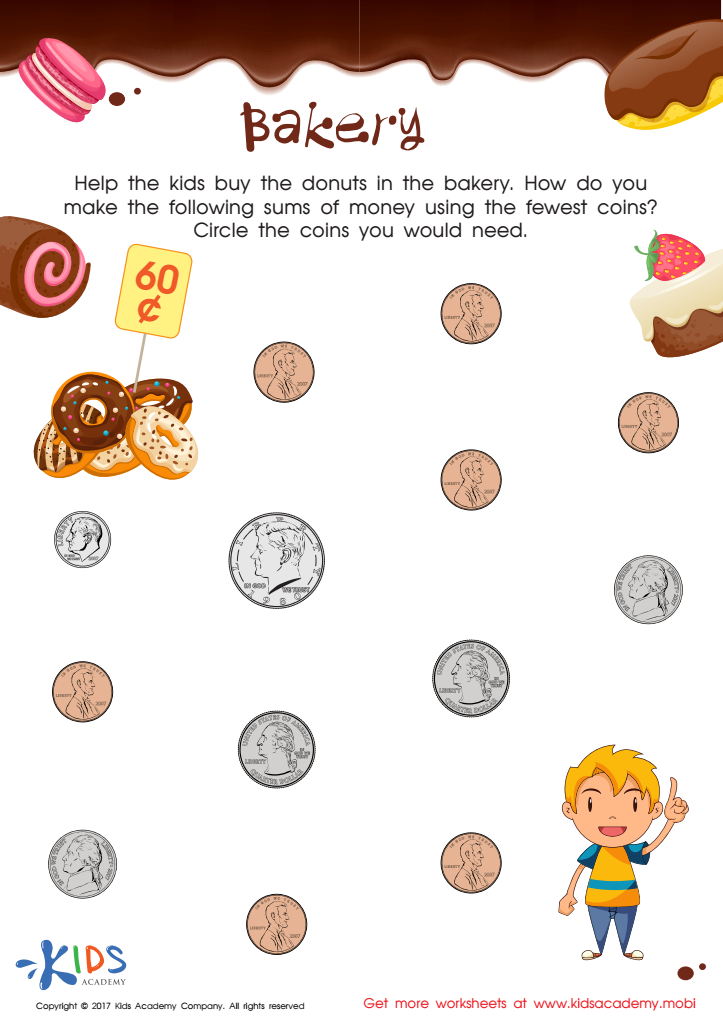
Counting Coins Worksheet
 Assign to My Students
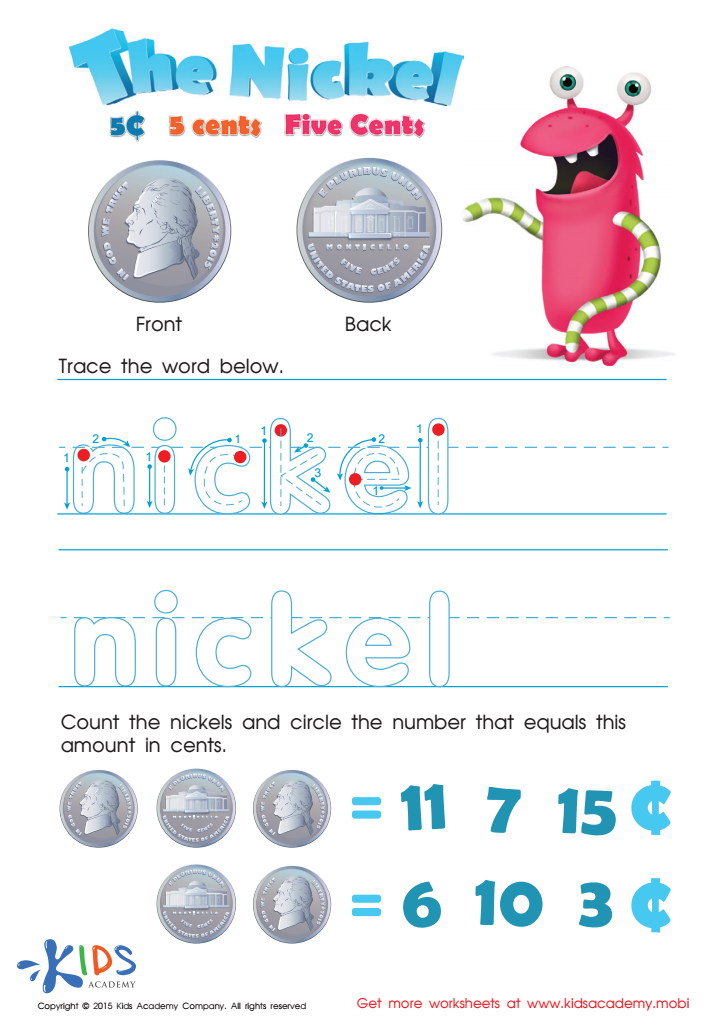
Five Cents or the Nickel Money Worksheet
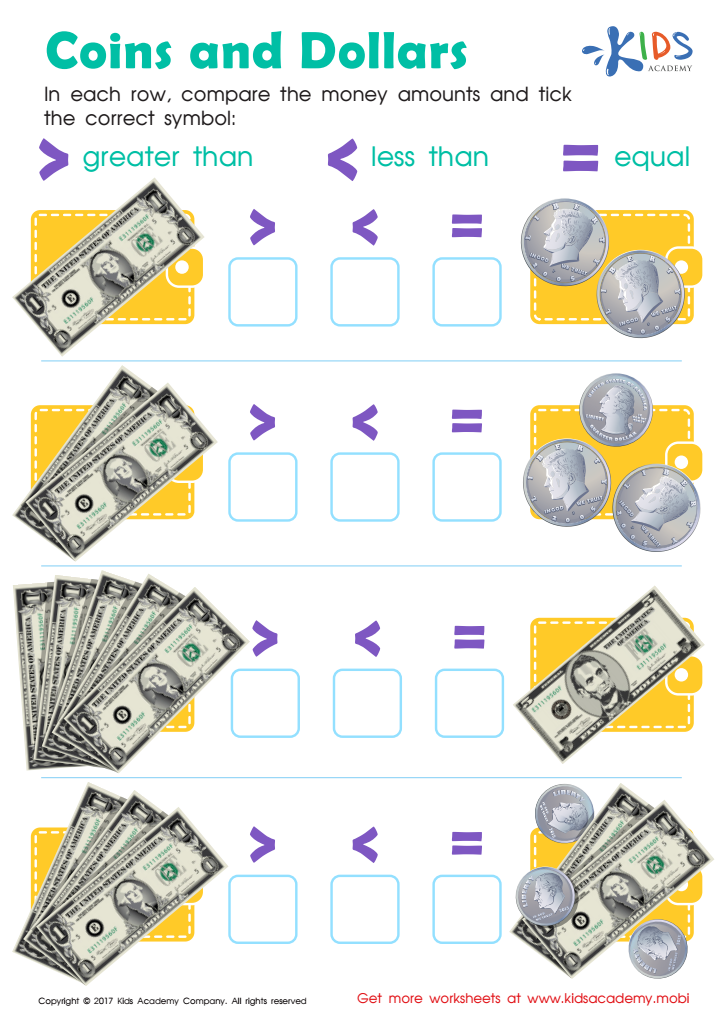
Money: Coins Dollars Printable




.jpg)



Understanding currency is essential for young children aged 6-9 because it sets the foundation for lifelong financial literacy. At this age, kids are naturally curious and can grasp basic concepts about numbers and value, making it an ideal time to introduce them to money. Teaching children about currency equips them with essential skills such as counting, addition, subtraction, and understanding the value of money, which are crucial for their academic development.
When kids comprehend how money works, they start learning important life skills like saving, spending wisely, and setting priorities. These concepts are key to building responsible financial behaviors that will benefit them throughout their lives. Moreover, early exposure to money management helps reduce financial anxiety in adulthood, as it fosters a sense of control and confidence over personal finances from an early age.
For parents and teachers, embedding lessons about money in day-to-day activities can make learning fun and practical. Games like setting up a play store, assigning chores for allowances, or using math problems involving money can be both educational and entertaining.
Overall, understanding currency not only supports mathematical development but also cultivates a sense of responsibility and independence, preparing children for more complex financial decisions in the future. Therefore, parents and teachers should prioritize teaching these concepts in a child-friendly manner.








