Filters

7 filtered results

Clear all filters
Favorites
With answer key
Interactive

7 filtered results

Difficulty Level

Grade


Enhance your child's fine motor skills while exploring the world of fractions with our engaging worksheets, designed specifically for ages 6-9. These printable resources focus on fractions of shapes, encouraging young learners to cut, trace, and color various forms. Each worksheet not only introduces key mathematical concepts but also promotes hand-eye coordination and dexterity through interactive activities. Ideal for homeschooling or classroom settings, our worksheets help children grasp essential math skills while having fun. Empower your little learners to explore fractions hands-on and develop their fine motor abilities simultaneously. Get started today for a wonderful learning experience!

Check out this FREE Trial Lesson on Fractions of Shapes for age 6-9!

Making a Whole

Favorites
With answer key
Interactive
  • 6-9
  • Fine Motor Skills
  • Fractions of Shapes
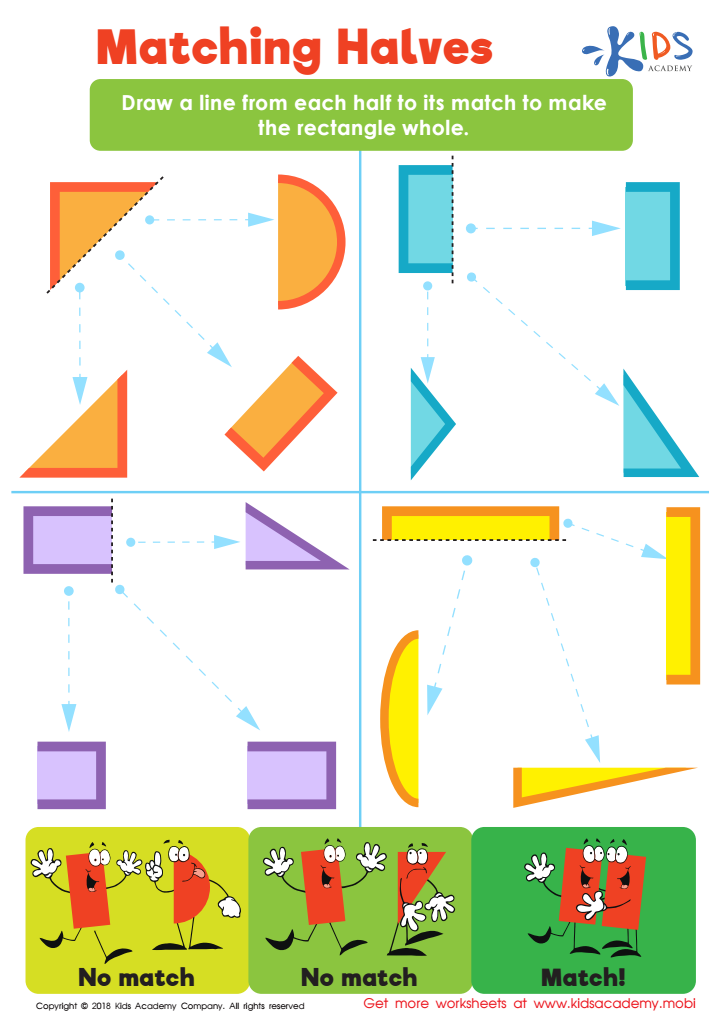
Matching Halves Worksheet

Matching Halves Worksheet

See how your child fares in matching two halves to form a complete rectangle. Provide them with four options, and ask them to draw a line connecting the two correct halves. Put their shape knowledge to the test with this simple worksheet!
Matching Halves Worksheet
Worksheet
Woodpecker and Triangles Worksheet

Woodpecker and Triangles Worksheet

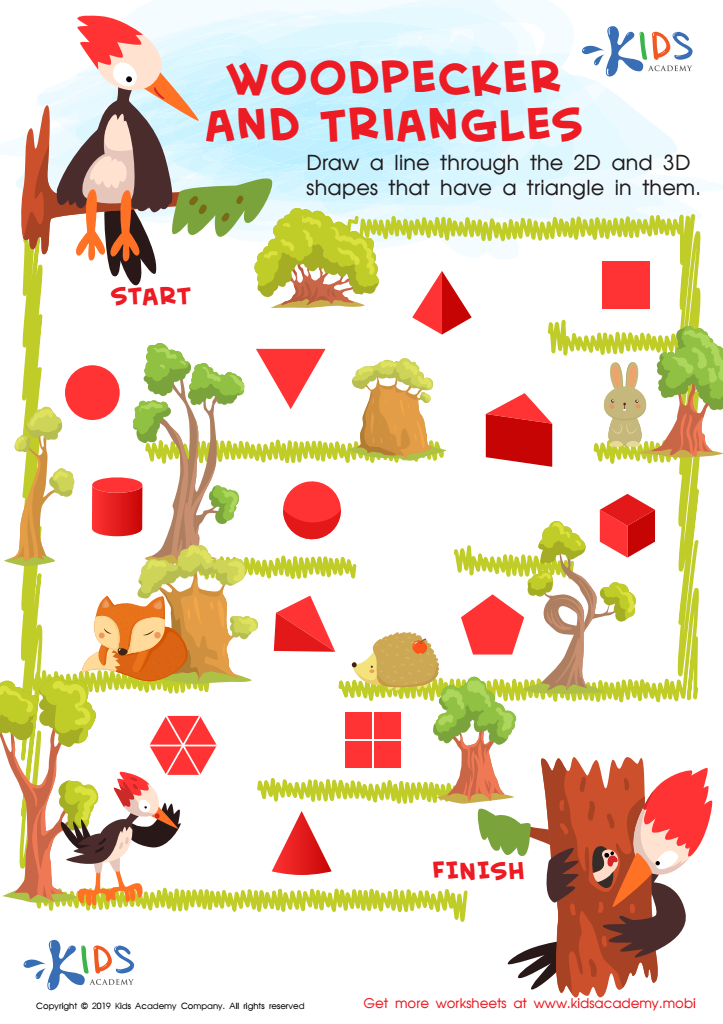
Woodpeckers peck wood, and this printout helps kids learn about triangles. Ask your kindergartners to draw a triangle, then draw a line through the shapes that have a triangle in them to help the woodpecker get out of the maze.
Woodpecker and Triangles Worksheet
Worksheet
Cutting Rectangles with Alien Worksheet

Cutting Rectangles with Alien Worksheet

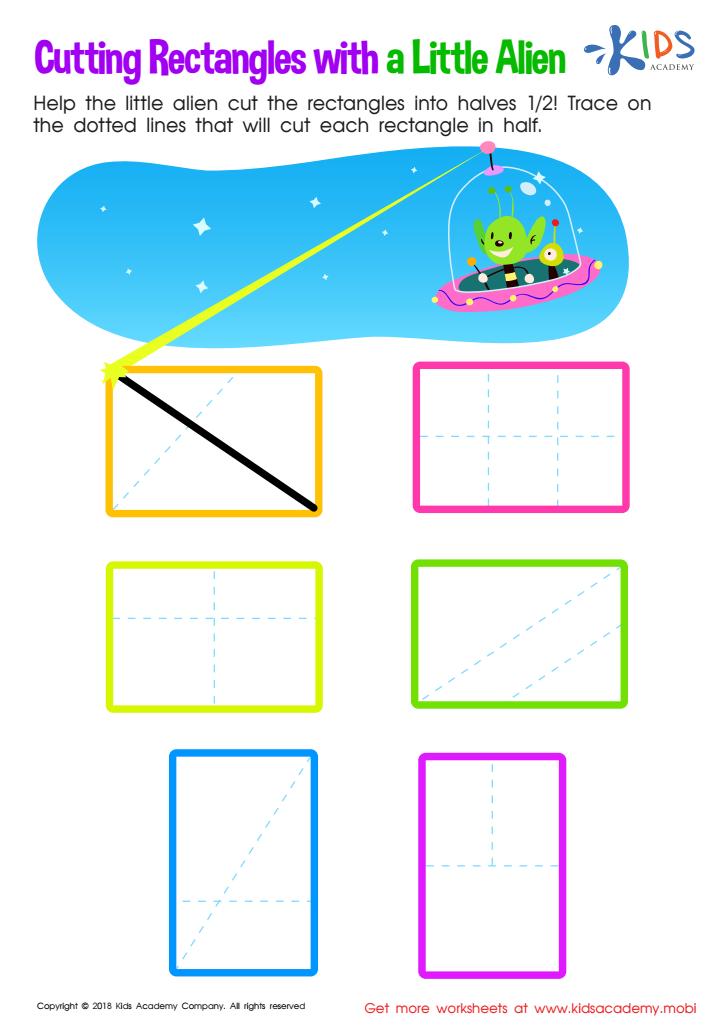
If your students are interested in aliens and otherworldly events, they'll love this exercise! It requires them to help a small alien cut rectangles into halves (½). They must trace the dotted lines to accurately cut each rectangle.
Cutting Rectangles with Alien Worksheet
Worksheet
Cutting in Halves Worksheet

Cutting in Halves Worksheet

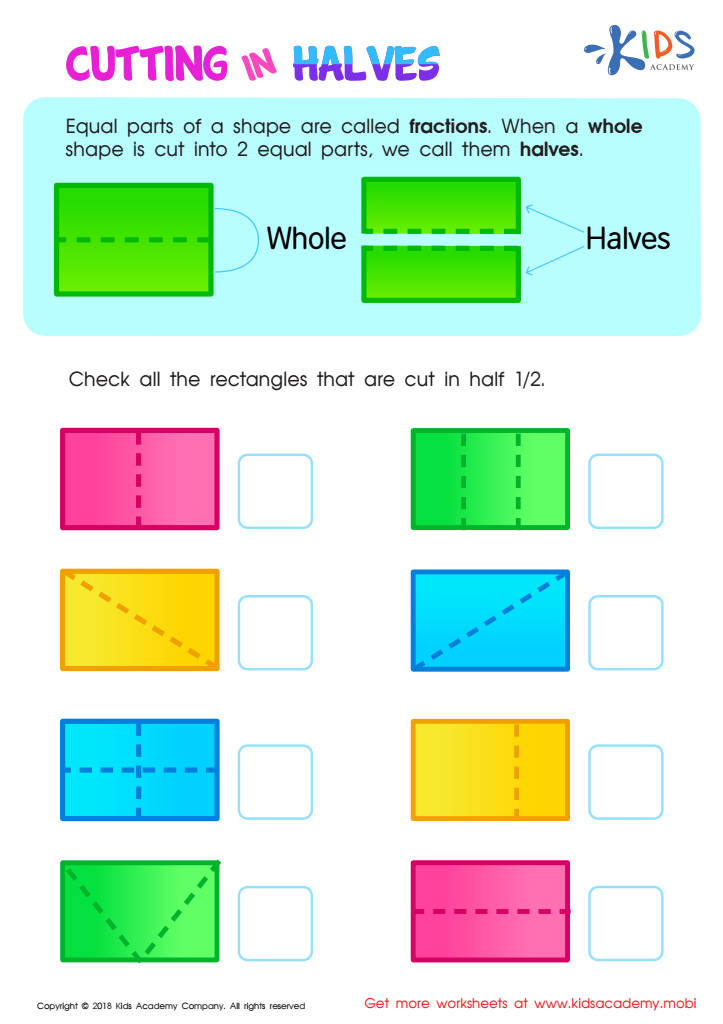
Show your child how to divide a whole shape, like a square, into smaller pieces to become fractions. Point out when a shape is divided into two equal parts, it's called a half. Look at the worksheet together, and identify all rectangles that are cut in half (½).
Cutting in Halves Worksheet
Worksheet
Patchwork Math Worksheet

Patchwork Math Worksheet

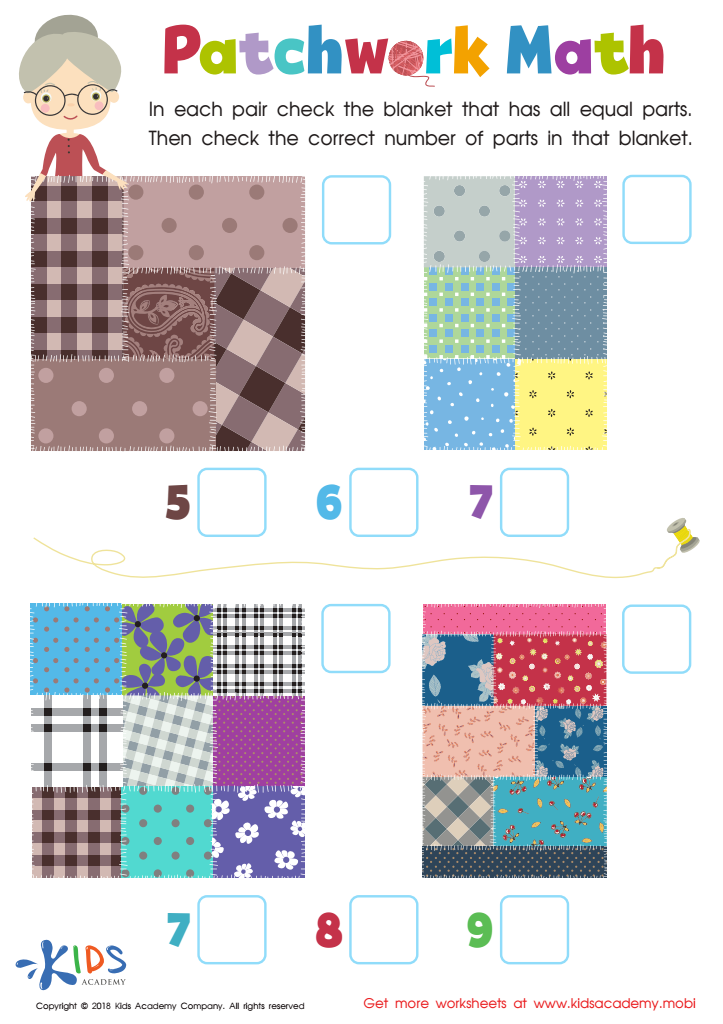
Test your children's knowledge with this colorful worksheet. They'll need to identify which of the blanket pairs have been cut in equal parts and count the number of parts. Check the provided options to ensure the correct answer.
Patchwork Math Worksheet
Worksheet
Circle Laser Cutting Worksheet

Circle Laser Cutting Worksheet

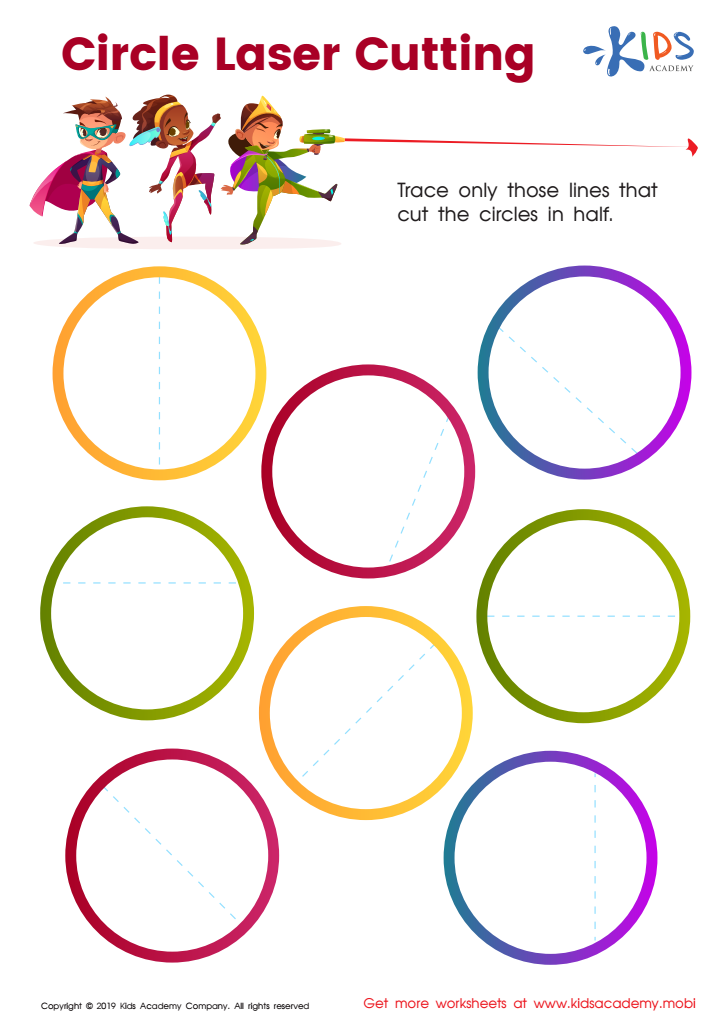
Encourage your kids to learn geometry! Remind them that when shapes are cut into two equal parts, they are called halves. Have them look at the circles in the worksheet, and trace the lines that cut the circles in half. Geometry is an essential part of education, and although it may not be exciting, it's a valuable skill to have.
Circle Laser Cutting Worksheet
Worksheet
Piece it together Worksheet


Piece it together Worksheet

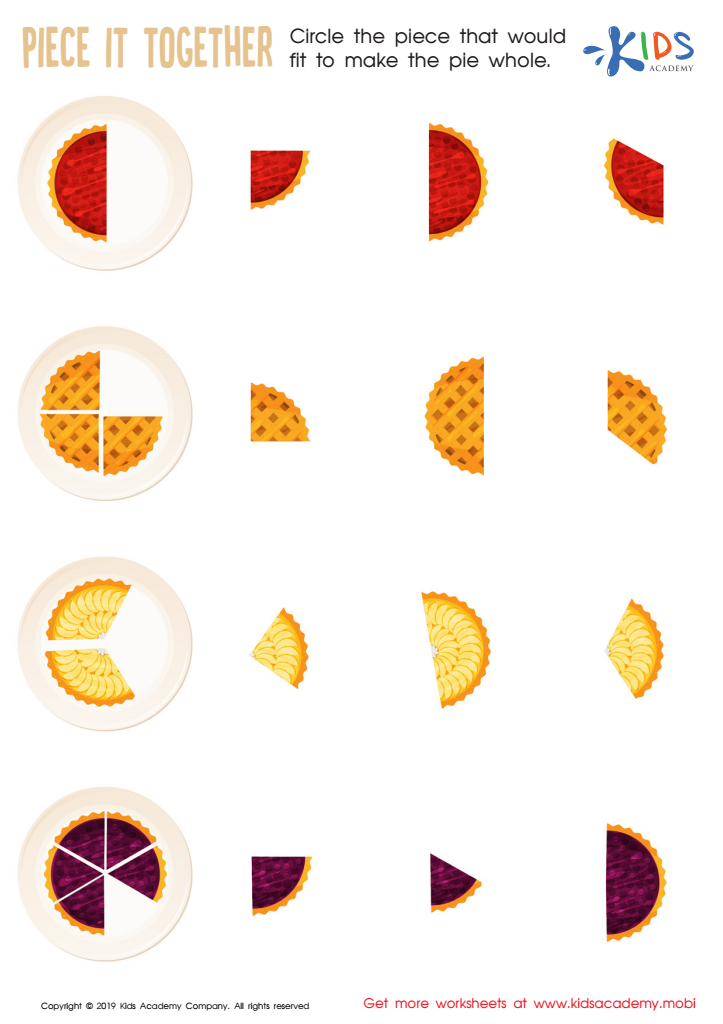
Help your kids learn fractions! Even if they're not eager, teach them as they get older. Teachers will provide enough lessons and homework, but you can go a step further. Look at a worksheet with your kids and help them circle the piece that would make the pie whole.
Piece it together Worksheet
Worksheet


Fine motor skills are crucial for children aged 6-9 as they directly influence their ability to perform everyday tasks and academic activities. At this developmental stage, children are refining their hand-eye coordination and dexterity, vital for tasks like writing, drawing, and manipulating small objects. When it comes to understanding fractions of shapes, fine motor skills play a pivotal role.

Engaging with shapes—whether cutting, pasting, or creating—allows children to physically interact with the concept of fractions. For example, cutting a pizza shape into halves and quarters helps solidify their understanding through a tangible experience. Parents and teachers should care about nurturing these skills because they fortify the foundational cognitive abilities required for math and critical thinking.

Moreover, strong fine motor skills enhance a child's confidence and self-sufficiency. As they gain mastery over these skills, they are more prepared for future educational tasks, allowing them to tackle more complex concepts with ease. By emphasizing fine motor development alongside mathematical concepts like fractions, we encourage a holistic approach to learning that integrates physical capability with cognitive understanding, setting the stage for lifelong academic success.