Basic geometry knowledge Geometry Worksheets for Ages 6-9
3 filtered results
-
From - To
Unlock your child's potential with our Basic Geometry Knowledge Worksheets, tailored for ages 6 to 9. These interactive, printable worksheets from Kids Academy effortlessly blend fun and education, helping young learners grasp foundational geometry concepts. With engaging activities on shapes, angles, symmetry, and spatial understanding, children enhance their math skills while enjoying the learning process. Ideal for both classroom and at-home use, these worksheets foster a love for geometry through hands-on practice. Download today to transform the way your child experiences geometry, turning challenges into triumphant growth in math confidence and knowledge.
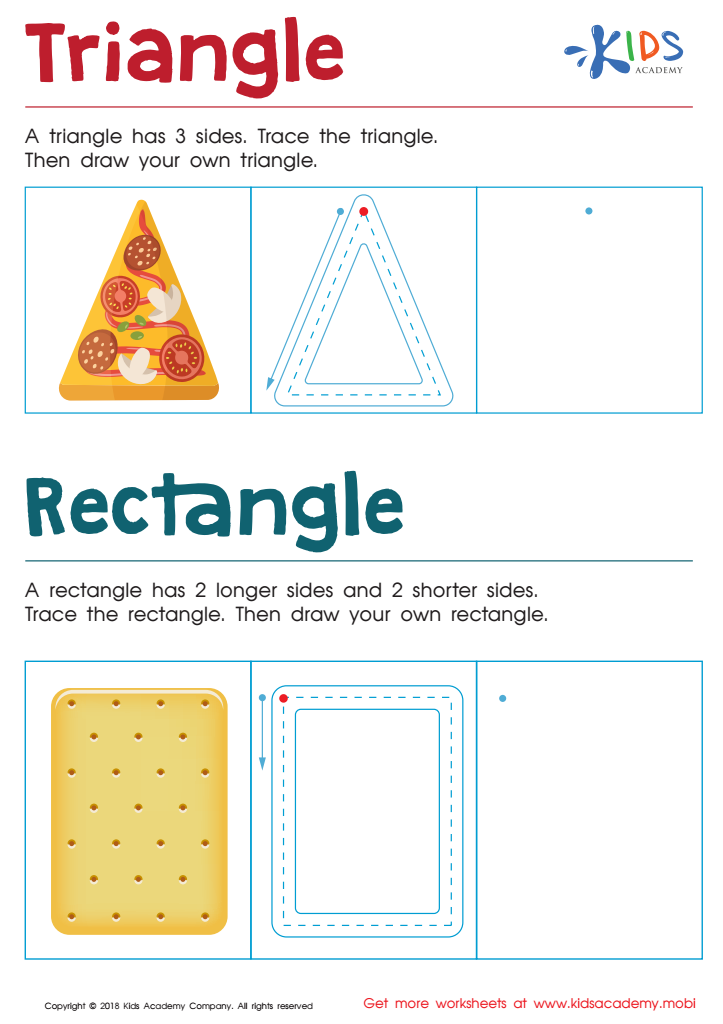
Triangle Rectangle Worksheet
 Assign to My Students











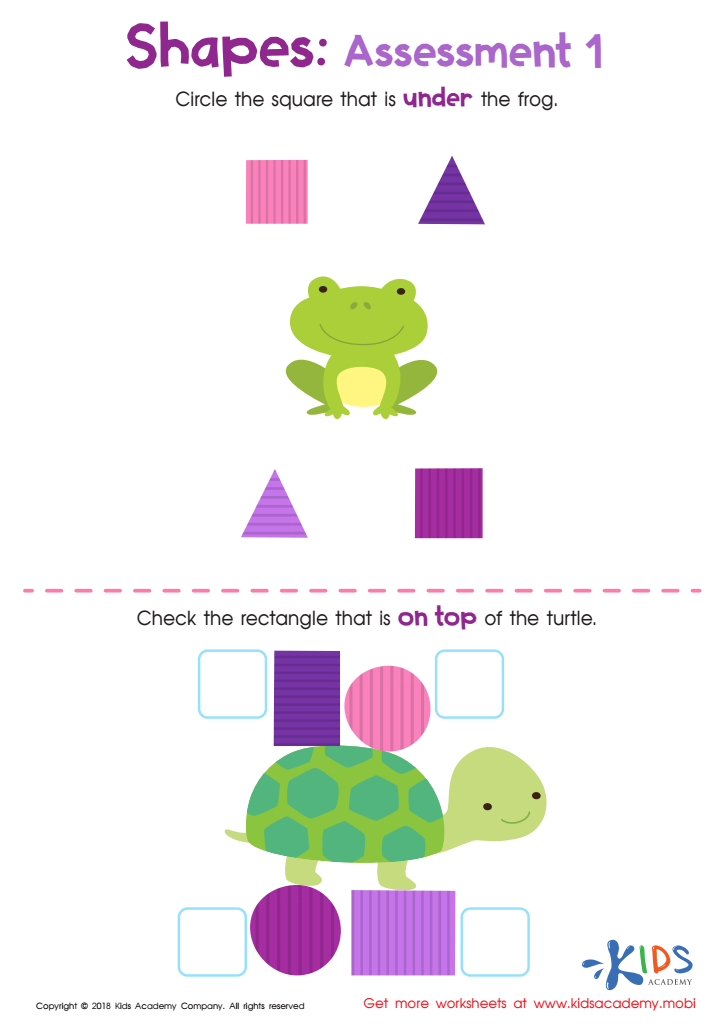
Geometry – Assessment 1 Worksheet
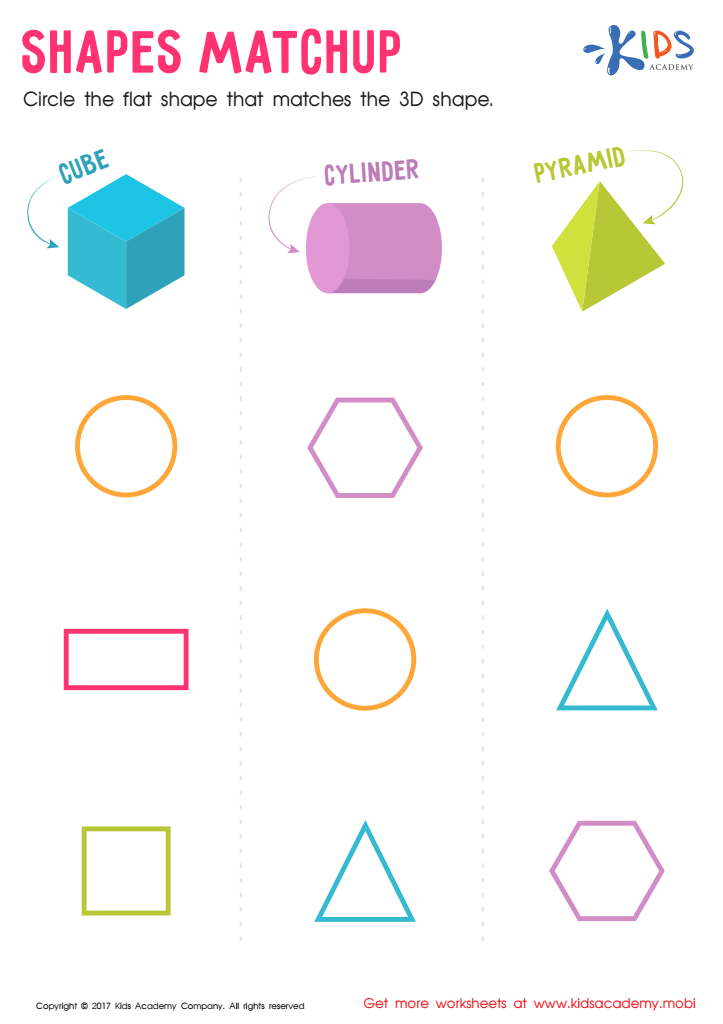
Shapes Matchup Worksheet








Parents and teachers should prioritize basic geometry knowledge for children aged 6-9 because it forms the foundation of numerous cognitive and practical skills. At this developmental stage, children are highly receptive to new concepts, and introducing geometry stimulates critical thinking and problem-solving abilities. Spatial awareness, an essential skill developed through geometry, helps children understand and organize the space around them, which is crucial for tasks such as reading, writing, and navigating their environment.
Moreover, early geometry education enhances mathematical reasoning by introducing concepts of shape, size, symmetry, and patterns. These foundational principles are not only relevant in advanced math but also in various real-life situations. For example, children learn to recognize shapes in everyday objects, contributing to better understanding and interaction with their surroundings.
From an academic standpoint, mastering basic geometry early on prepares children for more complex math and science subjects. It fosters a positive relationship with math, reducing anxiety and building confidence. Additionally, hands-on activities involving shapes and structures can be highly engaging, making learning enjoyable and reinforcing concepts through play.
Overall, equipping children with basic geometry skills during these formative years paves the way for academic success and practical problem-solving in daily life. It's an investment that reaps lifelong benefits.








