Identifying shapes Geometry Worksheets for Ages 6-9
3 filtered results
-
From - To
Unlock your child's potential with our "Identifying Shapes Geometry Worksheets for Ages 6-9". Designed to make learning engaging and fun, these worksheets help young learners recognize, differentiate, and master various geometric shapes. Perfect for kids in early elementary grades, each exercise focuses on enhancing their spatial awareness, critical thinking, and fine motor skills. Our easy-to-follow activities guide children through identifying circles, squares, triangles, and more, ensuring a strong foundation in geometry. Make math an enjoyable adventure and watch your child thrive with our expertly crafted educational resources. Suitable for home or classroom use!
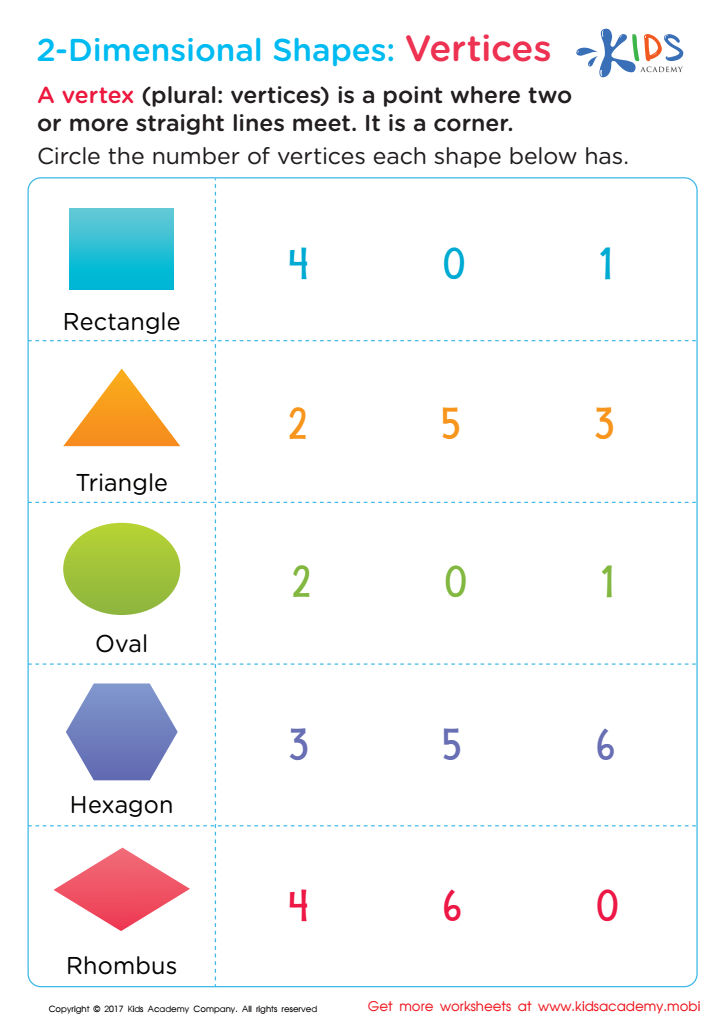
Two–Dimensional Shapes: Vertices Printable











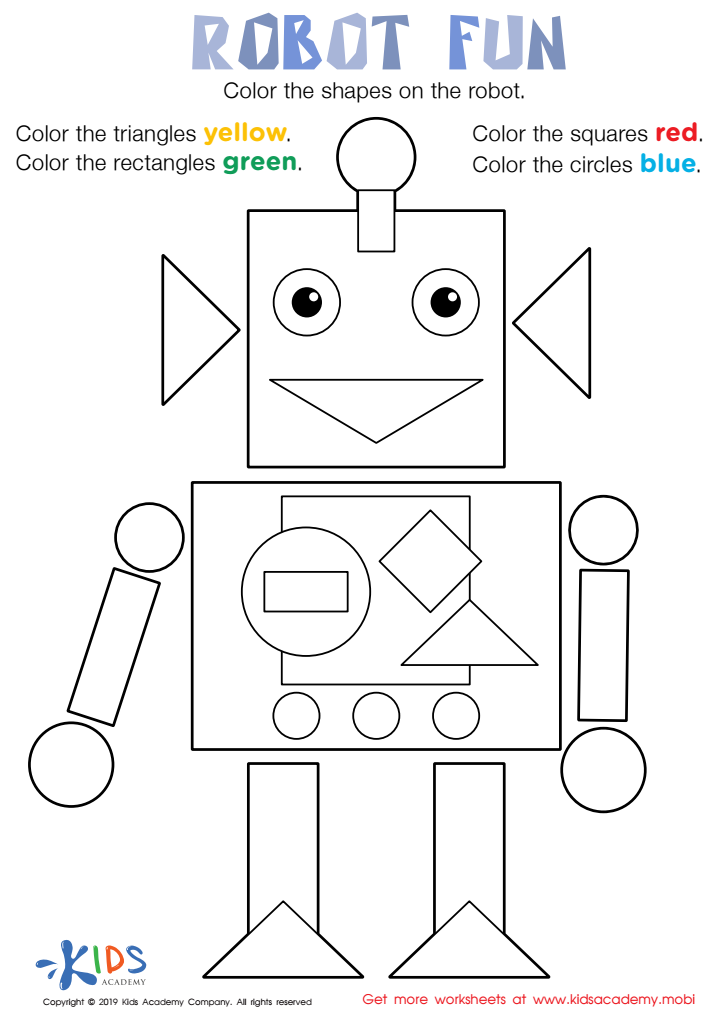
Robot Fun Worksheet
 Assign to My Students
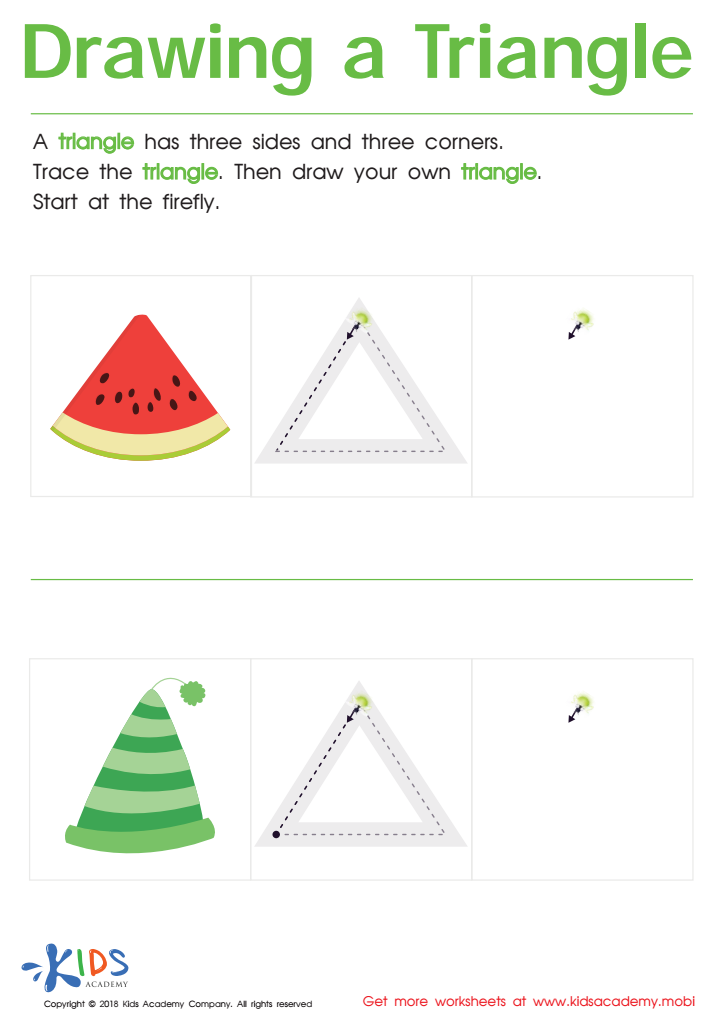
Drawing a Triangle Worksheet








Identifying shapes and understanding geometry for children aged 6-9 is crucial for several reasons. At this developmental stage, kids are learning to make sense of the world around them. Recognizing and working with different shapes helps develop their spatial awareness, a fundamental skill that underpins various cognitive and practical tasks. This awareness aids in everyday activities such as packing a backpack, organizing a desk, or even sports and play, which involve spatial understanding and coordination.
Moreover, geometry serves as a foundation for future math success. Early exposure to shapes and their properties enhances a child’s ability to learn more complex mathematical concepts as they progress academically. When children identify geometric shapes, they begin to comprehend symmetry, patterns, and structure, which are essential for higher-level math and critical thinking skills.
Shape recognition also ties into literacy. Describing geometric attributes helps expand vocabulary and improve language skills. When children explain why a shape is a triangle or a rectangle, they use descriptive language and reasoning.
Finally, engaging with geometry can spark creativity and enjoyment. Through activities like drawing, block building, and puzzles, children can explore geometric concepts in fun, hands-on ways, fostering a positive attitude towards learning.
Therefore, parents and teachers should prioritize geometry as it equips children with essential cognitive tools, supports academic progress, and enriches their problem-solving and creative abilities.








