Spatial understanding Geometry Worksheets for Ages 6-9
3 filtered results
-
From - To
Unlock young minds with our "Spatial Understanding Geometry Worksheets for Ages 6-9." These engaging activities are designed to build a solid foundation in essential geometry concepts, enhancing spatial awareness through fun and creative exercises. Perfect for young learners, our worksheets make geometry accessible and enjoyable. They cover a wide range of topics such as shape recognition, pattern identification, symmetry, and basic transformations. Aligned with educational standards, they're ideal for both classroom and home use. Foster a love for math and boost critical thinking skills with our expertly crafted resources. Discover the joy of learning geometry today!
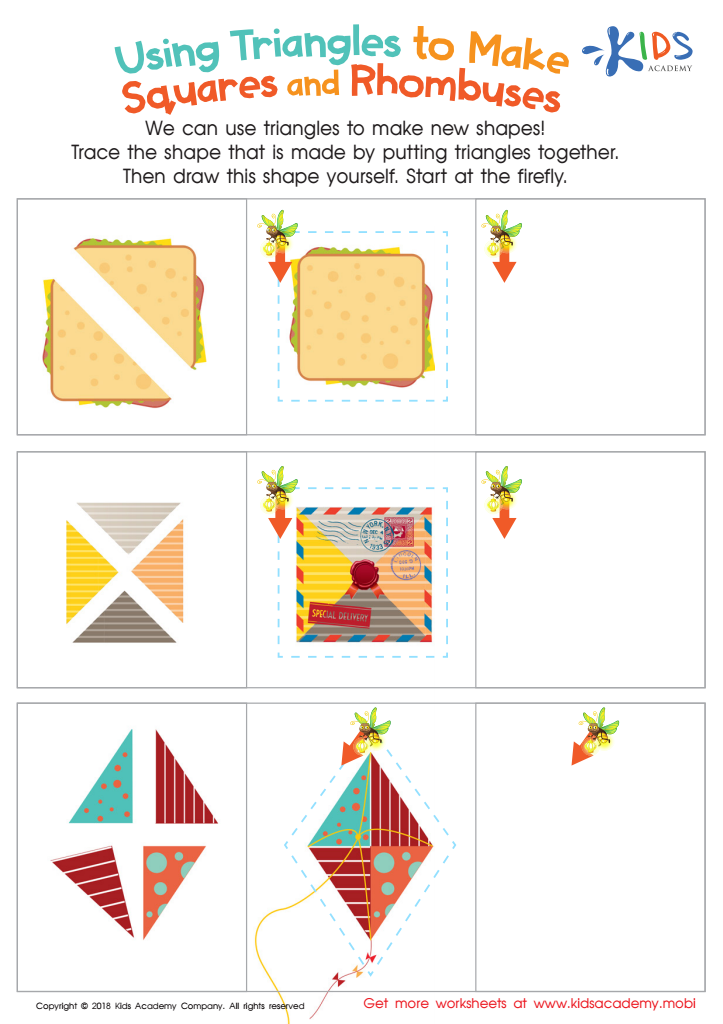
Using Triangles to Make Squares and Rhombuses Worksheet
 Assign to My Students











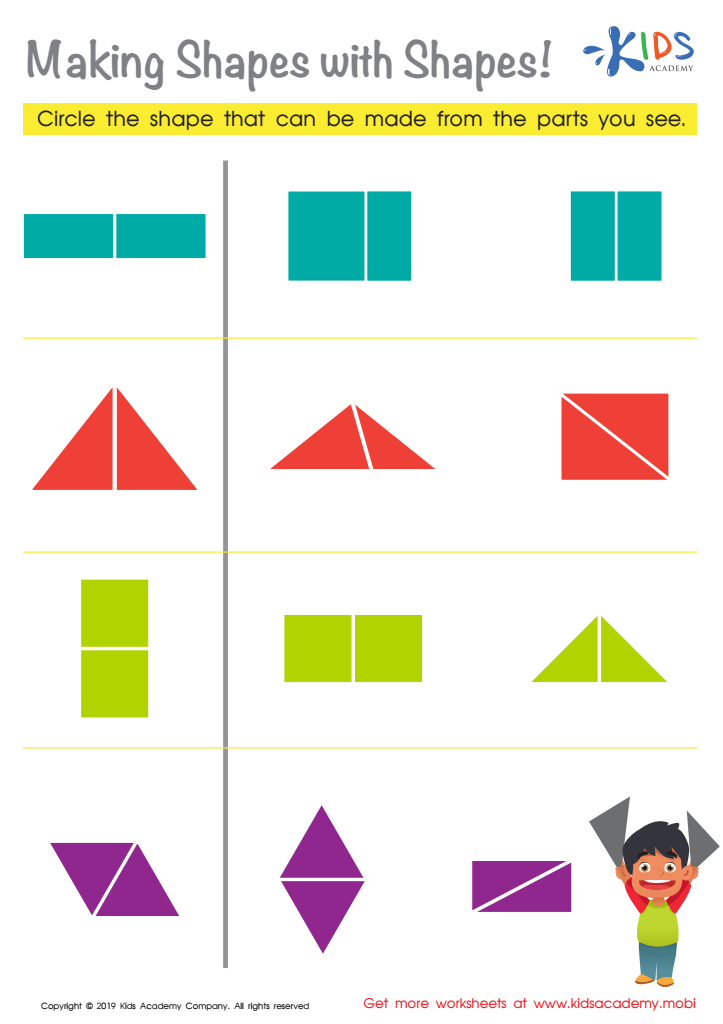
Making Shapes with Shapes Worksheet
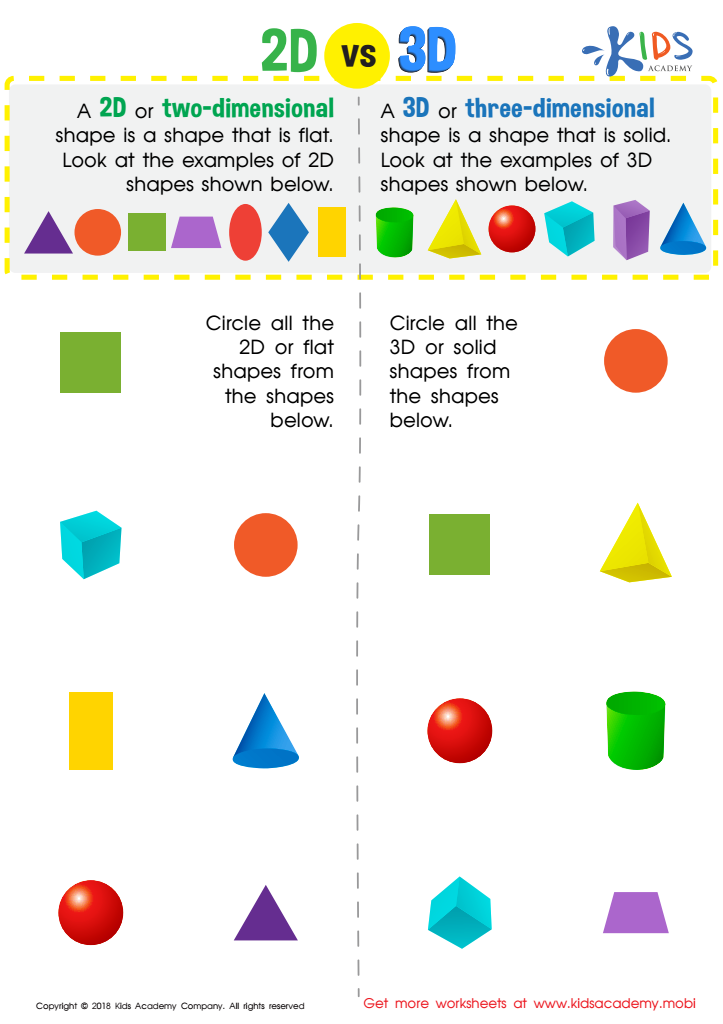
2D vs 3D Shapes Worksheet








Spatial understanding and geometry are critical skill sets for children ages 6-9, as they form foundational blocks for cognitive development and daily life functionality. Encouraging geometry helps children grasp concepts of shape, size, space, and position, which are not only relevant to mathematics but also to science, technology, and everyday problem-solving.
Young minds process information more effectively when they understand their physical environment. Geometry introduces them to essential concepts such as symmetry, congruence, and spatial reasoning. These concepts underpin more complex mathematical operations they will encounter in later years. Furthermore, spatial skills are linked to success in STEM fields (science, technology, engineering, mathematics), making early exposure vital for long-term academic and career prospects.
Practical, hands-on experiences with shapes and spaces also enhance fine motor skills. Activities like building blocks, drawing, and simple geometric puzzles improve hand-eye coordination and spatial awareness.
For social development, engaging with geometry tasks teaches children persistence and teamwork. Both individually and in groups, children practicing geometry learn patience, creativity, and the ability to think visually.
In sum, from boosting cognitive developmental processes and nurturing fine motor skills to supporting future STEM potential, significant benefits emerge when parents and teachers prioritize spatial understanding through early geometric education.








