Understanding Perimeter Geometry Worksheets for Ages 6-9
3 filtered results
-
From - To
Introduce young learners to the fundamental concept of perimeter with our engaging worksheets designed for ages 6-9. These printable activities not only help children grasp how to calculate the perimeter of various shapes but also enhance their problem-solving skills and spatial awareness. Each worksheet features clear instructions and fun exercises that build on previous knowledge, ensuring a solid understanding of geometry. Whether it's basic shapes or more complex figures, our resources provide effective practice tailored to young students' educational needs. Start your child's mathematics journey with our expertly crafted perimeter geometry worksheets today!
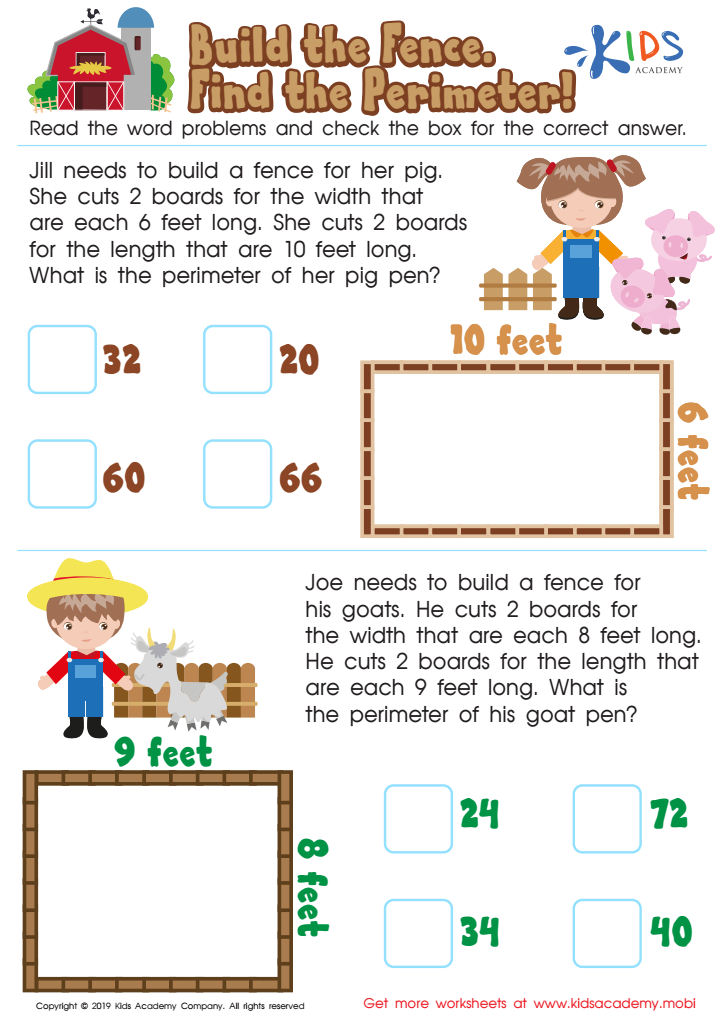
Build the Fence, Find the Perimeter Worksheet
 Assign to My Students











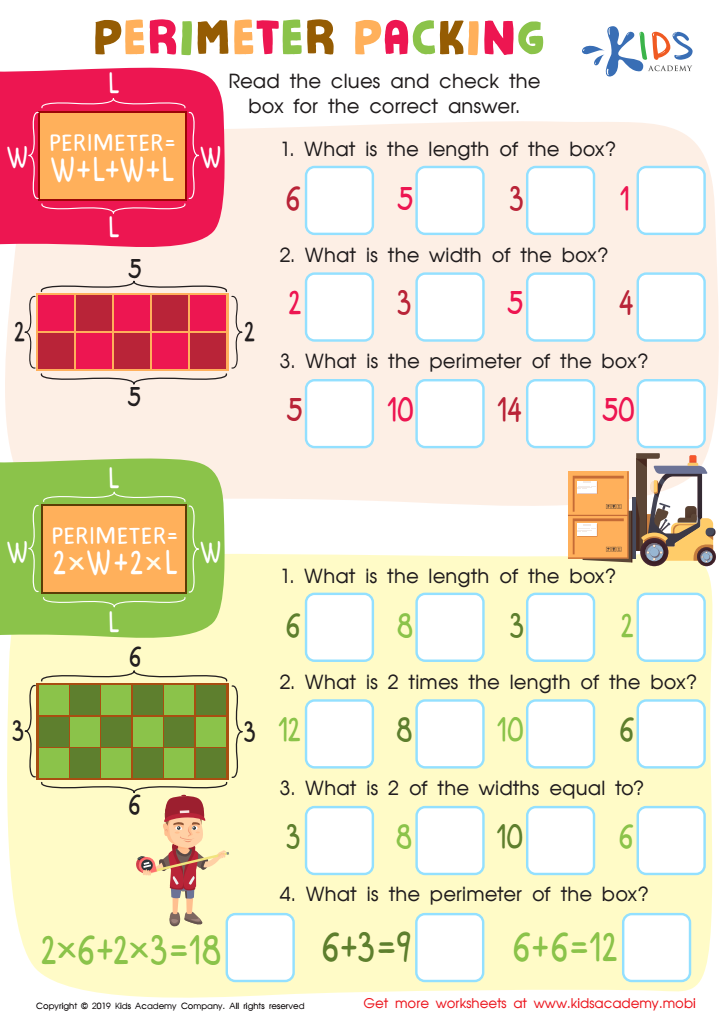
Perimeter Parking Worksheet
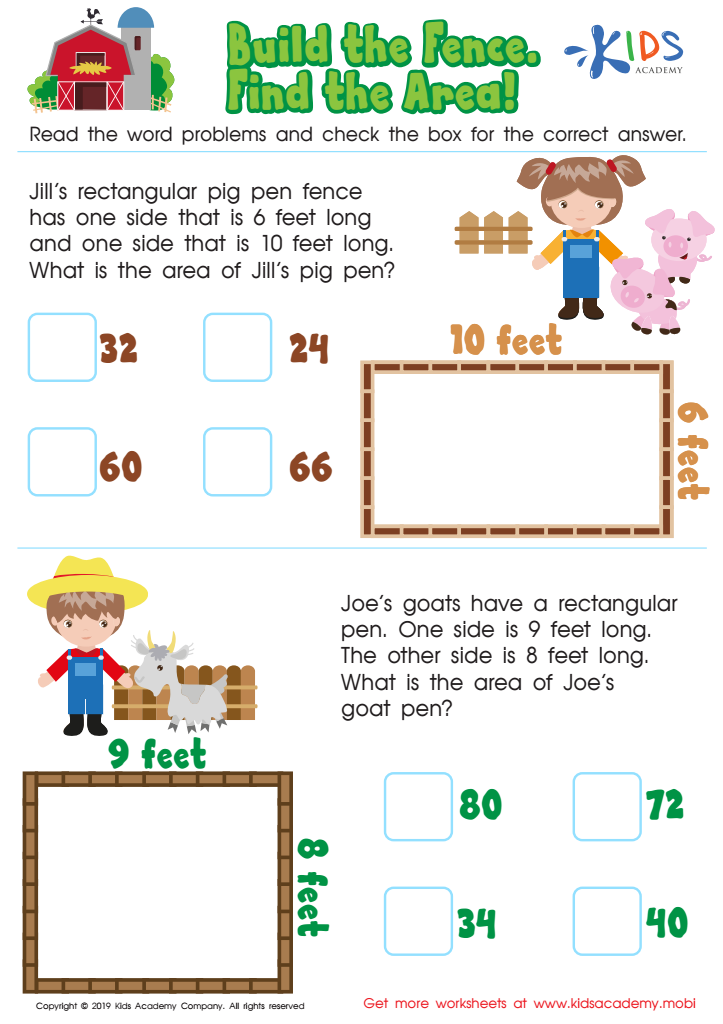
Build the Fence, Find the Area Worksheet








Understanding perimeter geometry for children aged 6-9 is remarkably valuable as it forms a fundamental building block for their overall mathematical development. Firstly, it introduces young minds to basic geometric concepts, nurturing their spatial awareness. Learning about the perimeter helps children recognize and measure the boundary of shapes, which can be integrated into their daily experiences, like determining the length of a garden fence or a playground.
Additionally, understanding the perimeter lays the groundwork for more advanced mathematical topics. Grasping these concepts early can lead to easier comprehension of area, volume, and eventually, more complex geometrical properties encountered in higher education. With these basics securely in their skillset, children can build their analytical and problem-solving skills, which are essential across all areas of learning and future applications.
For teachers and parents, engaging children in practical perimeter activities also fosters their hands-on learning and critical thinking. It encourages curiosity and the application of math in real-world contexts, making abstract concepts more tangible. By supporting a strong foundation in perimeter geometry, caregivers can help children develop a positive attitude toward math, enhancing their academic confidence and fostering a lifelong appreciation for the subject. It is an investment in their cognitive and intellectual growth that pays dividends throughout their educational journey.








