Data analysis Graphs Worksheets for Ages 6-9
3 filtered results
-
From - To
Enhance your child's math skills with our Data Analysis Graphs Worksheets, specially designed for ages 6-9. These fun and engaging activities help young learners understand and interpret different types of graphs, including bar graphs, line graphs, and pictographs. By working through real-world scenarios, kids will develop essential data analysis skills, promote critical thinking, and build a strong foundation in math. Perfect for classroom use or at-home practice, our worksheets are aligned with educational standards and foster a love for learning. Give your child the tools they need to succeed with Kids Academy’s high-quality resources.
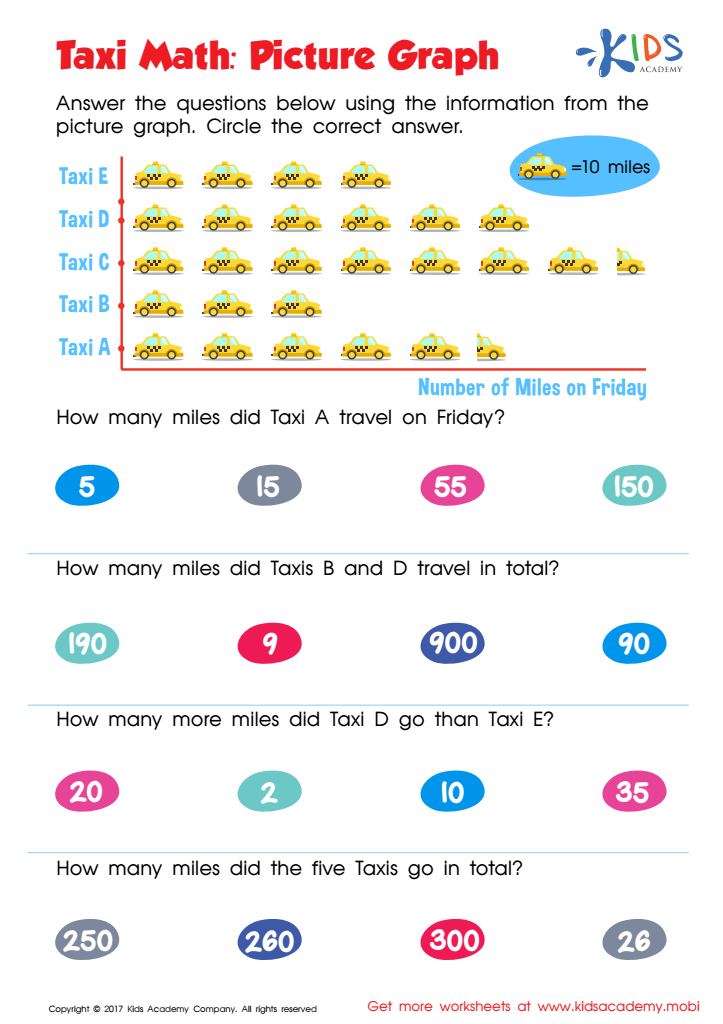
Taxi Math Worksheet
 Assign to My Students
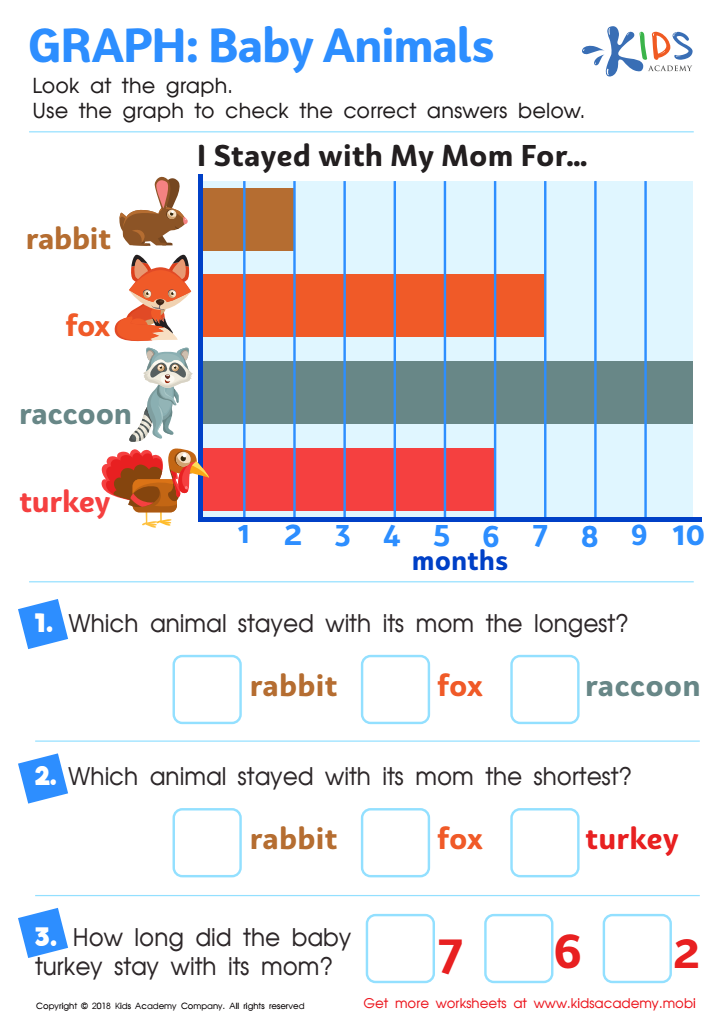
Graph: Baby Animals Worksheet

Swim Race Line Plot Worksheet








Parents and teachers should care about data analysis graphs for children aged 6-9 because these tools play a crucial role in developing foundational math and critical thinking skills. At this age, children are particularly receptive to visual learning. Graphs such as bar charts, line graphs, and pie charts simplify complex information, making it more accessible and engaging for young minds. By integrating these visual aids into the curriculum, children begin to understand key concepts like comparison, pattern recognition, and trend analysis early on.
Understanding data and graphs primes children for future academic success. Proficiency in interpreting visual data is increasingly important in our data-driven world, especially as students progress through higher grades and eventually into the workforce. A solid grasp of basic data analysis nurtures logical reasoning and decision-making skills. For instance, kids might use a simple bar graph to compare their classmates' favorite fruits, understanding not just the math behind numbers, but also preferences and simple statistical concepts.
Caring about data analysis at this stage sets a foundation for STEM (Science, Technology, Engineering, and Mathematics) education. Moreover, it encourages a sense of curiosity and inquiry, equips students to question information critically, and supports their overall cognitive development. Investing in these skills now cultivates confident, competent learners equipped for future challenges.








