Data interpretation Graphs Worksheets for Ages 6-9
3 filtered results
-
From - To
Enhance your child’s data interpretation skills with our fun and educational Graphs Worksheets for Ages 6-9. Our printable worksheets at Kids Academy guide young learners through sorting, analyzing, and making sense of various types of data using colorful and engaging graphs. These activities are designed to develop critical thinking and analytical skills in a motivating and enjoyable way. Whether they are comparing quantities in bar graphs, interpreting patterns in line graphs, or understanding pie charts, your child will build a strong foundation for future math success. Perfect for both classroom and home use, these worksheets make learning accessible and enjoyable.
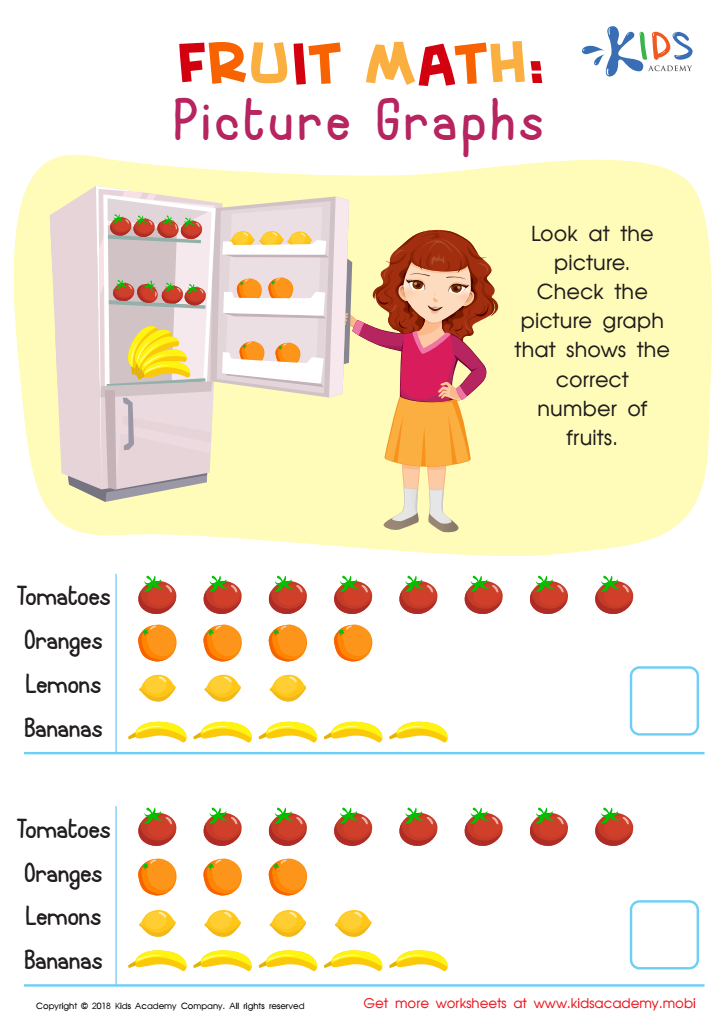
Fruit Math: Picture Graphs Worksheet
 Assign to My Students

Aircraft Carrier Picture Graphs Worksheet
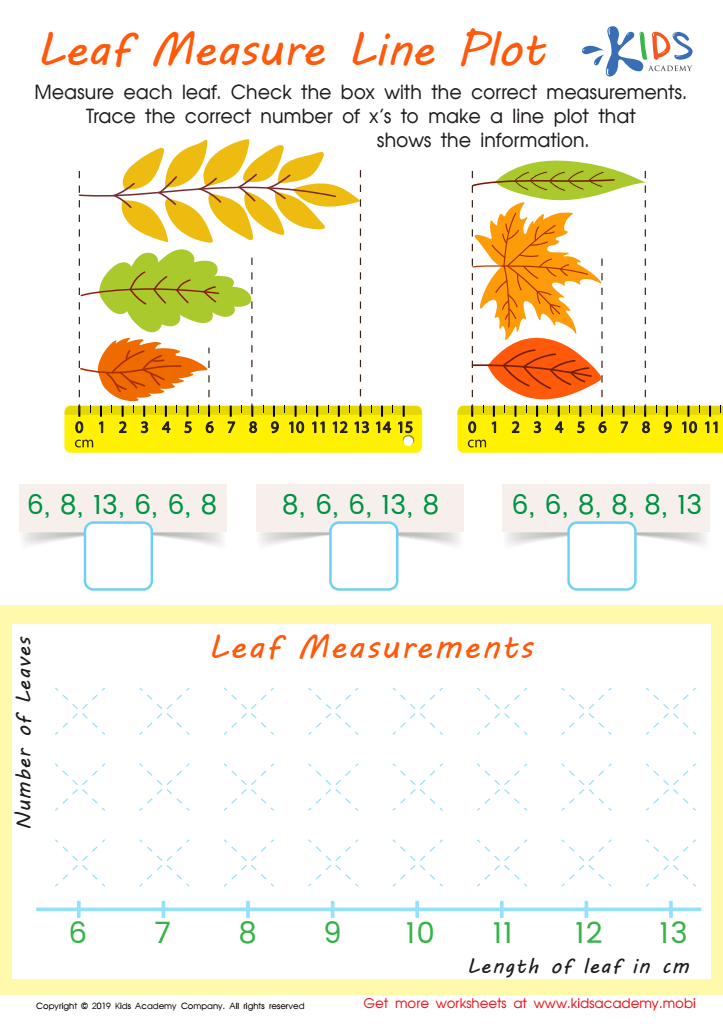
Leaf Measure Line Plot Worksheet





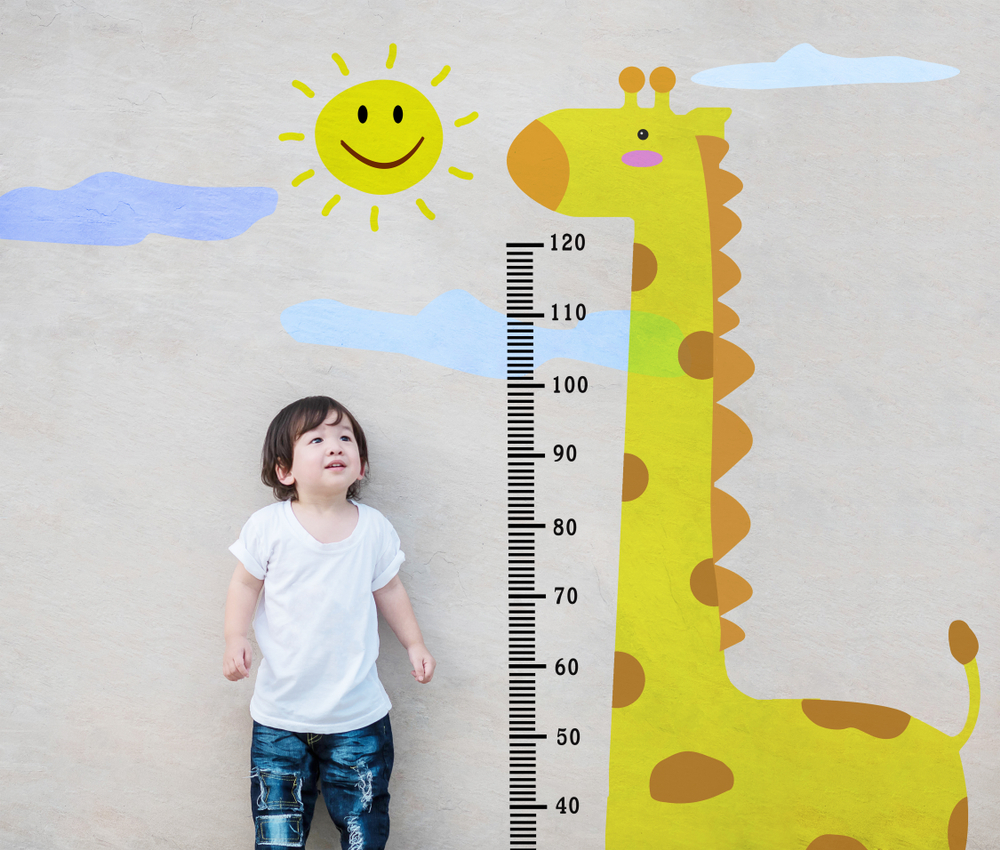


Data interpretation and graph reading are crucial skills for children aged 6-9 as they form the foundation for critical thinking and analytical reasoning. At this developmental stage, kids are like sponges and can absorb complex concepts when presented in a simple, engaging manner. Graphs and data interpretation make abstract numbers and statistics concrete, helping children visualize relationships and trends easily.
For teachers, incorporating graphs into lessons can make subjects like math and science more accessible and less intimidating. Graphs can turn raw data into stories, making learning more interactive and fun, thus fostering a love for these subjects early on. Children also learn to decipher information and draw conclusions, skills that are vital across all areas of education and beyond.
For parents, encouraging children to understand graphs aids in their overall cognitive development. It cultivates critical life skills such as problem-solving, decision-making, and logical thinking. Being comfortable with data interpretation prepares children for future jobs and everyday tasks that involve data, from understanding weather reports to analyzing polls and graphs in news articles.
Moreover, as our world becomes increasingly data-driven, proficiency in interpreting data equips children to navigate this landscape more effectively. Building these skills early sets a robust foundation for future academic and real-world success.








