Addition Practice Math Worksheets for Ages 6-9 - Page 6
125 filtered results
-
From - To
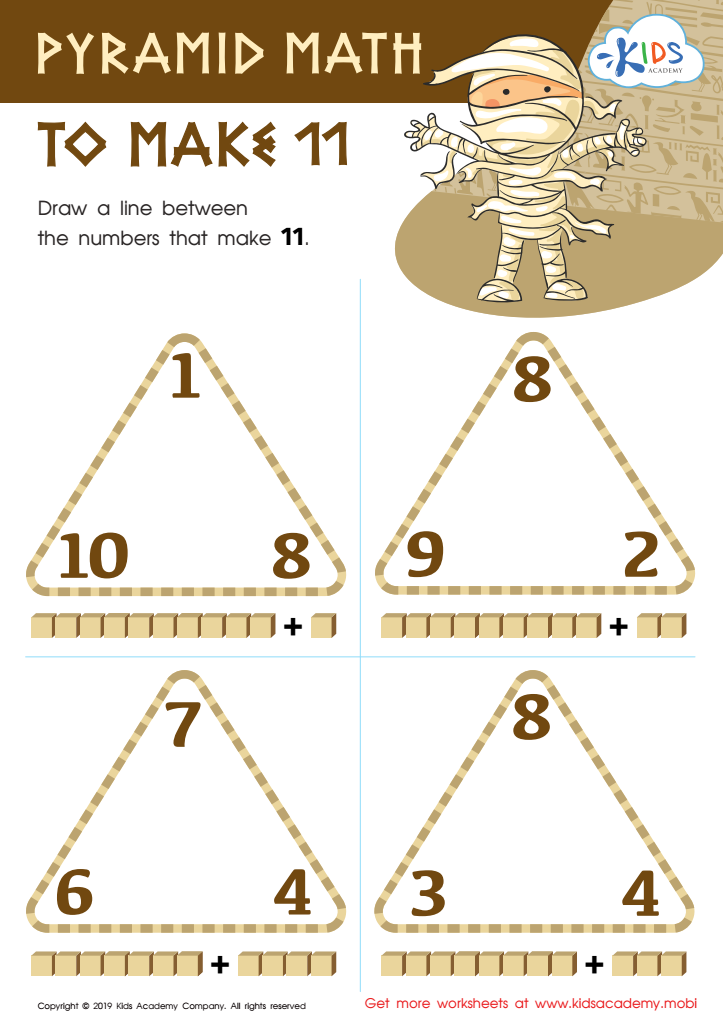
Pyramid Math to Make 11 Worksheet
 Assign to My Students
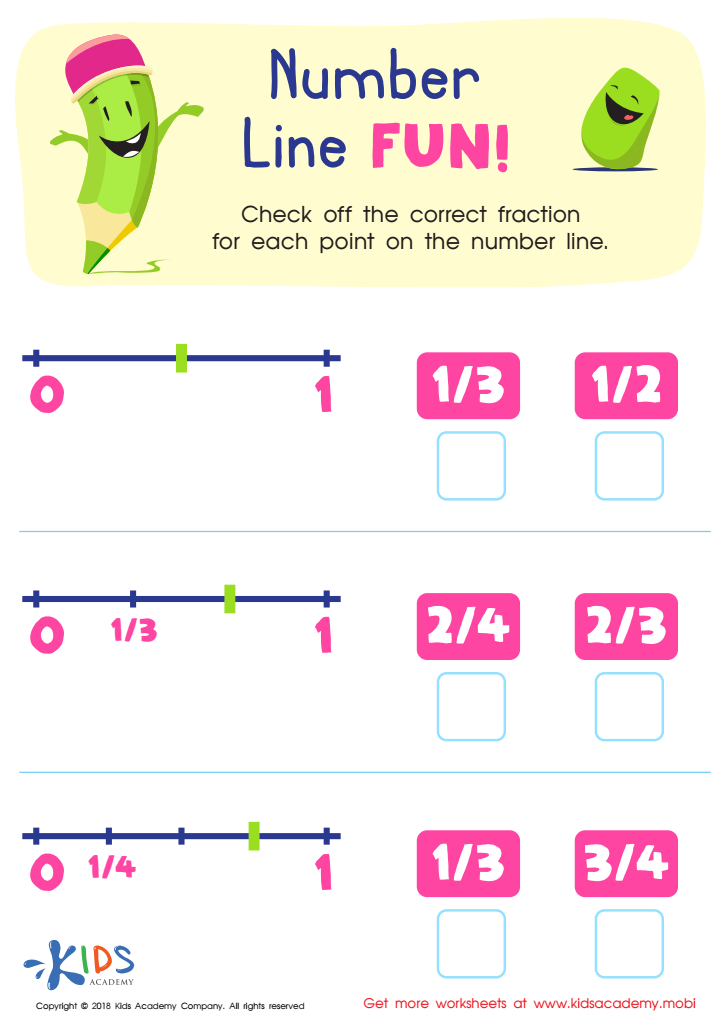
Number Line Fun Worksheet
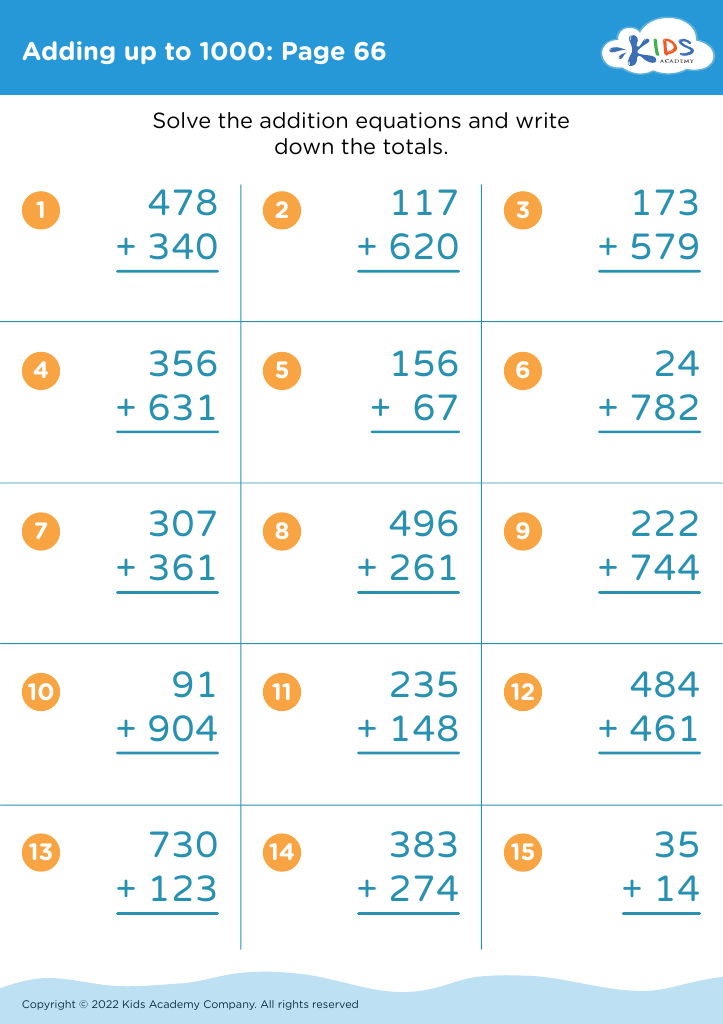
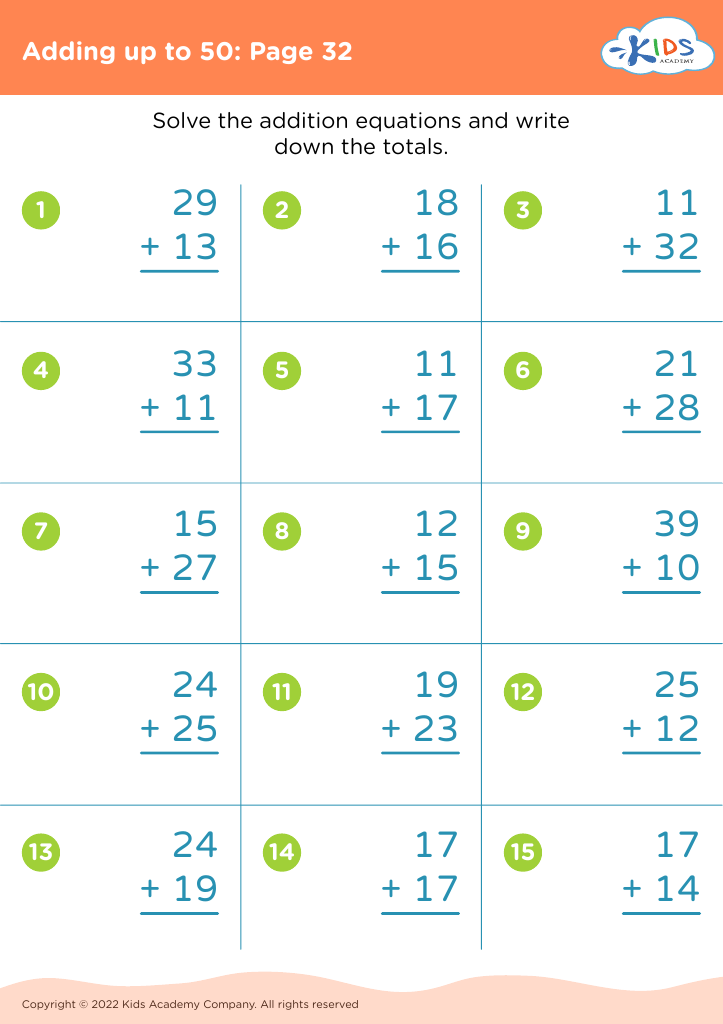








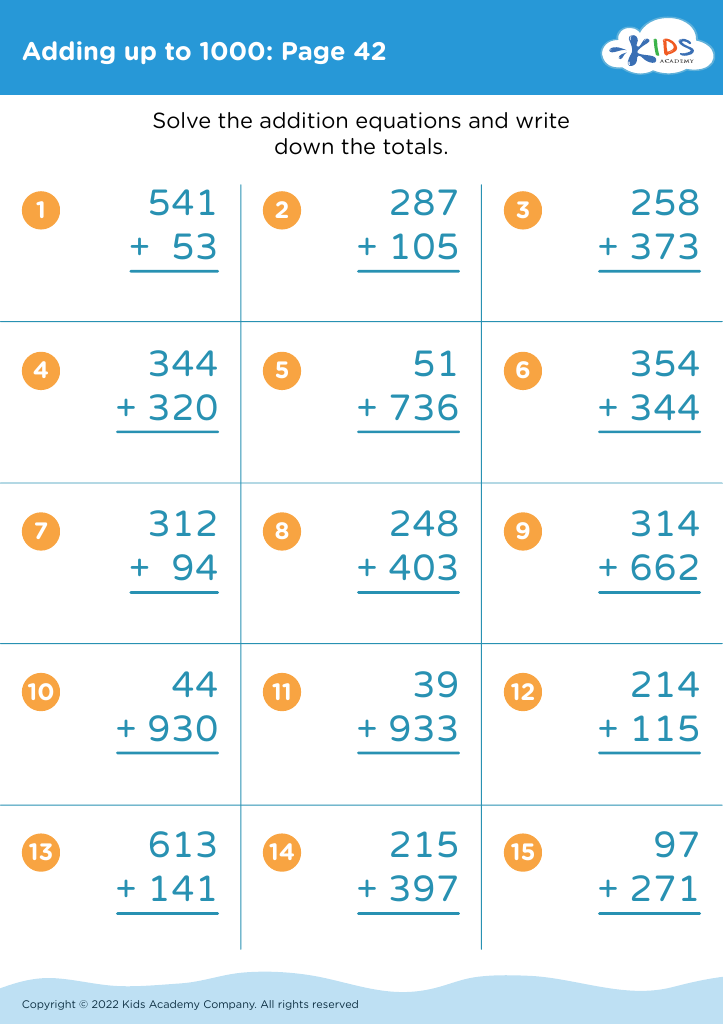
Addition practice for children aged 6 to 9 is crucial for several reasons. First, this foundational skill builds the groundwork for more complex mathematical concepts such as subtraction, multiplication, and division. Mastery of addition enhances a child's confidence, helping to create a positive attitude towards math, which is vital for their ongoing learning.
Moreover, in today’s digital world, where mathematical proficiency is often linked to cognitive development, children who solidify basic addition skills are better equipped for higher-level problem-solving and analytical thinking. Engaging in consistent addition practice also promotes mental agility, helping children to easily navigate everyday situations that require quick calculations, such as budgeting their allowance or estimating time.
Additionally, addition practice aids in the development of perseverance and critical thinking skills, as children learn to work through problems and understand the importance of accuracy. With parental and teacher involvement, children can receive encouragement and constructive feedback, fostering a supportive environment for growth.
In essence, caring about addition practice means investing in a child's future success—not just in math, but in various facets of life, giving them tools to think logically and solve problems effectively.








