Comparative skills Math Worksheets for Ages 6-9
3 filtered results
-
From - To
Welcome to our "Comparative Skills Math Worksheets" designed specifically for children aged 6-9! These engaging worksheets help young learners develop essential comparative skills through fun activities that involve comparing sizes, quantities, and numbers. With colorful illustrations and relatable contexts, kids will enjoy exploring concepts like greater than, less than, and equals. Our materials promote critical thinking and enhance math proficiency in a playful manner. Perfect for home or classroom use, these worksheets align with educational standards to ensure meaningful learning experiences. Start building your child's comparative skills today and watch them thrive in their math journey!
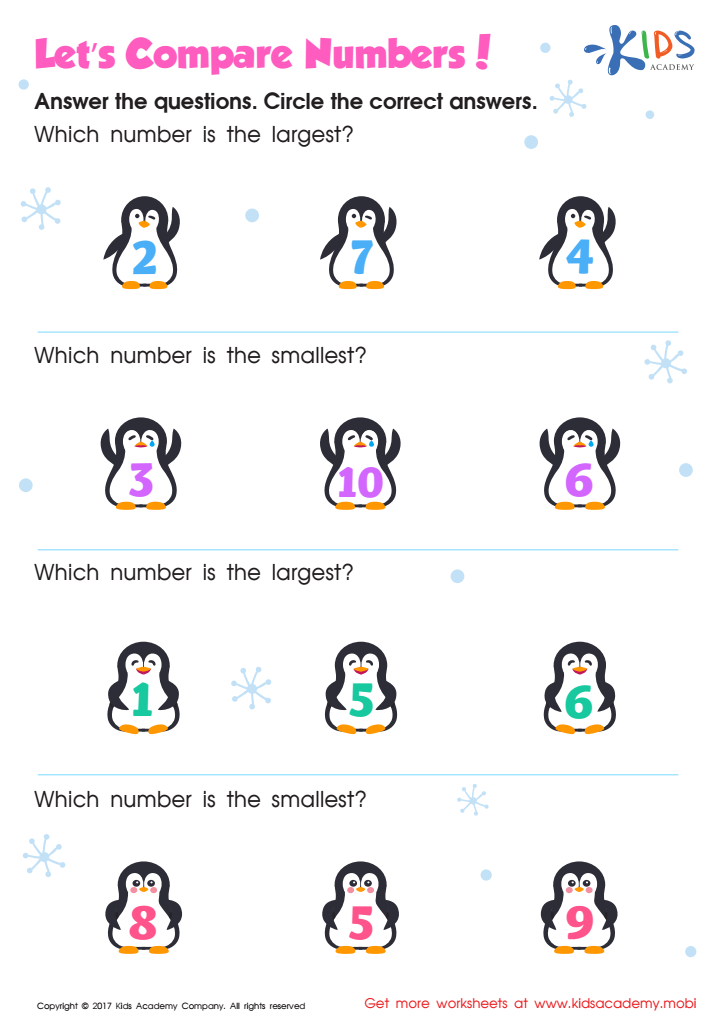
Comparing Numbers 1–10 Worksheet Kindergarten
 Assign to My Students
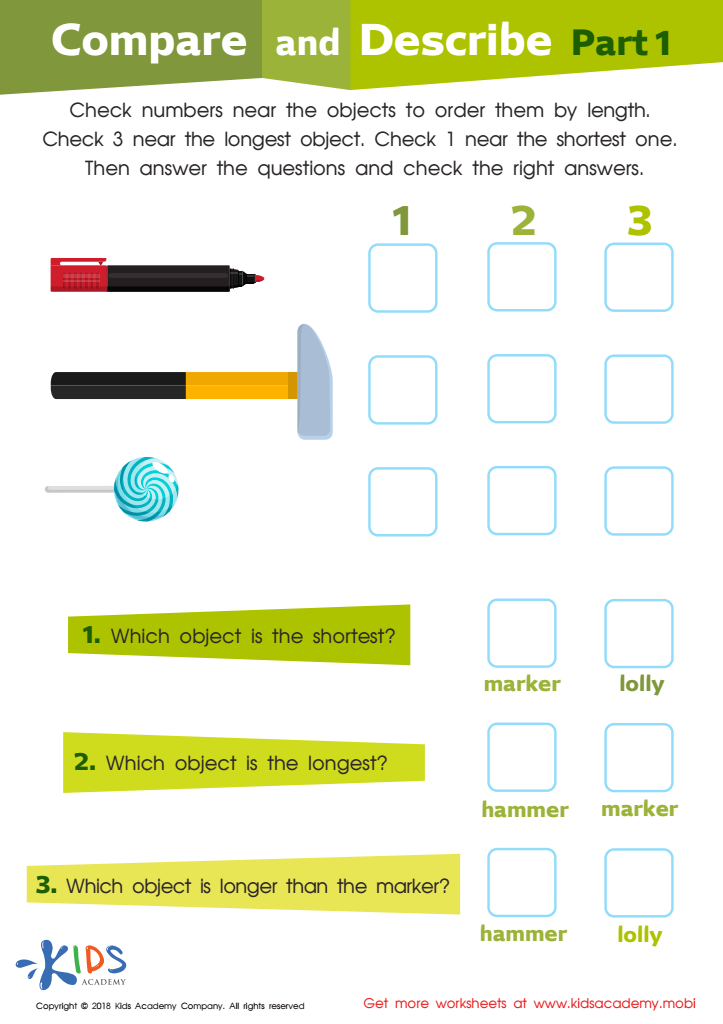
Compare and Describe: Part 1 Worksheet
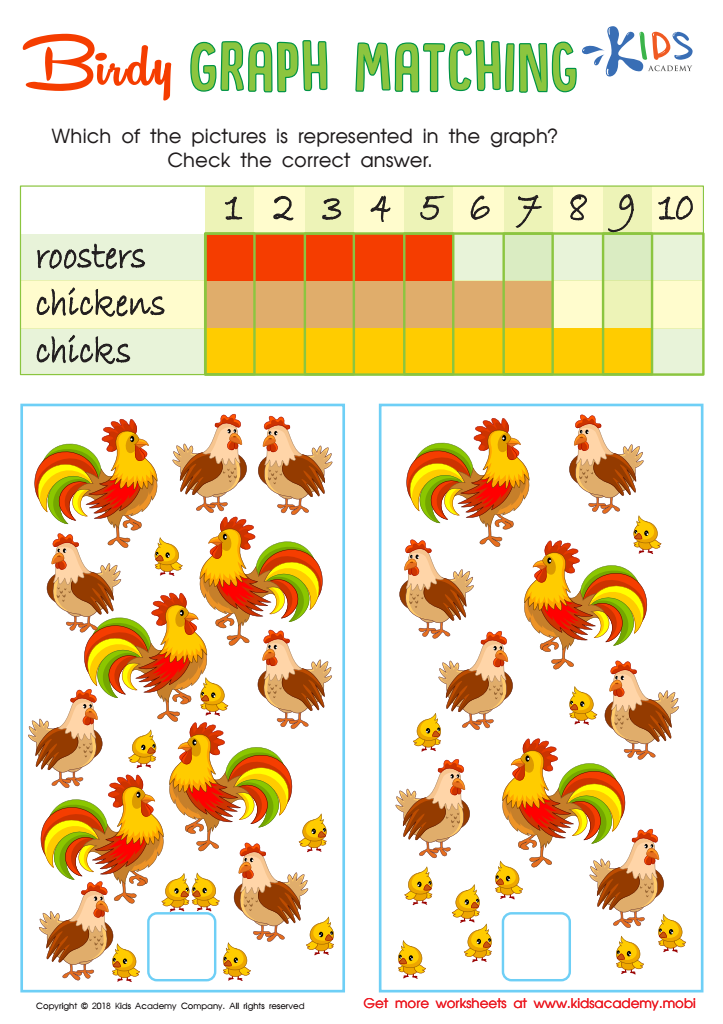
Birdy Graph Matching Worksheet








Comparative skills in math, especially for children ages 6 to 9, are crucial for building a strong mathematical foundation. At this age, students begin to develop critical thinking and problem-solving abilities. Learning how to compare numbers and quantities promotes not only number sense but also lays the groundwork for understanding more complex mathematical concepts in the future.
By fostering comparative skills, children learn to evaluate relationships between numbers, which is essential when tackling addition, subtraction, and even basic multiplication and division. This skill set enriches their ability to analyze data and make connections in real-world situations, enhancing their literacy in mathematics.
Additionally, comparative skills encourage confidence and independence in students. As they learn to make comparisons, they interpret outcomes and make decisions effectively, elements that extend beyond math into science, economics, and even social interactions.
Teachers and parents should recognize that cultivating these skills early on helps to spark an interest in mathematics. Engaging activities that promote comparative thinking can turn abstract numbers into relatable concepts, fostering a lifelong love for learning. By prioritizing comparative skills, educators and caregivers can prepare children for academic success and instill an appreciation for logical reasoning that benefits them throughout life.








