
Counting money Math Worksheets for Ages 6-9
3 filtered results
Difficulty Level
Grade
Age
-
From - To
Subject
Activity
Standards
Explore our engaging Counting Money Math Worksheets designed for children ages 6-9! These worksheets provide a fun and interactive way for young learners to develop essential money management skills. With a variety of tasks, including identifying coins, counting bills, and making change, our resources cater to different learning styles. Each worksheet features colorful illustrations and practical scenarios that make learning about money enjoyable. Parents and educators will find these worksheets invaluable for reinforcing math concepts at home or in the classroom. Help your child become confident in their money skills while navigating real-world situations with our thoughtfully crafted resources!
Favorites
With answer key
Interactive
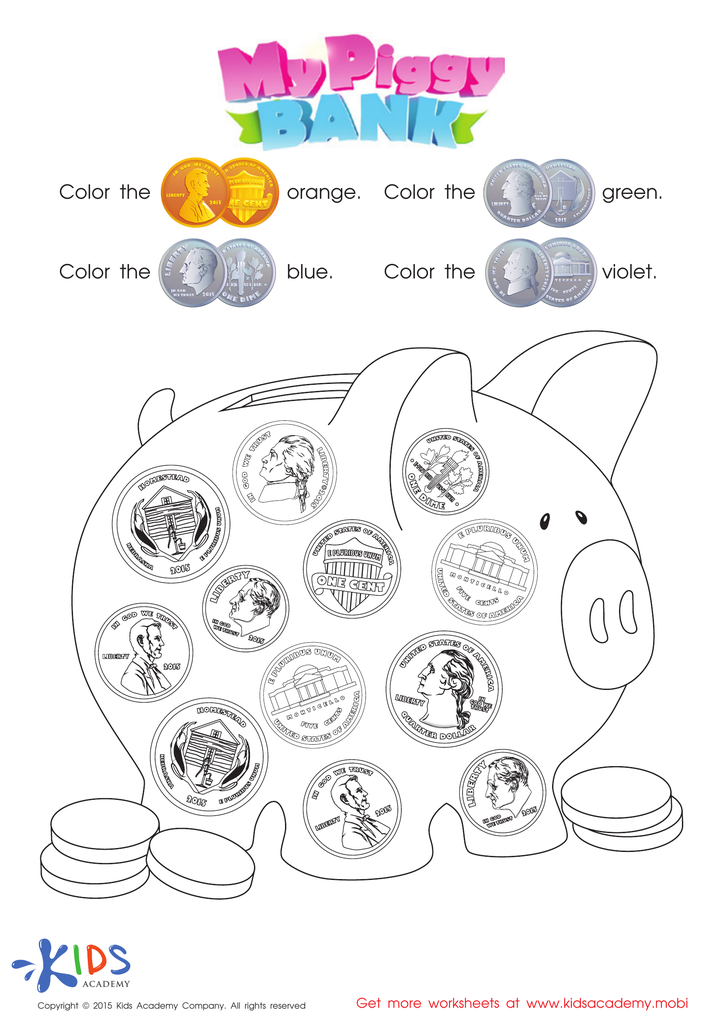
Recognizing Money Money Worksheet
Help the piggy bank by coloring its coins with Kids Academy's free money worksheets! Learn the different coins and their values with your kids. Printable worksheets are available to continue the lesson. Let's learn and have fun!
Recognizing Money Money Worksheet
Worksheet
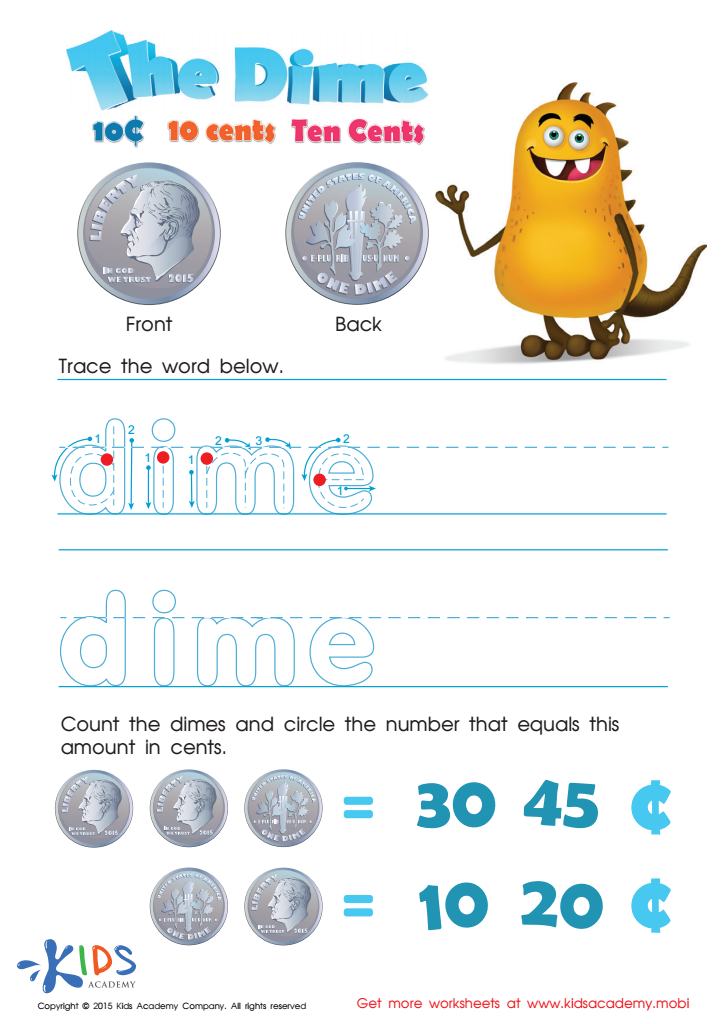
Ten Cents or the Dime Money Worksheet
Introduce your kids to coin games! Start with a dime: trace the word on both sides and count the dimes. Kids Academy has printable worksheets to help your kids learn how to count money.
 Assign to My Students
Ten Cents or the Dime Money Worksheet
Worksheet
Join Kids Academy for Free
Who is primarily going to use this learning content?





.jpg)

Counting money is a vital skill for children aged 6-9, making it crucial for parents and teachers to prioritize this aspect of math education. At this developmental stage, children are beginning to grasp basic numerical concepts and understanding currency can enhance their mathematical fluency. Learning to count money develops essential skills such as addition, subtraction, and problem-solving, creating a strong foundation for more advanced math later on.
Moreover, counting money helps children make real-world connections to math, increasing their motivation and engagement. It promotes financial literacy, preparing them for future responsibilities like budgeting, saving, and making informed spending choices. By practicing with coins and bills, children learn to recognize different denominations and the value of money, which fosters independence and confidence.
This practical skill not only enhances cognitive abilities but also cultivates social skills; children can practice transactions during play, role-playing scenarios that mimic real-life experiences. When parents and teachers emphasize counting money, they empower children with skills that will benefit them in everyday life, paving the way for future financial success and responsible citizenship. Ensuring that children are confident with money counting ultimately fosters a generation that is knowledgeable about finance and economics.








