Data analysis Math Worksheets for Ages 6-9
4 filtered results
-
From - To
Discover engaging Data Analysis Math Worksheets tailored for children aged 6-9! Our resources are designed to introduce young learners to the world of data interpretation and analysis in a fun and interactive way. Through colorful visuals and relatable themes, kids will explore vital skills such as organizing information, identifying patterns, and understanding graphs. Each worksheet encourages critical thinking and reinforces math concepts while promoting creativity. Perfect for classroom use or at-home learning, these worksheets motivate students to connect math to real-life situations. Equip your child with essential data skills for their future academic journey with our thoughtfully crafted worksheets!
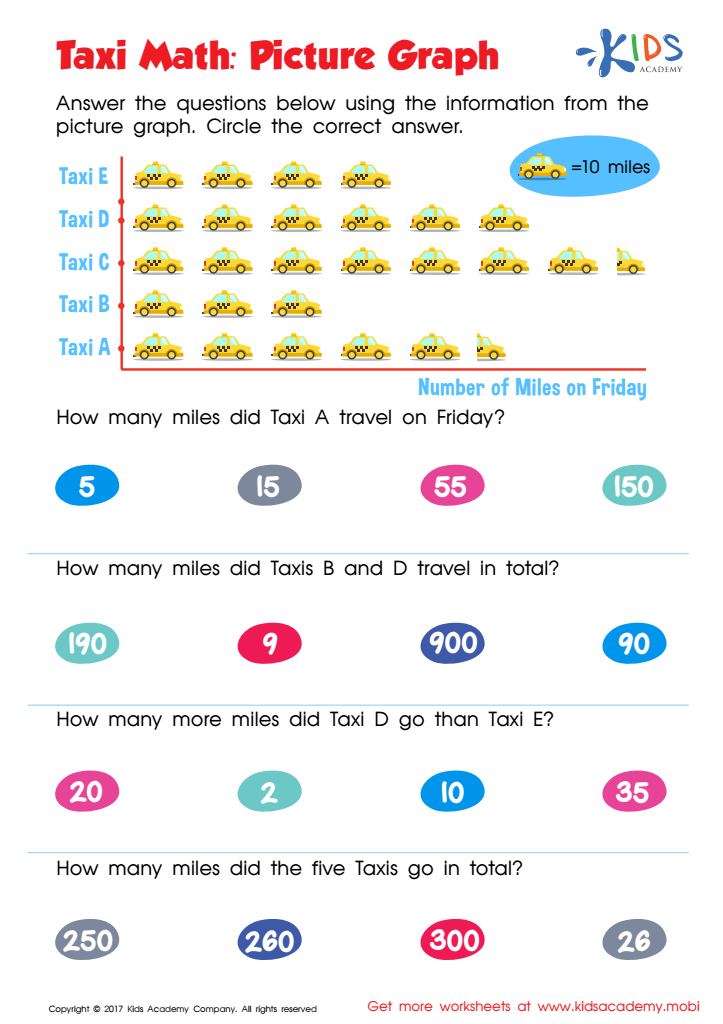
Taxi Math Worksheet
 Assign to My Students
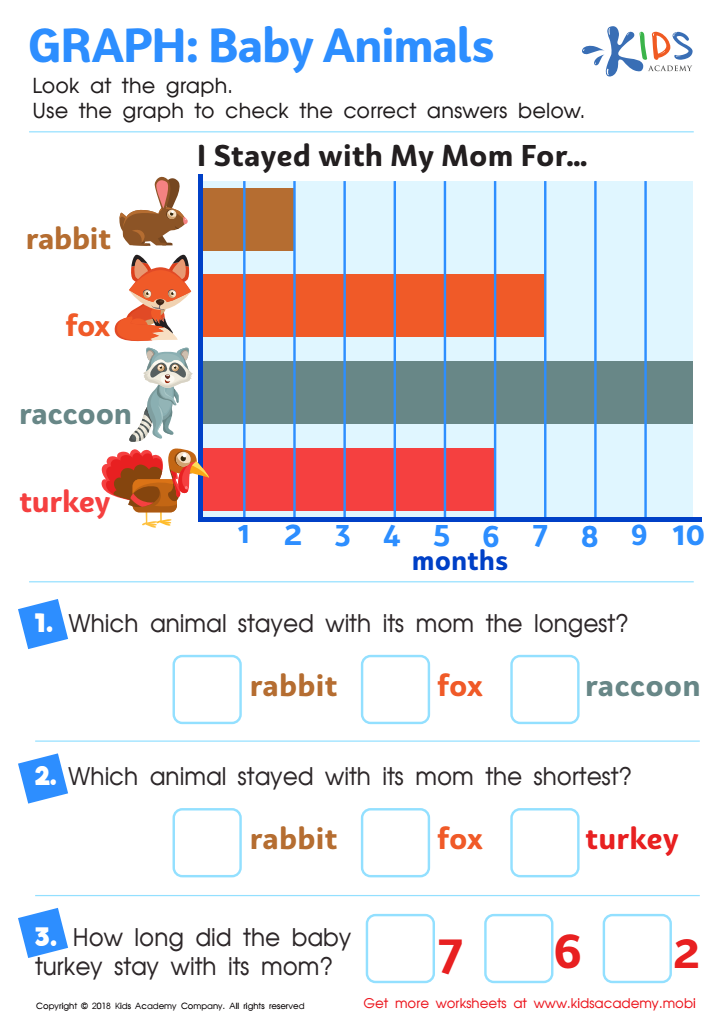
Graph: Baby Animals Worksheet
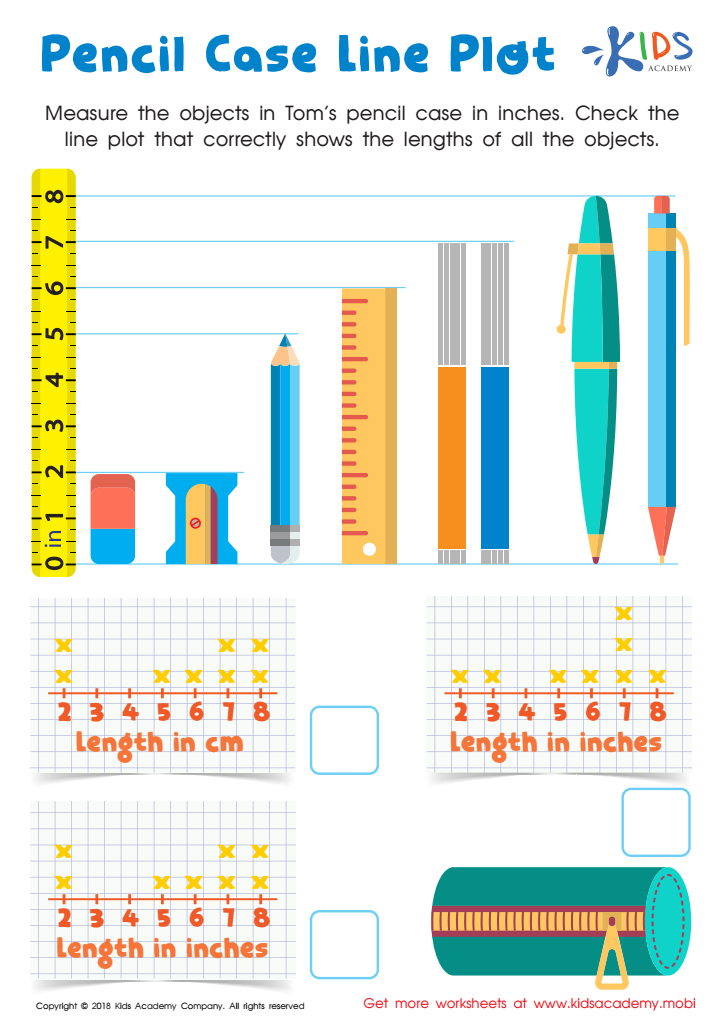
Pencil Case Line Plot Worksheet
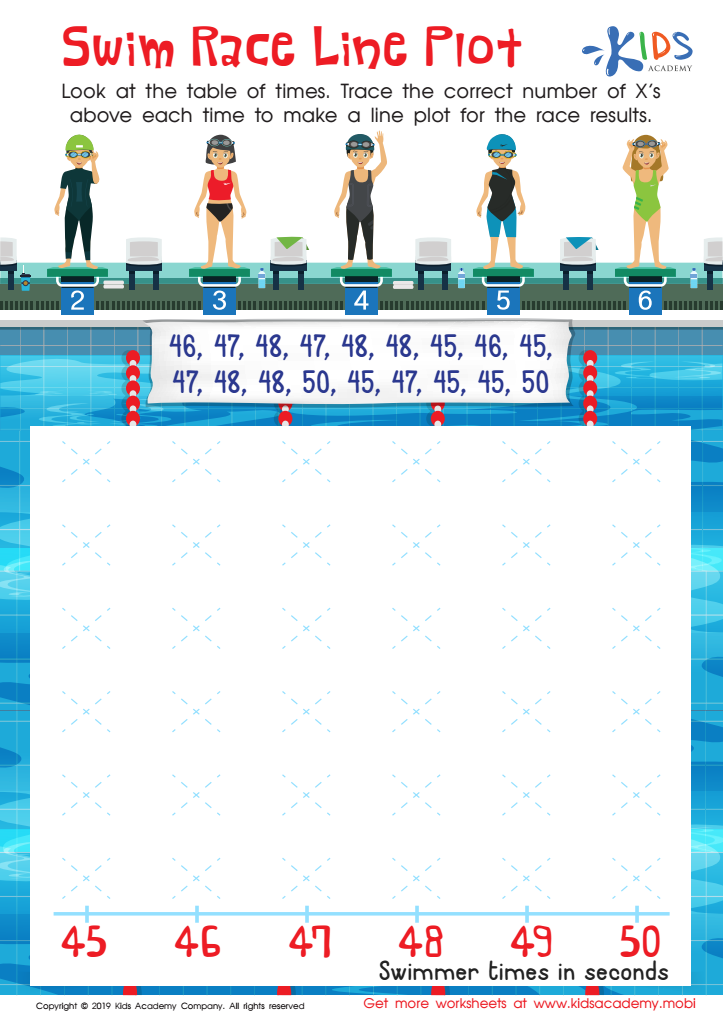
Swim Race Line Plot Worksheet








Data analysis math is essential for children aged 6-9 as it equips them with vital skills necessary for understanding their world. At this age, children begin to wonder about patterns, relationships, and measurements. Engaging with data cultivates critical thinking skills, enabling students to analyze information, make predictions, and draw conclusions. Teaching data analysis not only enhances numerical skills but also promotes logical reasoning, which is foundational for later subjects like science and economics.
Moreover, as the digital age progresses, data literacy becomes indispensable. By introducing children to basic data concepts early, parents and teachers ensure they are prepared for future challenges in the increasingly data-driven world. Engaging learners in activities like collecting data through surveys, interpreting graphs, and visualizing results makes math both enjoyable and relevant.
Additionally, data analysis fosters collaboration and communication. Children learn to discuss their findings, share insights, and appreciate diverse perspectives, building social interaction skills. When parents and teachers prioritize data analysis in early math education, they are contributing to a well-rounded foundation for informed, analytical, and capable adults. Ultimately, understanding data transforms young learners into inquisitive individuals who feel empowered to explore and interpret the world around them.








