Developing fine motor skills Math Worksheets for Ages 6-9
3 filtered results
-
From - To
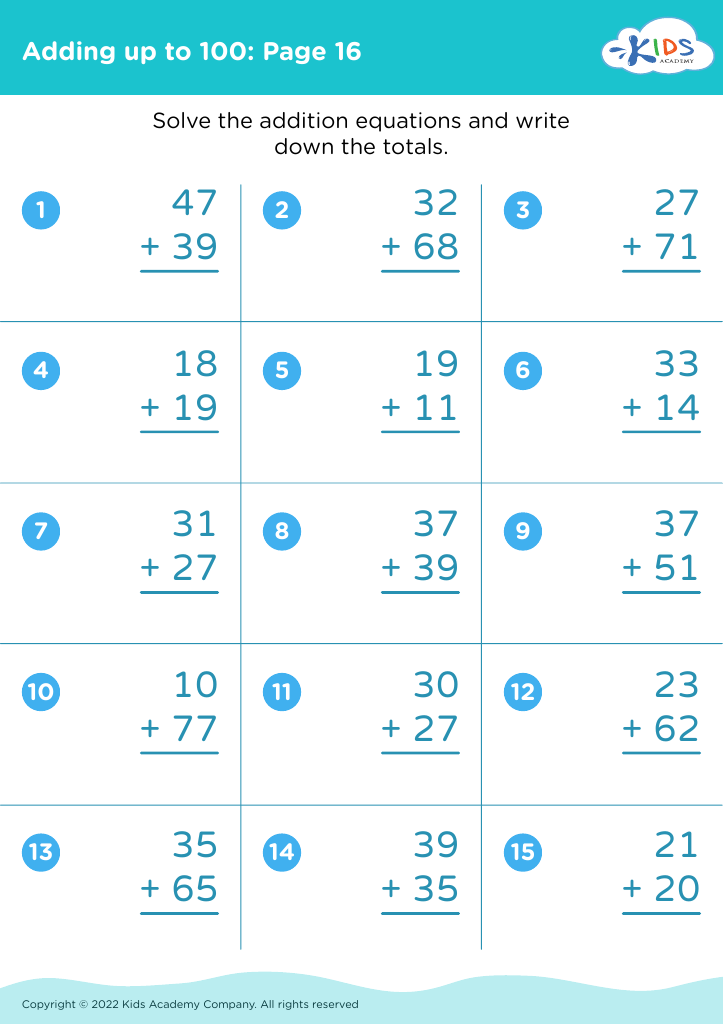
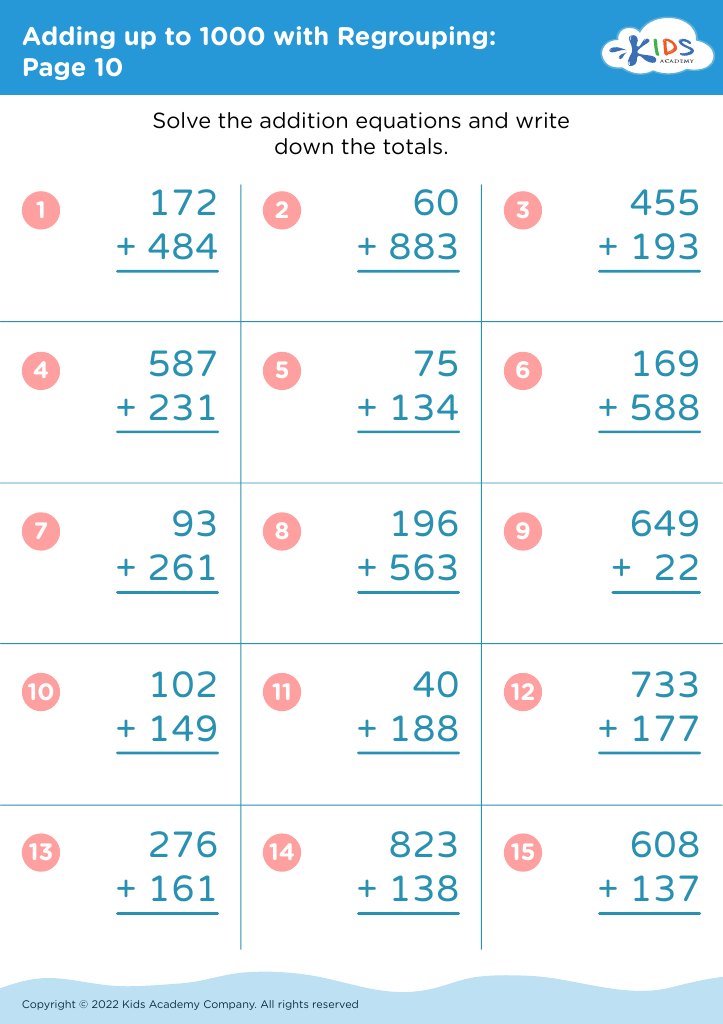
Enhance your child’s fine motor skills and math abilities with our expertly designed worksheets for ages 6-9. Kids Academy offers engaging activities that encourage precision and control through tasks like tracing, cutting, and counting. These worksheets not only make learning math fun but also bolster the essential motor skills needed for writing and daily life activities. Foster your child's growth and confidence with purposeful exercises crafted to develop both their mathematical understanding and fine motor dexterity. Perfect for educational support at home or in the classroom, our worksheets are a trusted resource for young learners.
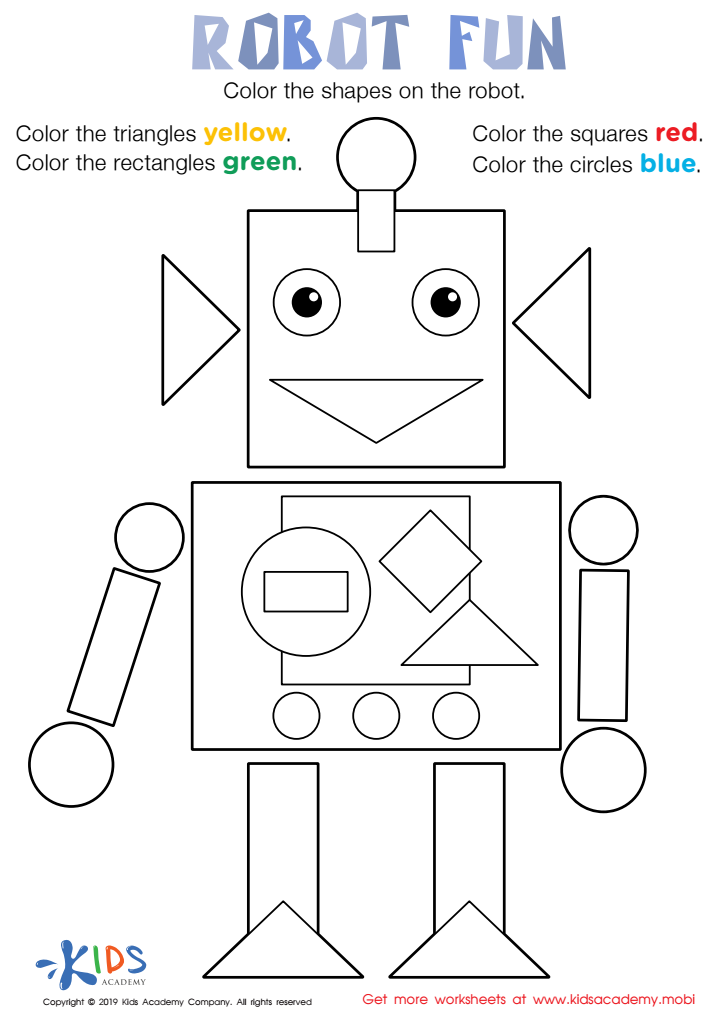
Robot Fun Worksheet
 Assign to My Students







Developing fine motor skills in children ages 6-9 is crucial because it lays a foundation for successful learning and daily activities. Fine motor skills involve the coordination of small muscles, particularly in the hands and fingers. This ability is essential for a range of activities, including writing, drawing, and manipulating small objects, all of which are fundamental for success in school and beyond.
Fine motor development directly affects a child's ability to perform tasks like holding a pencil correctly, cutting with scissors, or navigating computer keys, which are important both for academic tasks such as math exercises and everyday life skills. By focusing on these skills, parents and teachers can help children develop better hand-eye coordination and dexterity.
In the context of math, fine motor skills allow children to more easily write numbers, draw shapes, and use tools like rulers and protractors. Without well-developed fine motor abilities, children may struggle with math tasks, leading to frustration and decreased confidence.
Furthermore, when fine motor skills are nurtured, children can also improve their concentration and task management skills which benefit their overall cognitive development. Thus, investing time and resources in developing these skills will lead to children excelling not only in math but in all areas of their academic and personal lives.








