Enhances number recognition Math Worksheets for Ages 6-9
5 filtered results
-
From - To
Our "Enhances Number Recognition Math Worksheets for Ages 6-9" offer a fun and interactive way to strengthen your child's numerical skills. Tailored specifically for early learners, these worksheets feature vibrant illustrations and engaging activities that make learning enjoyable. Each worksheet focuses on key concepts like identifying numbers, counting, and number sequencing, ensuring children build a solid foundation in mathematics. Ideal for at-home learning or classroom use, our resources promote cognitive development while reinforcing recognition and comprehension. Get your child excited about numbers with our thoughtfully designed worksheets that foster confidence and enthusiasm for math! Download and start learning today!
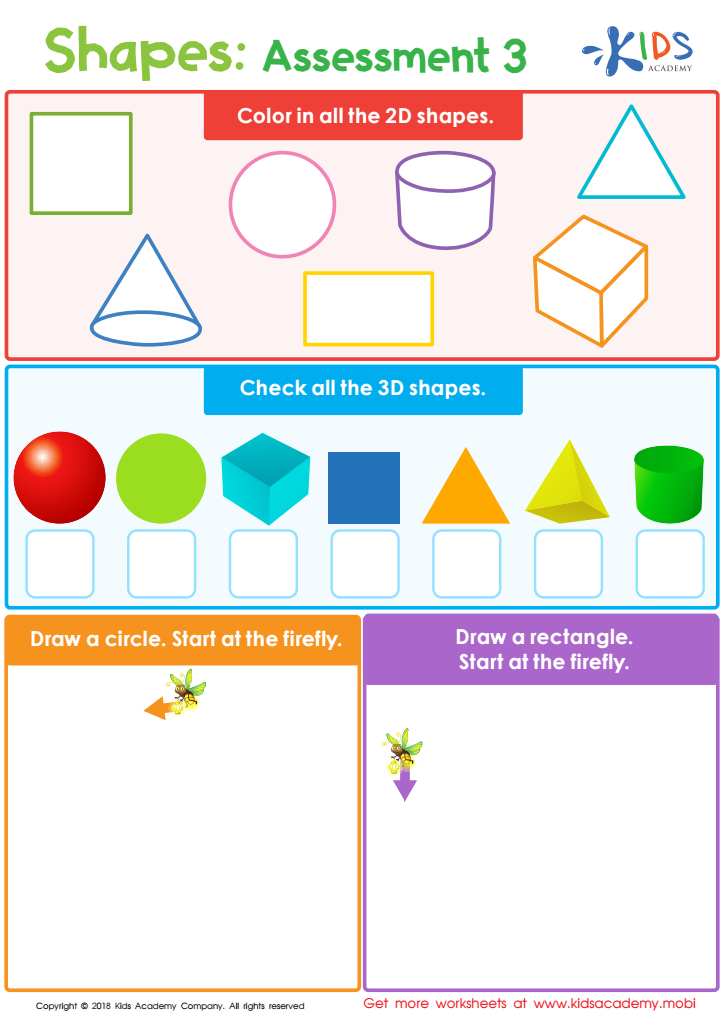
Shapes: Assessment 3 Worksheet
 Assign to My Students
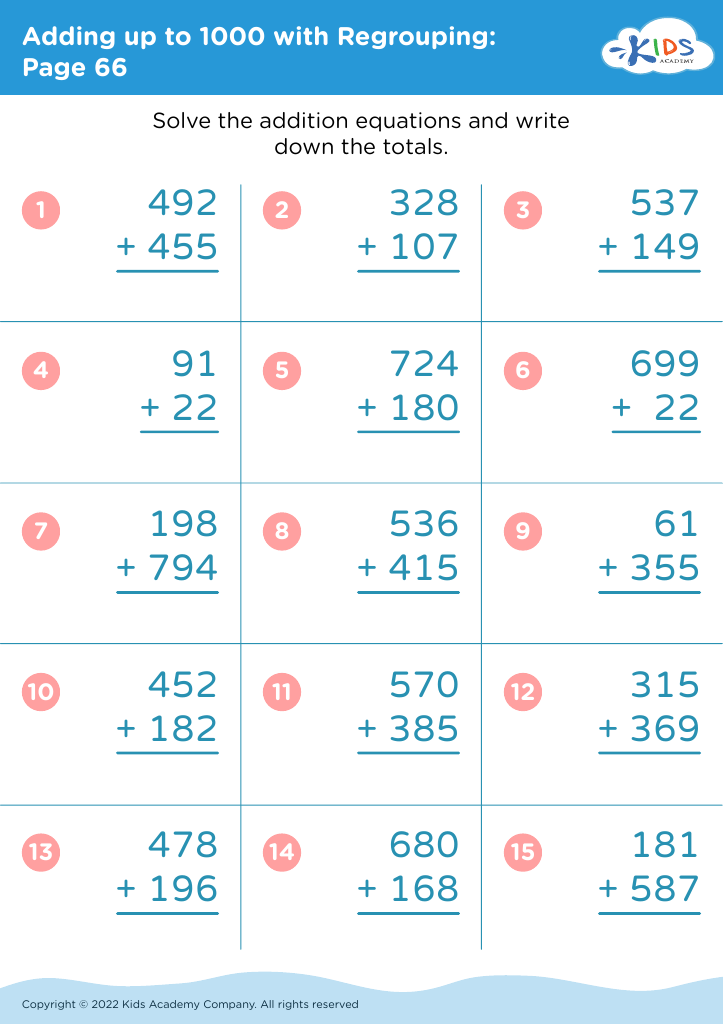








Enhancing number recognition skills for children aged 6-9 is crucial for their mathematical development and overall academic success. At this age, students are transitioning from basic counting to more complex mathematical concepts such as addition, subtraction, and problem-solving. Strong number recognition helps children understand quantity, number order, and the relationships between numbers, laying the groundwork for more advanced topics like multiplication and division.
Parents and teachers should care about fostering these skills because early mastery of number recognition will bolster a child's confidence in their mathematical abilities. Confident learners are more likely to engage actively in classroom discussions, ask questions, and take on more challenging tasks. Additionally, age-appropriate activities that enhance number recognition—like games, art projects, or interactive lessons—promote critical thinking and problem-solving skills.
Furthermore, strong foundational math skills support children's performance across various subjects, as many areas of learning rely on numerical comprehension. By prioritizing number recognition initiatives, parents and teachers can ensure children develop a love for math, creating positive attitudes that foster lifelong learning. Ultimately, building these foundational skills not only equips children for their immediate academic challenges but also nurtures their potential for future successes.








