
Enhancing Reading Comprehension Math Worksheets for Ages 6-9
3 filtered results
Difficulty Level
Grade
Age
-
From - To
Subject
Activity
Standards
Unlock your child’s potential with our "Enhancing Reading Comprehension Math Worksheets" designed specifically for ages 6-9. These worksheets integrate reading skills with math concepts, helping young learners develop critical thinking and comprehension abilities. Engaging exercises promote not only math proficiency but also improve vocabulary and understanding of numerical language. Children will enjoy fun scenarios that enable them to solve math problems while enhancing their reading skills. Perfect for at-home practice or classroom activities, these worksheets are a valuable resource for nurturing well-rounded students. Start your child's journey toward academic success by combining math and reading in an enjoyable and effective way!
Favorites
With answer key
Interactive
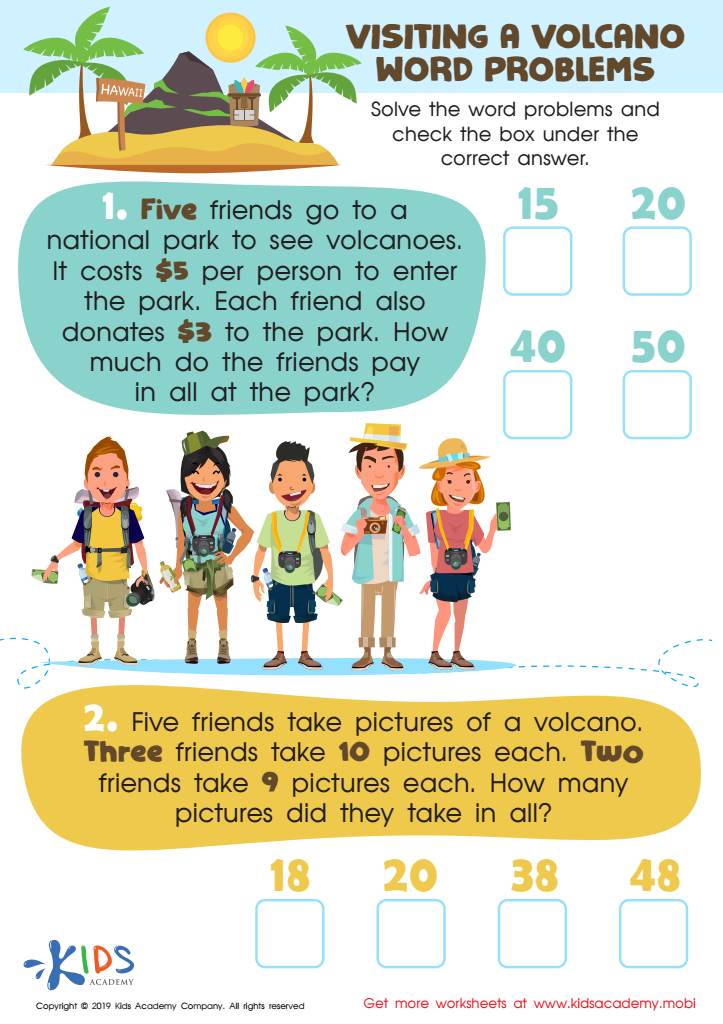
Visiting a Volcano Word Problems Worksheet
Read the word problems to your kids, note down the numbers and help them solve. Check the box under the correct answer. Word problems are sentences posed as math problems; just like regular number problems, first you must understand and interpret the sentence.
 Assign to My Students
Visiting a Volcano Word Problems Worksheet
Worksheet
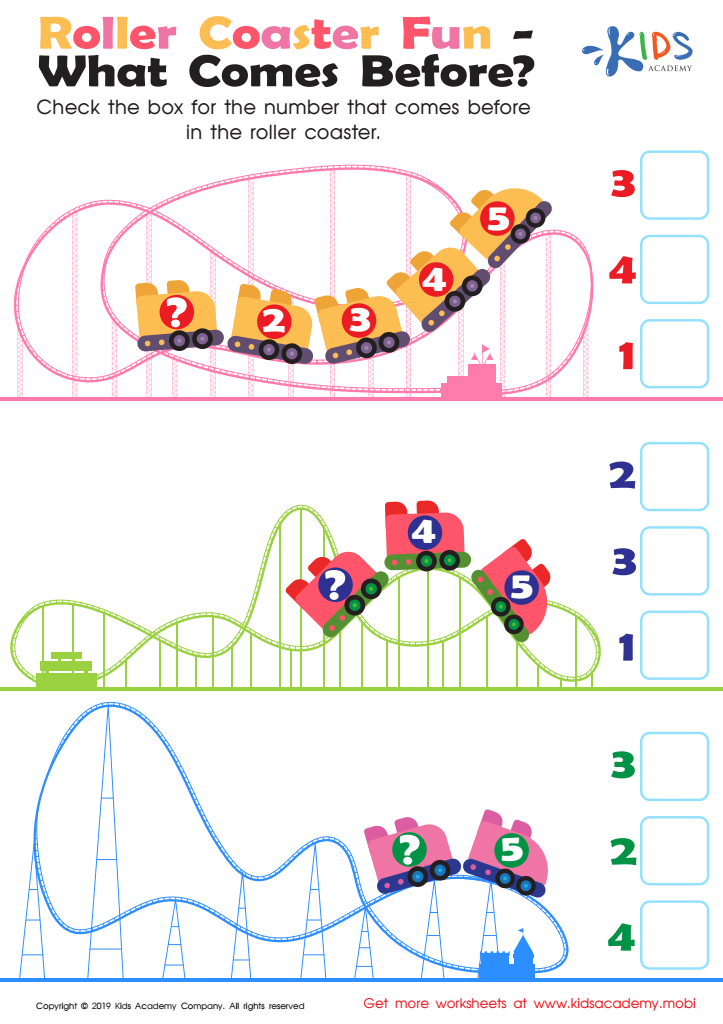
Roller Coaster Fun Worksheet
Ride a roller coaster and experience the thrill! Kids will love checking off the number that comes before each one on the worksheet. With three roller coasters to choose from, the fun never stops! Ask your kids if they've been on a roller coaster and where. Let them explore the excitement and joy of this thrilling ride!
Roller Coaster Fun Worksheet
Worksheet
Join Kids Academy for Free
Who is primarily going to use this learning content?








Enhancing reading comprehension in mathematics is crucial for children aged 6-9, as these skills are foundational for their academic success. At this stage, children are not only learning basic arithmetic but also developing the ability to understand and interpret mathematical problems. Strong reading comprehension skills allow students to grasp complex concepts, follow multi-step instructions, and make connections between math and real-life situations. This ability fosters critical thinking and problem-solving skills, which are essential for later, more advanced mathematics.
Moreover, improving reading comprehension in math helps bridge the gap for diverse learners who may struggle with either subject independently. By integrating reading strategies into math instruction, students become more confident and motivated to tackle challenges. For parents and educators, supporting literacy in mathematics can enhance overall learning experiences and positively impact students’ attitudes towards both reading and math.
Furthermore, as assessments become increasingly focused on students’ ability to apply mathematical concepts through word problems, children who excel in reading comprehension will likely perform better. By nurturing these interconnected skills now, parents and teachers equip children with the tools they need for future academic success and lifelong learning. Ultimately, investing in these critical skills lays the groundwork for a well-rounded education.








