Grammar practice Math Worksheets for Ages 6-9
3 filtered results
-
From - To
Explore our engaging Grammar Practice Math Worksheets specifically designed for children ages 6-9! These worksheets combine essential grammar skills with fun mathematical concepts to create a unique learning experience. Ideal for reinforcing foundational grammar rules, our resources encourage students to enhance their language skills while solving math problems. Each worksheet is crafted to stimulate critical thinking and promote literacy, ensuring a comprehensive educational experience. Perfect for classroom or at-home activities, our materials support various learning styles and encourage independent work. Help your child excel in their grammar and math skills today with our carefully curated worksheets that make learning enjoyable and effective!
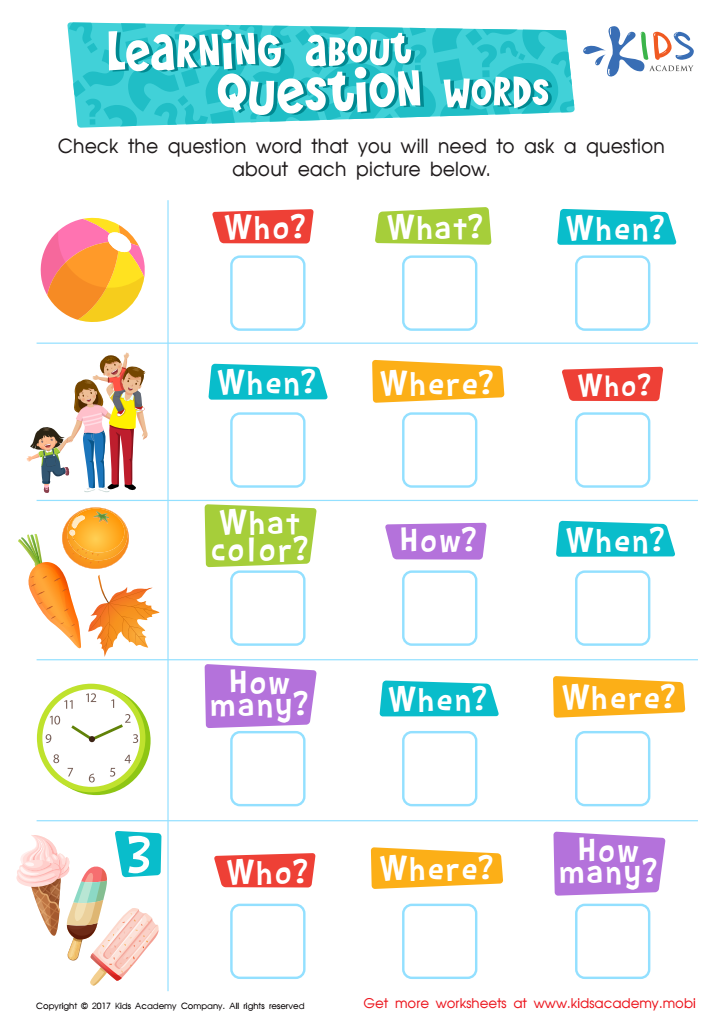
Learning about Question Words Worksheet
 Assign to My Students






Parents and teachers should prioritize grammar practice and math for children aged 6-9 because these foundational skills play a crucial role in overall academic success and effective communication. At this stage, children are developing their cognitive abilities and learning to express thoughts clearly. Understanding grammar not only aids in the correct construction of sentences but also enhances critical thinking and comprehension skills. Being able to communicate effectively prepares children for future academic challenges and social interactions.
Similarly, building a strong foundation in mathematics during these formative years fosters essential problem-solving skills and logical reasoning. Learning to recognize patterns, perform basic calculations, and understand numerical relationships helps children gain confidence in their abilities and sparks an ongoing interest in math. Combined with grammar, math creates a well-rounded education that promotes both verbal articulation and quantitative literacy.
Moreover, reinforcing these subjects at home or in the classroom reinforces the importance of education and keeps students engaged. Early mastery of grammar and math establishes habits of persistence and resilience, setting a positive tone for lifelong learning. By investing time and resources into these areas, parents and teachers can ensure children not only succeed academically but also grow into articulate and capable individuals.








