
Graph reading Math Worksheets for Ages 6-9
3 filtered results
Difficulty Level
Grade
Age
-
From - To
Subject
Activity
Standards
Discover engaging graph reading math worksheets tailored for ages 6-9. These fun, educational printables help young learners develop essential skills for interpreting bar graphs, picture graphs, and more. Each worksheet is carefully designed to build visual analysis, critical thinking, and problem-solving abilities, making math concepts accessible and enjoyable. Ideal for classroom use or at-home practice, our worksheets blend play with learning, ensuring kids grasp fundamental graph reading techniques. Support your child's mathematical journey with these interactive resources and watch their confidence soar. These worksheets are a perfect addition to any early-grade learning curriculum.
Favorites
With answer key
Interactive
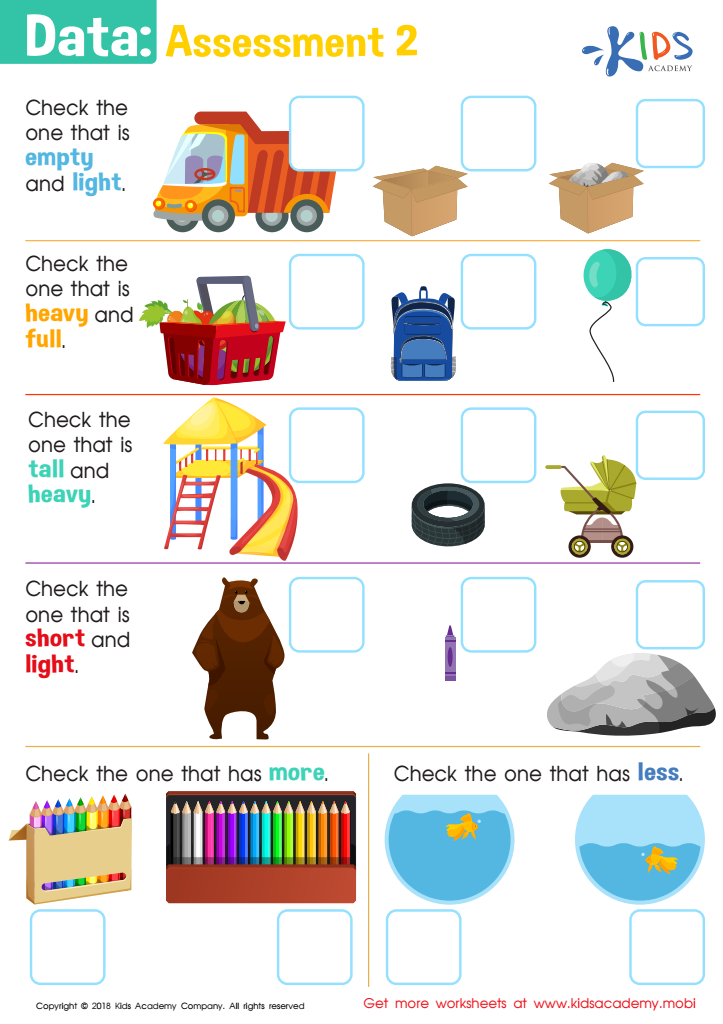
Data: Assessment 2 Worksheet
This PDF helps you assess your students' understanding of concepts like empty/light, full/heavy, tall/short, and more/less. With this worksheet, students use pictures to answer questions and check off the appropriate box. It's a fast, easy way to determine what concepts they have learned and which need more work.
 Assign to My Students
Data: Assessment 2 Worksheet
Worksheet
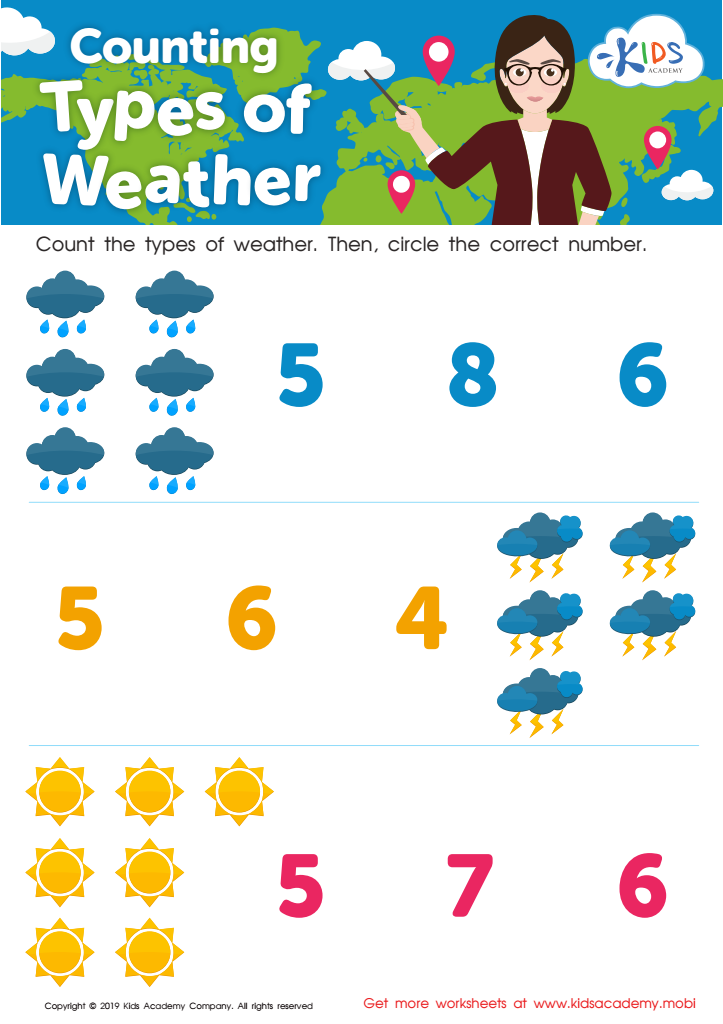
Counting Types of Weather Worksheet
Have your students look outside and tell you the weather today. Get kindergartners thinking by asking them to name different types of weather. Point to each one in the picture and get them to tell you what it is. Then, have them count the types and circle the number.
Counting Types of Weather Worksheet
Worksheet
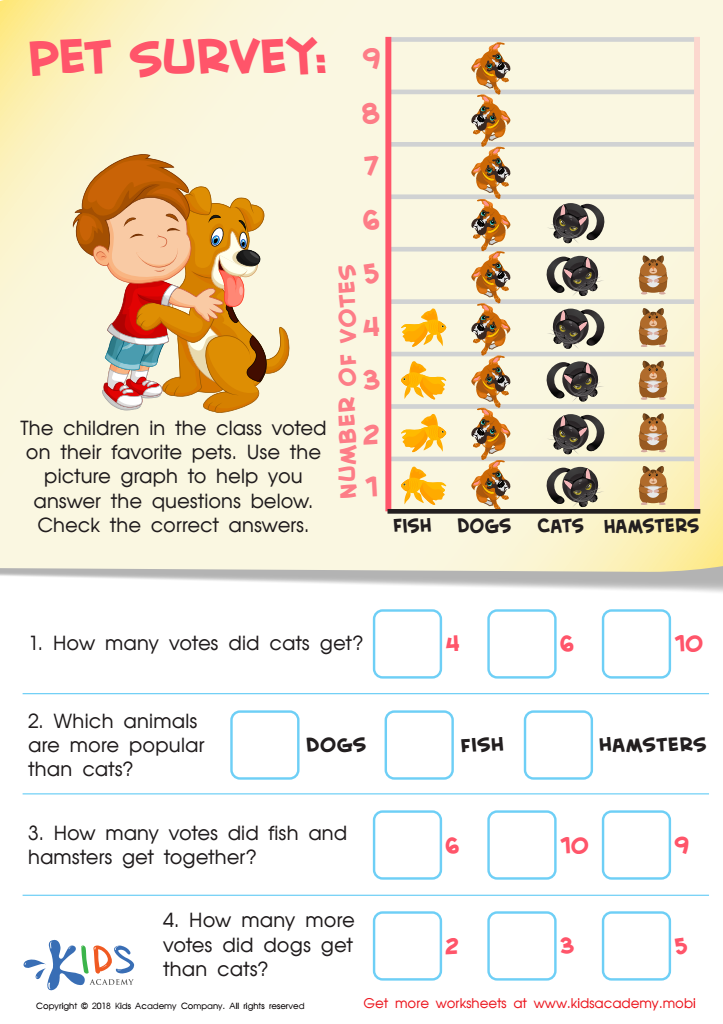
Pet Survey Worksheet
Do you have a furry family member? If the answer is yes and your kids love animals, they'll enjoy this worksheet. The picture graph shows the children's votes for their favorite pet - fish, dog, cat and hamster. Ask your child to use the graph to answer the questions. Guide them to check the right answer.
Pet Survey Worksheet
Worksheet
Join Kids Academy for Free
Who is primarily going to use this learning content?


.jpg)





Reading graphs is a fundamental skill that supports children's comprehension and application of mathematical concepts, and it's especially important to introduce it at an early age. For children aged 6-9, learning to read graphs can help them develop critical thinking and analytical skills. Graphs serve as a visual tool that makes complex data understandable and engaging, which can spark interest in math and science.
Additionally, the ability to read and interpret graphs is crucial for problem-solving. When children understand how to extract and interpret information from graphs, they learn to analyze real-world scenarios more effectively. This skill is not only beneficial in math but extends to other subjects such as science, where data representation is often used.
Parents and teachers play a vital role in encouraging these skills. When children are exposed to graphs in a supportive environment, they gain confidence and competence that will serve them in their academic journey and beyond. Starting early with graph reading can build a strong foundation in mathematical literacy, which is essential for future education and everyday decision-making. Overall, fostering graph-reading skills in young learners enables them to navigate a world rich with data confidently and capably.








