Learning addition Math Worksheets for Ages 6-9
6 filtered results
-
From - To
Unlock your child's mathematical potential with our "Learning Addition Math Worksheets for Ages 6-9"! Designed to make learning addition fun and effective, our worksheets incorporate engaging exercises that appeal to young learners. Suitable for both classroom use and at-home practice, these resources help kids develop strong foundational skills in addition, boosting their confidence and performance in math. Our collection features a variety of problems that cater to different learning styles, ensuring every child can thrive. With easy-to-follow instructions and vibrant design, our worksheets make mastering addition a delightful experience for children. Visit now to help your child excel in math!
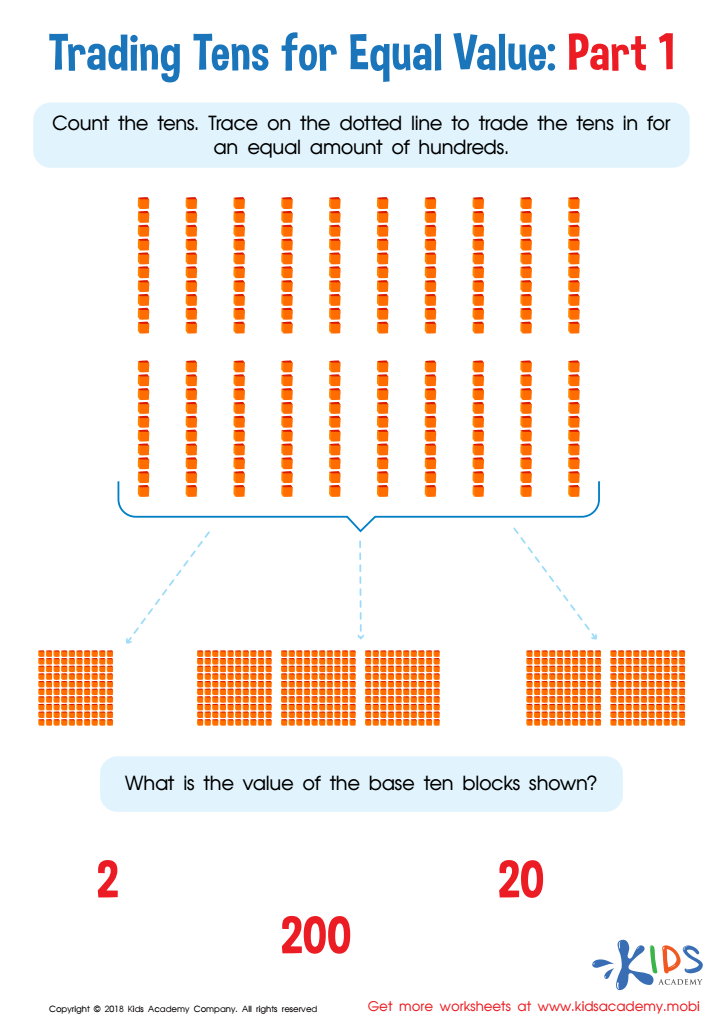
Trading Tens for Equal Value Worksheet: Part 1
 Assign to My Students
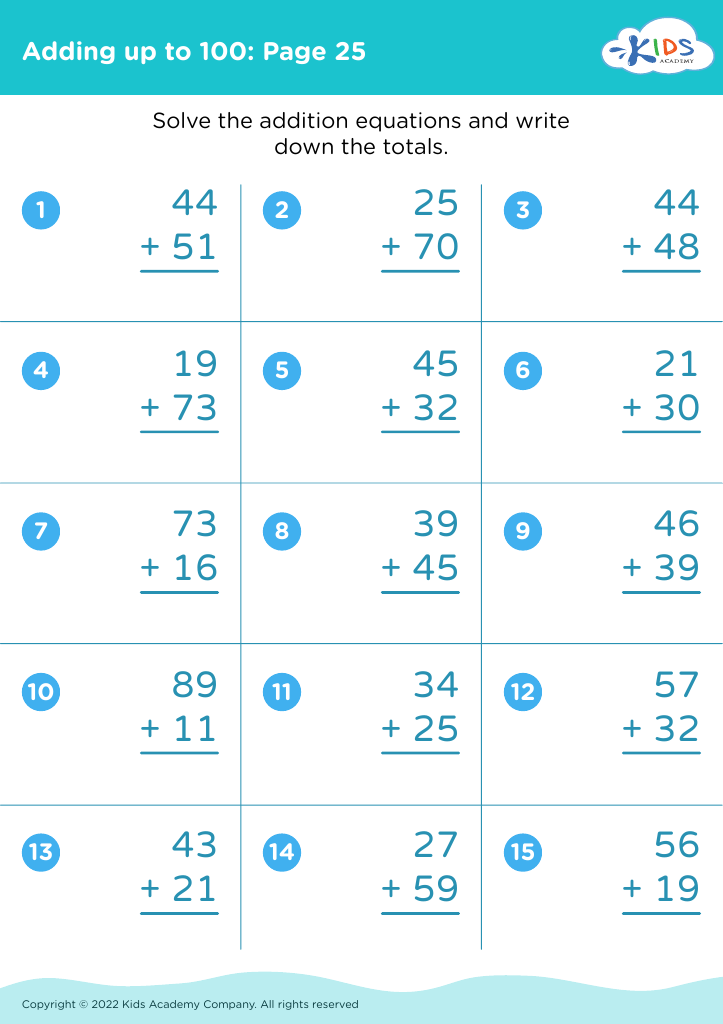
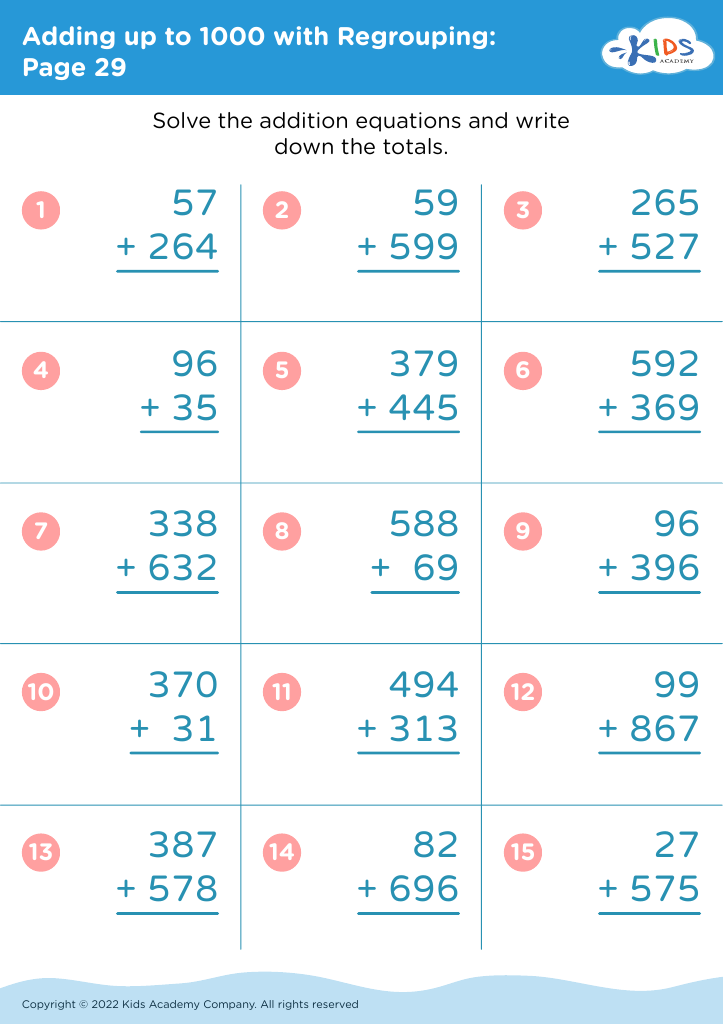
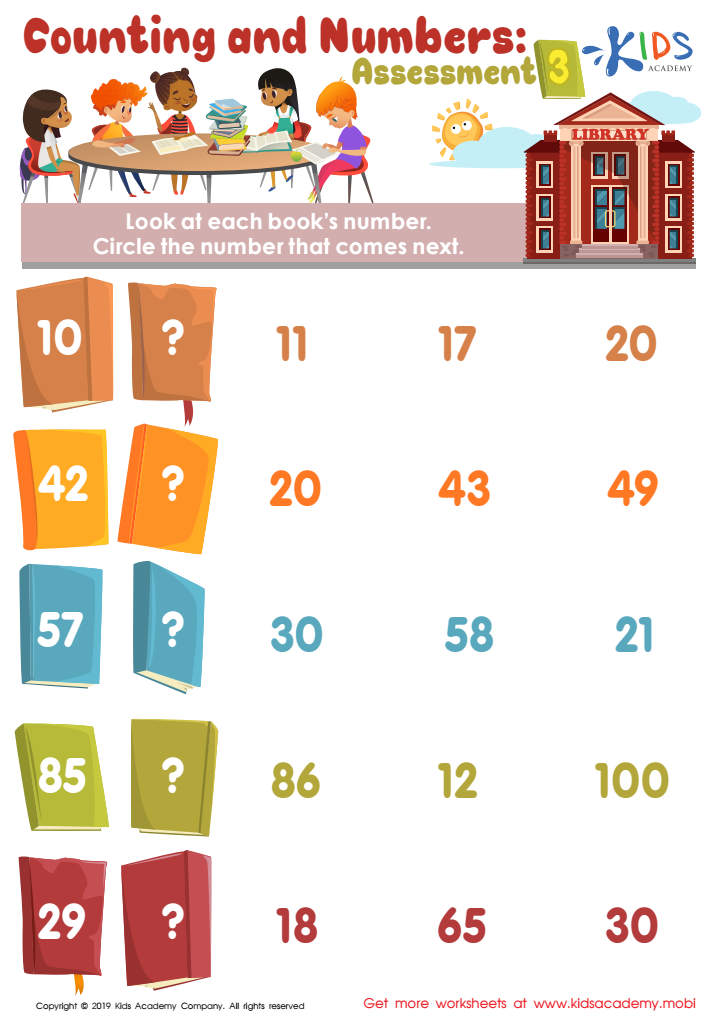
Counting and Numbers: Assessment Worksheet
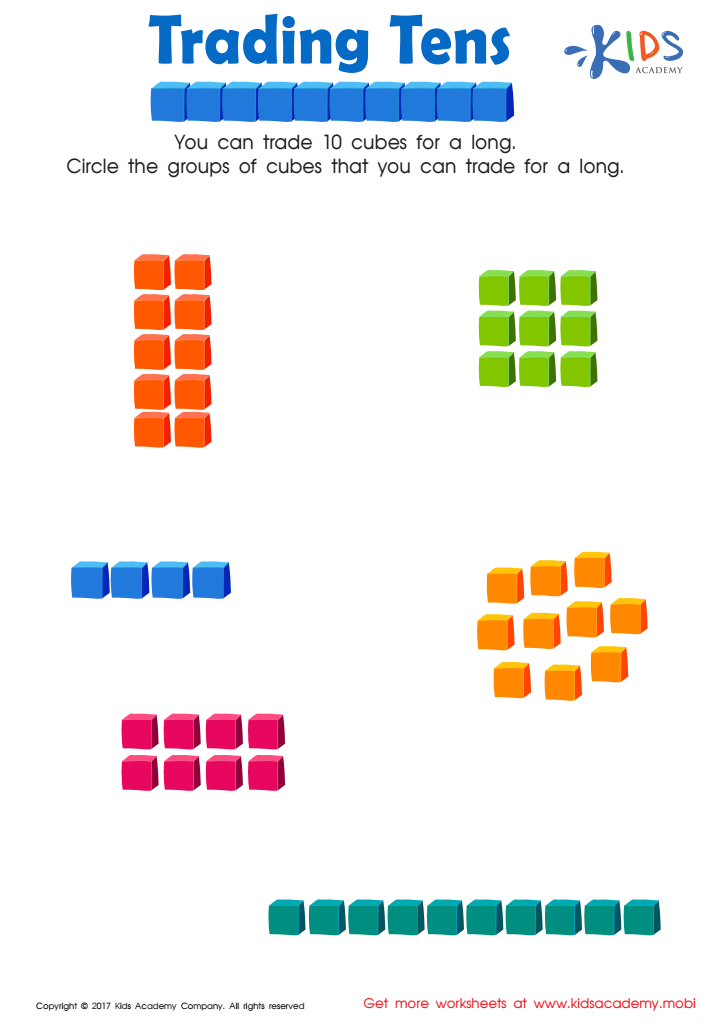
Trading Tens Worksheet
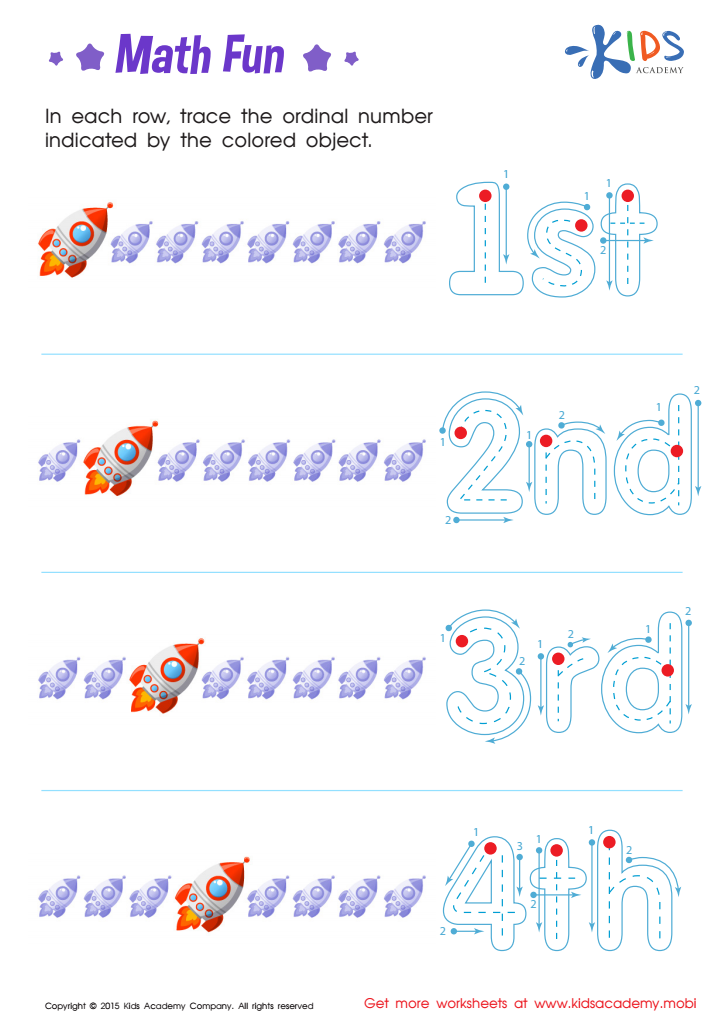
Ordinal Numbers: Math Fun Worksheet








Learning addition is a foundational skill crucial for children ages 6-9, laying the groundwork for more advanced mathematical concepts they'll encounter later in life. At this developmental stage, kids are highly receptive, and introducing them to addition helps build confidence in their academic abilities. This confident approach translates into a positive attitude toward learning in general.
From a cognitive standpoint, addition enhances critical thinking and problem-solving skills. It increases their understanding of number relationships and the basic principles of arithmetic, critical for navigating more complex math, like subtraction, multiplication, and division. Additionally, math skills are pervasive in everyday life, from counting money to measuring in recipes, making these early lessons in addition practical and beneficial beyond the classroom.
Practicing addition promotes focus and discipline, as consistent learning processes require concentration and patience. Furthermore, engaging with mathematical problems can improve memory and cognitive development.
Teachers and parents play critical roles in this learning process, as their encouragement and support can significantly enhance a child's interest and proficiency in math. Introducing children to addition in fun, interactive ways through games and practical applications can make learning enjoyable and effective, fostering a lifetime appreciation for math.








