
Motor skills Math Worksheets for Ages 6-9
3 filtered results
Difficulty Level
Grade
Age
-
From - To
Subject
Activity
Standards
Enhance your child's learning experience with our Motor Skills Math Worksheets designed specifically for ages 6-9! These engaging worksheets combine essential math concepts with fun motor skill activities, promoting coordination and cognitive development. Your child will enjoy hand-eye coordination exercises while practicing counting, addition, and subtraction in an interactive way. Our resources cater to various learning styles, ensuring every child can benefit from these hands-on activities. Ideal for home or classroom use, these worksheets foster both math skills and fine motor abilities, setting a solid foundation for future academic success. Explore our collection and watch your child thrive in their learning journey!
Favorites
With answer key
Interactive
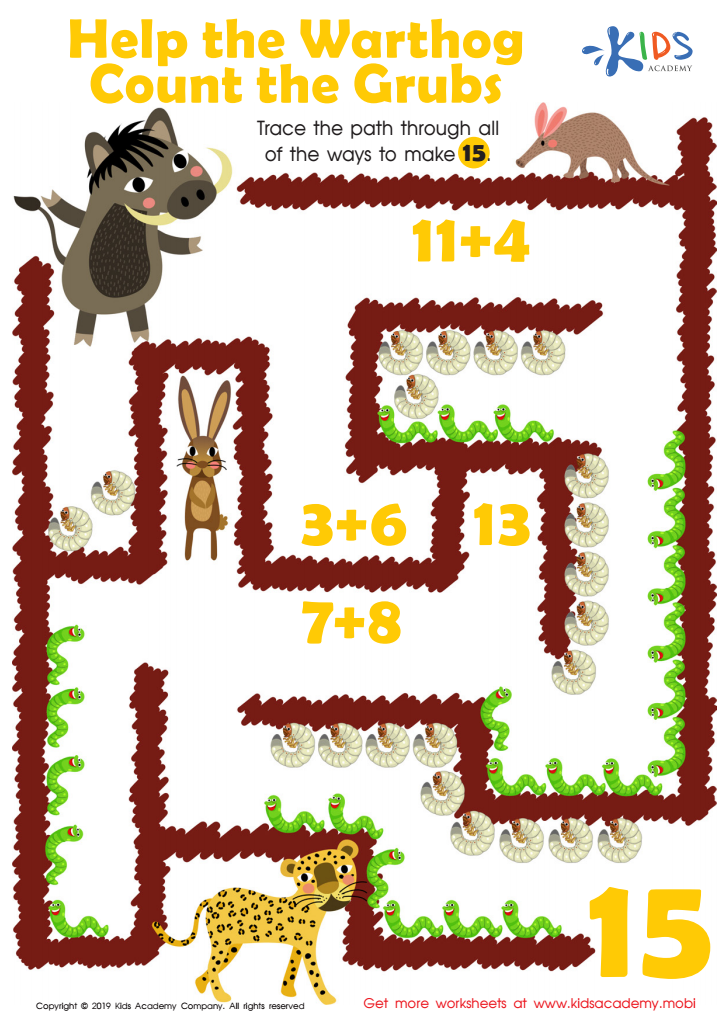
Help the Warthog Count the Grubs Worksheet
Test your kids' knowledge of wild animals. Ask them to name some they know, then have them identify the animals on this worksheet. If they can't, take the time to tell them the names. Finally, trace the warthog's path through the maze by solving the equations and going through paths that make 15.
 Assign to My Students
Help the Warthog Count the Grubs Worksheet
Worksheet
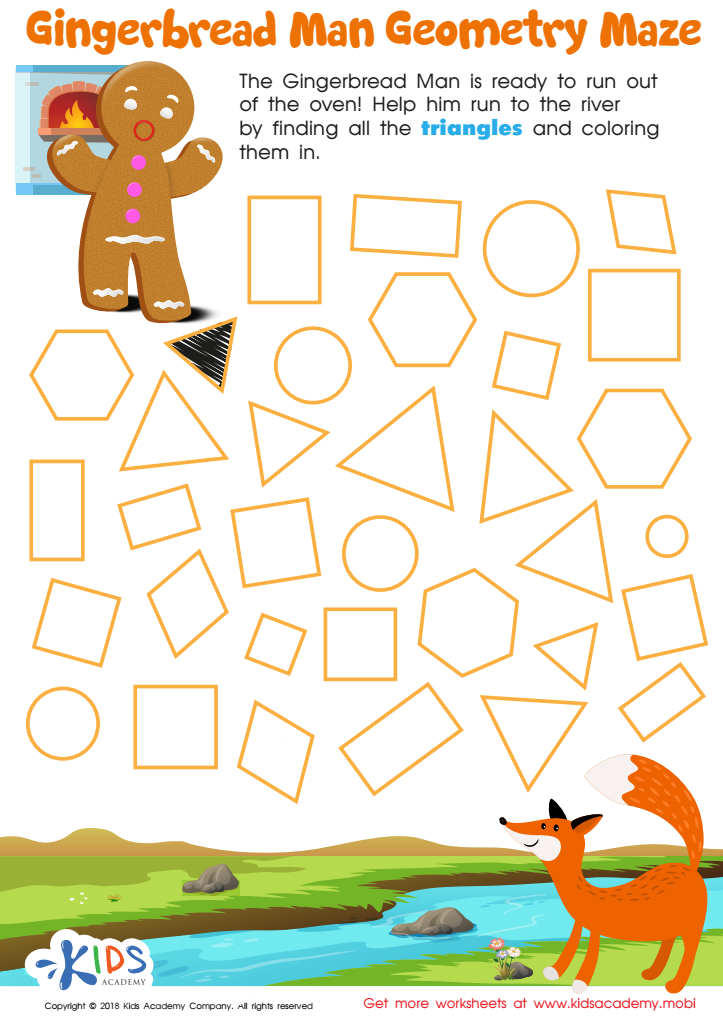
Gingerbread Man Geometry Maze Worksheet
Help a beloved character escape the oven! Kids race through a sea of geometrical shapes, searching for triangles of various sizes. With this free worksheet, they can have fun while learning about similarity of geometrical shapes concepts. Run, run, run as fast as they can!
Gingerbread Man Geometry Maze Worksheet
Worksheet
Join Kids Academy for Free
Who is primarily going to use this learning content?







Parents and teachers should pay close attention to motor skills math for children ages 6 to 9 because it lays the foundation for essential cognitive and physical development. This critical period involves nurturing both fine and gross motor skills, which directly impacts children’s ability to engage with mathematical concepts. Integrating motor skills into math learning not only makes the subject more engaging but also enhances comprehension by allowing children to physically manipulate objects, helping them visualize and understand abstract math concepts.
Improved motor skills contribute to better hand-eye coordination, essential for tasks like writing numbers or using math tools. Furthermore, children who develop these skills are generally more confident in their academic abilities, leading to better participation and success in numeracy tasks. Engaging in motor activities related to math, such as sorting blocks, measuring ingredients for a simple recipe, or using manipulatives for counting, fosters a hands-on learning environment.
Moreover, incorporating physical movement into math lessons can cater to various learning styles, making it inclusive and effective for all children. By prioritizing motor skills development within mathematical contexts, parents and teachers foster a well-rounded education that prepares children for future academic challenges and lifelong learning.








