
Practice counting Math Worksheets for Ages 6-9
6 filtered results
Difficulty Level
Grade
Age
-
From - To
Subject
Activity
Standards
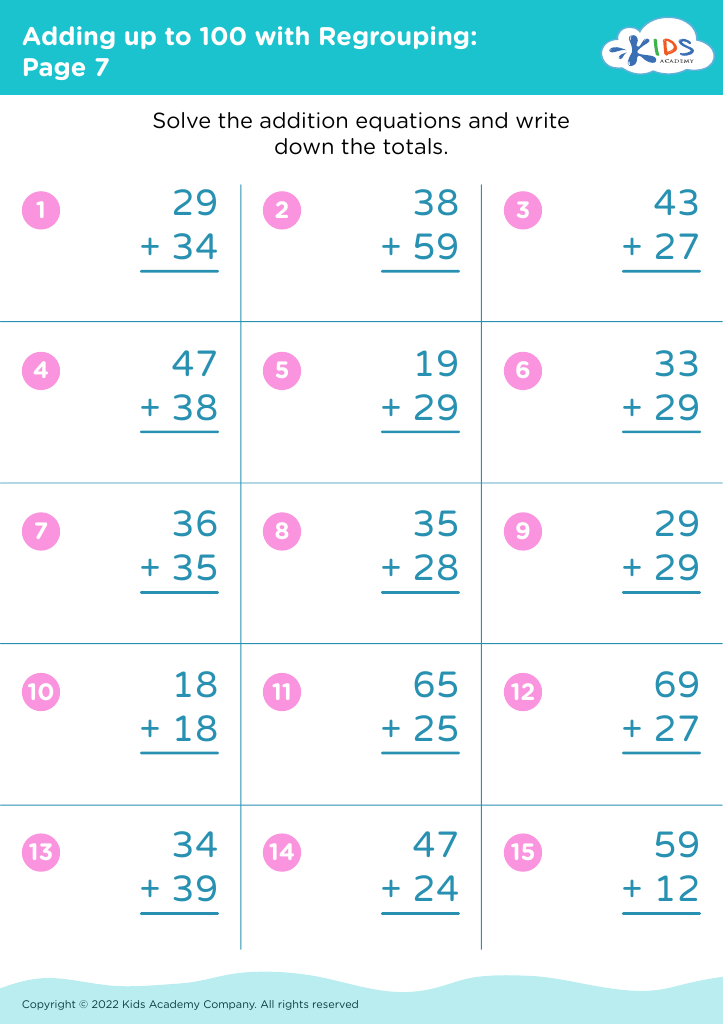
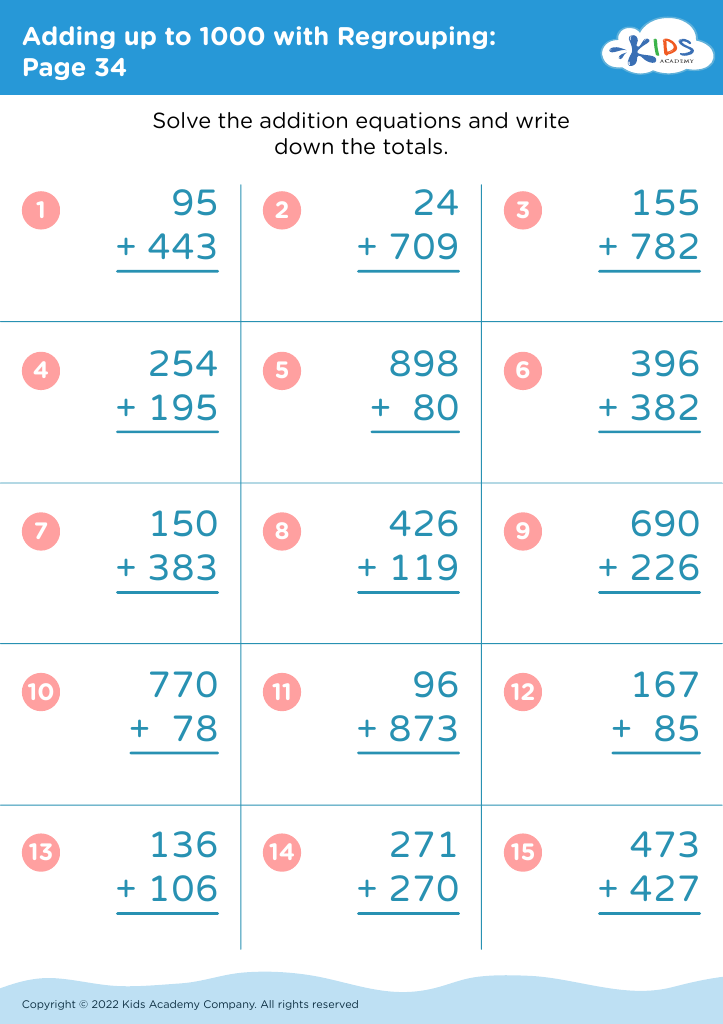
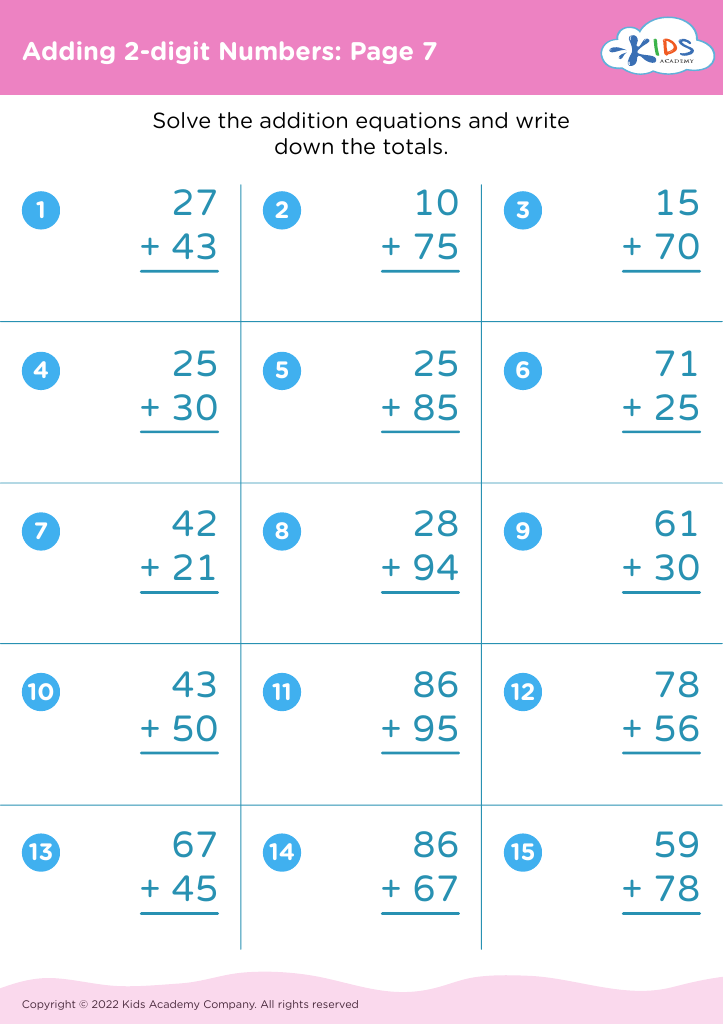
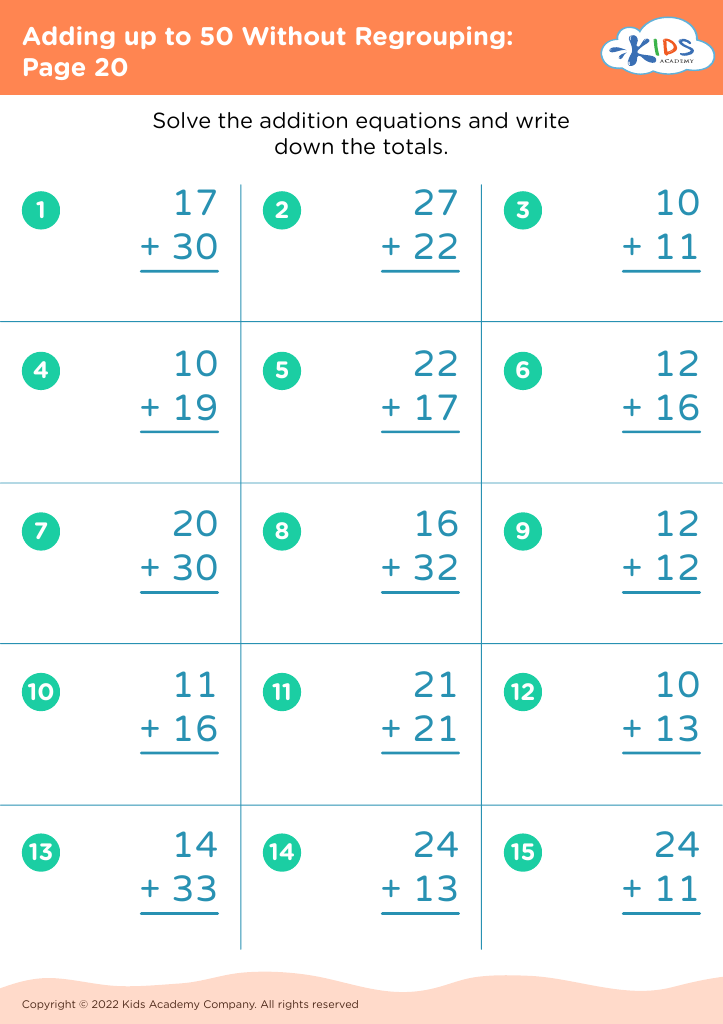
Unlock your child's math potential with our "Practice Counting Math Worksheets" designed for ages 6-9! These engaging and interactive worksheets offer a fun way for young learners to master counting skills through various activities. From colorful illustrations to creative exercises, each worksheet helps reinforce number recognition and counting proficiency. Designed to accommodate different learning styles, our resources encourage children to explore math concepts at their own pace. Ideal for school or at-home practice, these worksheets provide essential practice that lays the groundwork for future math success. Dive in and watch your child gain confidence and enjoyment in counting!
Favorites
With answer key
Interactive
Join Kids Academy for Free
Who is primarily going to use this learning content?








Practice counting math is crucial for children aged 6-9 as it lays the foundation for their overall mathematical understanding and problem-solving skills. During these formative years, children are developing cognitive abilities, and counting practice enhances their numerical fluency, enabling them to grasp more complex concepts in the future.
Firstly, counting is essential for everyday tasks such as telling time, measuring ingredients when cooking, and managing money. By mastering counting, children gain confidence in these practical areas, fostering independence and self-reliance.
Secondly, proficient counting skills are linked to later success in academic settings. Research shows that early mathematical competencies predict future achievements in math. Teachers and parents who emphasize counting can help children develop a strong math base, enhancing their performance in subjects that require numeral manipulation, like addition and subtraction.
Additionally, counting activities, whether through games, songs, or interactive exercises, make learning engaging and enjoyable. This can motivate children to see math as fun, rather than a chore. As a result, fostering an early love for numbers can lead to a more positive attitude towards math-related subjects throughout their education. Therefore, parents and teachers should prioritize counting practice in order to support their children's learning and confidence in math.








