Filters

105 filtered results

Clear all filters
Favorites
With answer key
Interactive

105 filtered results

Difficulty Level

Grade


Check out this FREE Trial Lesson on Math for age 6-9!

Making a Whole

Favorites
With answer key
Interactive
  • 6-9
  • Shape Recognition
  • Math
Shapes Matchup Worksheet

Shapes Matchup Worksheet

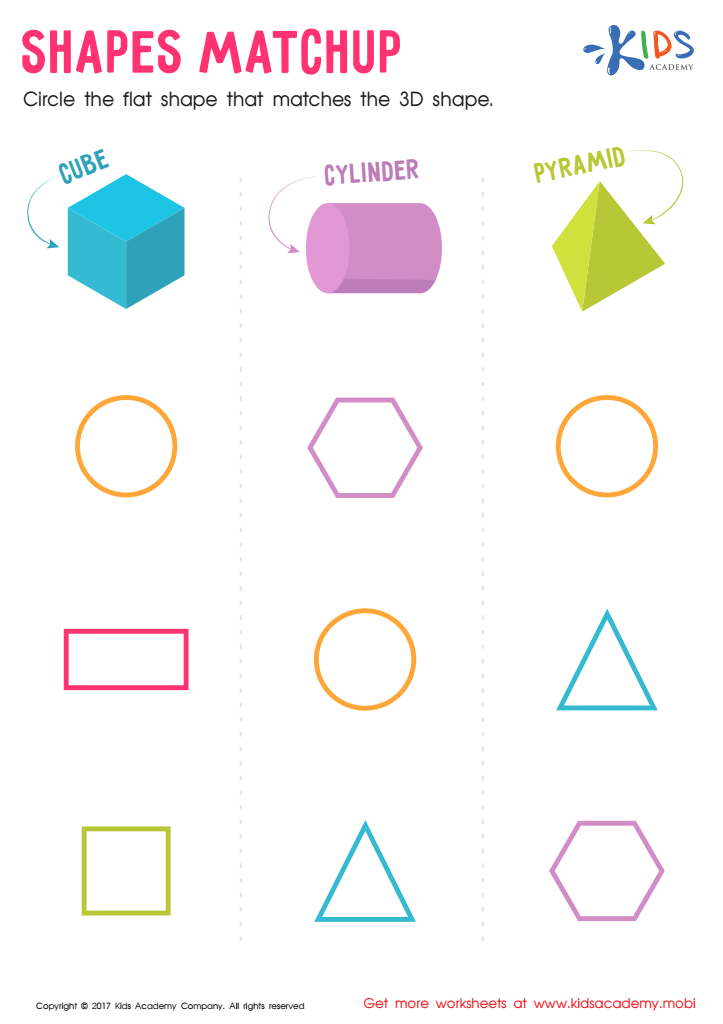
Explain to your kids that 3D shapes are the view from another angle, offering depth, height and width. This worksheet encourages them to match the 3D shapes to their 2D form. They can circle the flat shapes that match the 3D shapes in the printout.
Shapes Matchup Worksheet
Worksheet
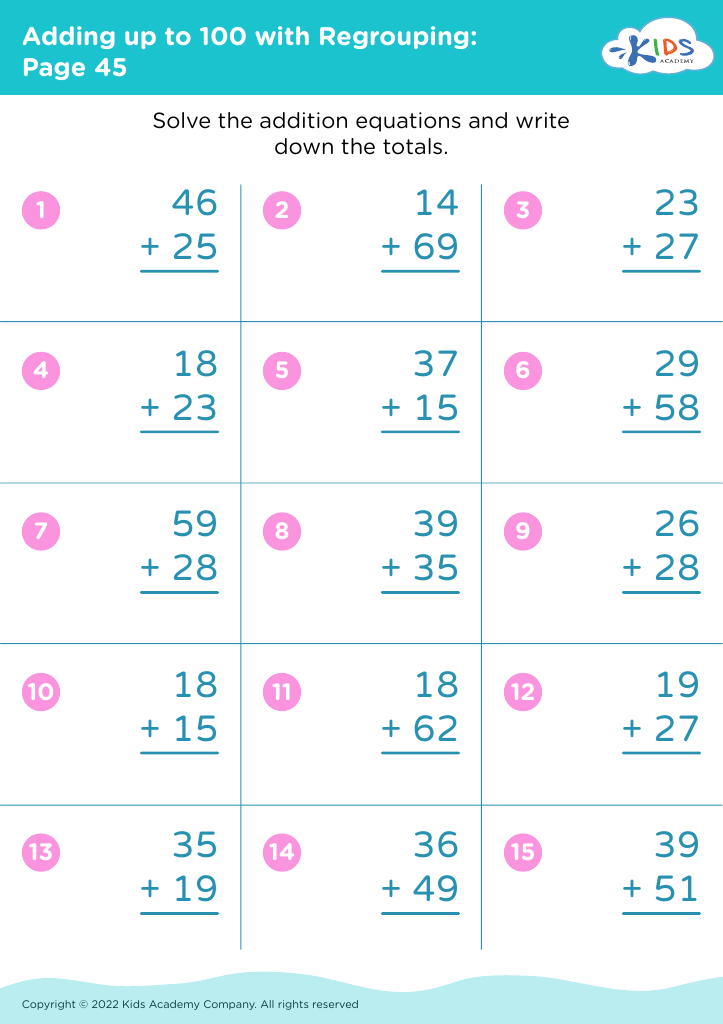
Adding up to 100 with Regrouping: Page 45
Worksheet
Build and Match Worksheet

Build and Match Worksheet

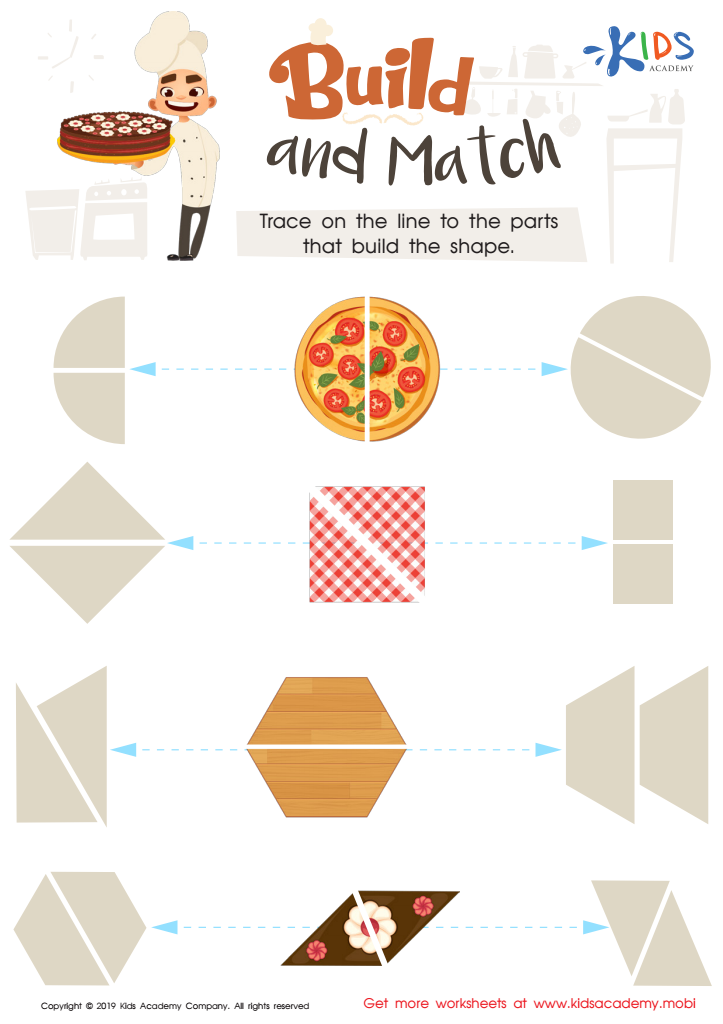
This bright worksheet will get your kids excited to learn more! Use the colorful images and shapes to engage them and have them trace the parts to build the shape. This fun exercise will help them retain the lessons and make it an enjoyable experience.
Build and Match Worksheet
Worksheet
Piece it together Worksheet

Piece it together Worksheet

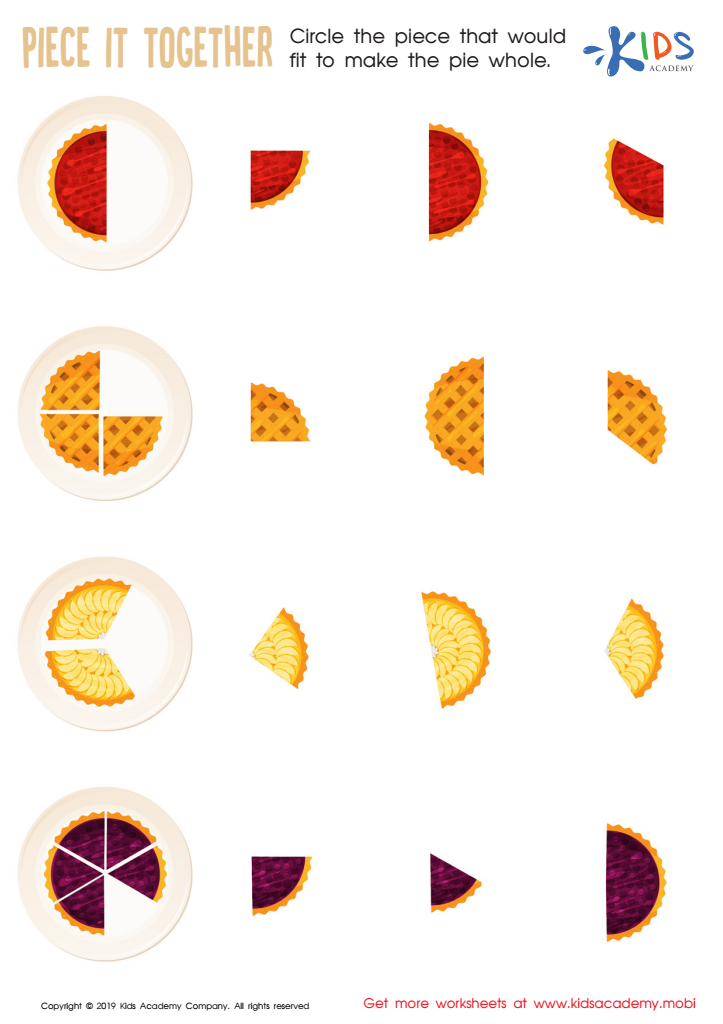
Help your kids learn fractions! Even if they're not eager, teach them as they get older. Teachers will provide enough lessons and homework, but you can go a step further. Look at a worksheet with your kids and help them circle the piece that would make the pie whole.
Piece it together Worksheet
Worksheet
Whole Shape from Halves, Thirds and Fourths Worksheet

Whole Shape from Halves, Thirds and Fourths Worksheet

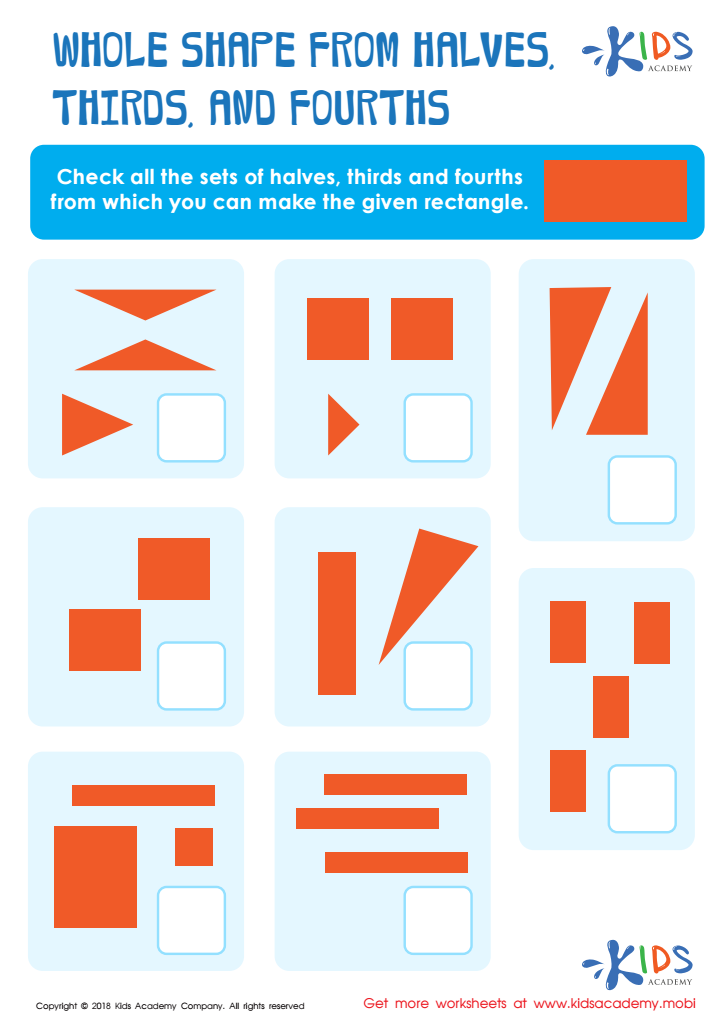
Explain to your students that they can make a new shape by combining halves, thirds, and fourths of a shape. Show them the worksheet with the rectangle at the top and ask them to find which sets of halves, thirds, and fourths make it. Have them check all the correct sets.
Whole Shape from Halves, Thirds and Fourths Worksheet
Worksheet
Dot to Dot Worksheets 11 to 20

Ordering 11–20: Dot–to–dot Seashell Printable
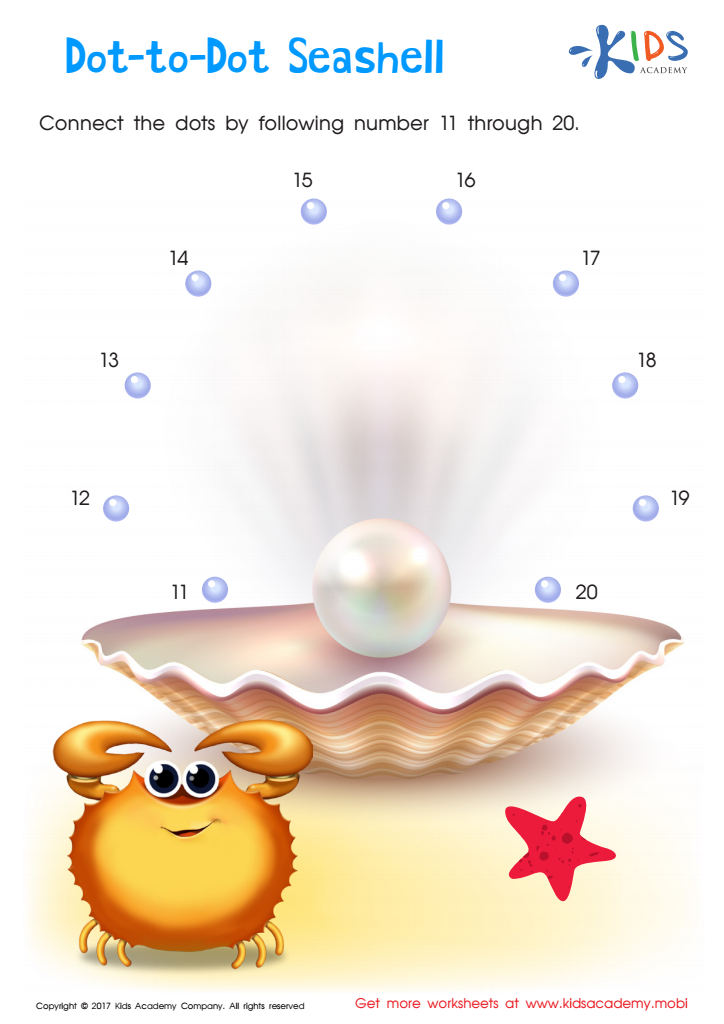
Connecting the dots 11 to 20 is rewarding for kids, helping them practice counting, identifying numbers and gain cognitive and logical skills. Our worksheet features a vibrant image of a seashell, crab and sea star, and your child will feel rewarded creating it while honing their counting skills!
Ordering 11–20: Dot–to–dot Seashell Printable
Worksheet
Construction Shapes Worksheet


Construction Shapes Worksheet

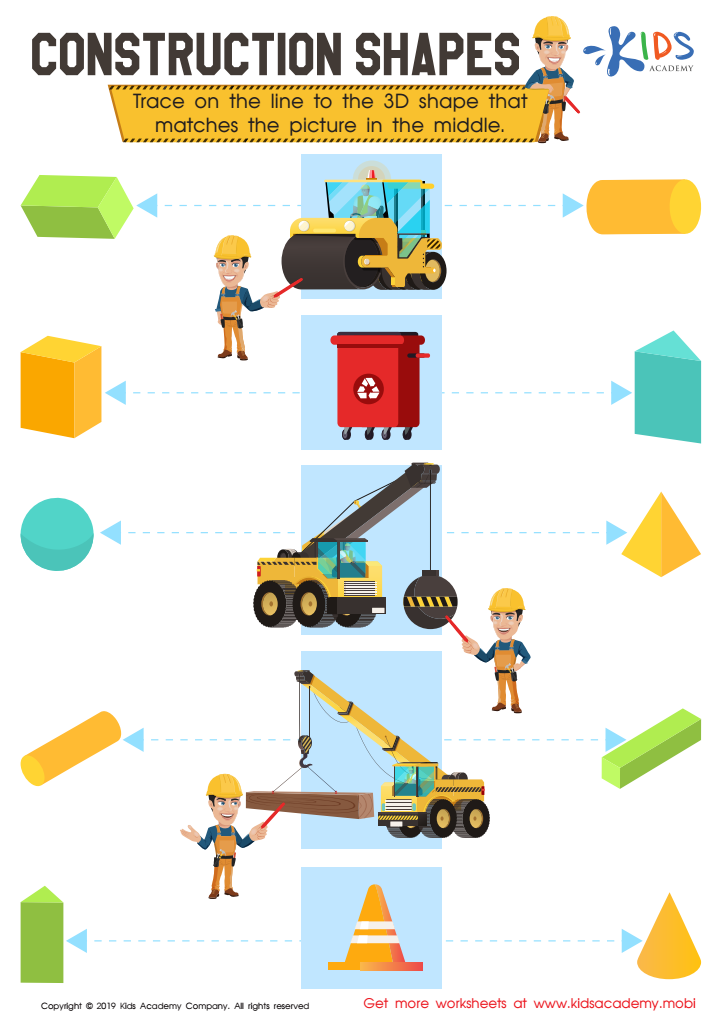
Construction workers are professionals who build structures like buildings. In this worksheet, kids will learn about shapes with the help of workers and their equipment. Help them trace the lines to the 3D shape that matches the picture in the middle.
Construction Shapes Worksheet
Worksheet
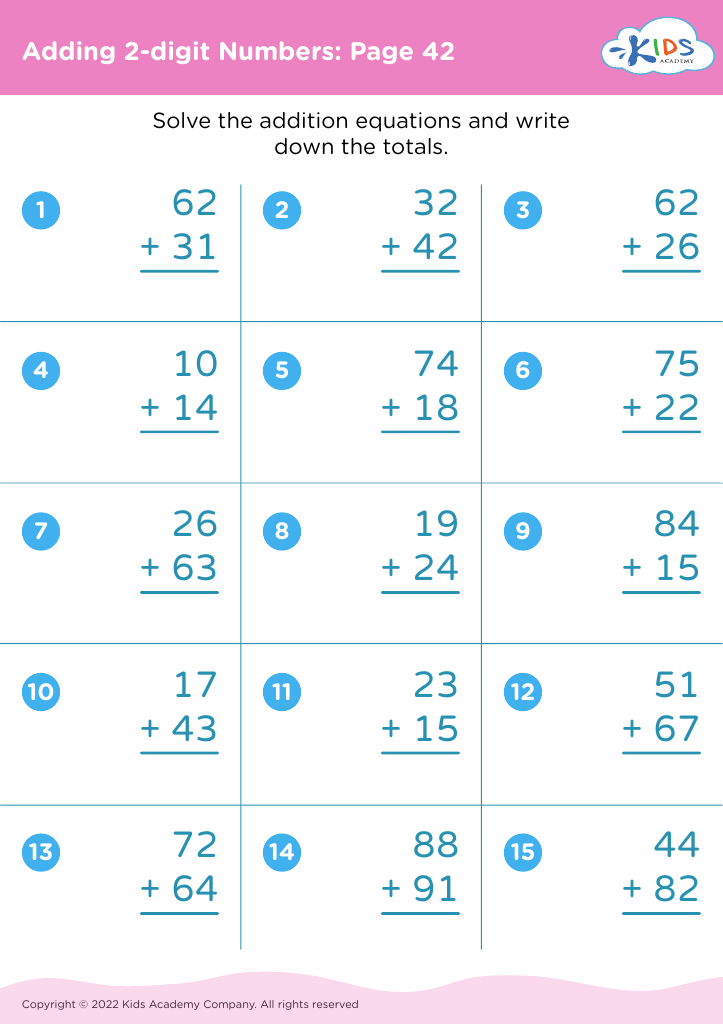
Adding 2-digit Numbers: Page 42

Adding 2-digit Numbers: Page 42

Adding 2-digit Numbers: Page 42
Worksheet
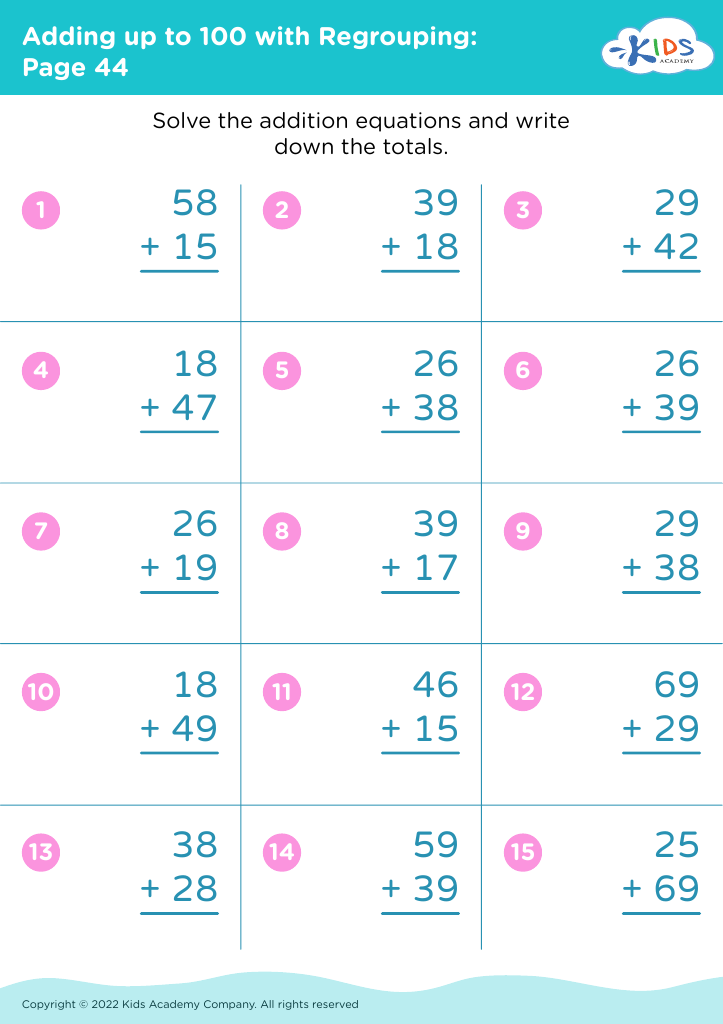
Adding up to 100 with Regrouping: Page 44
Worksheet


... 4 5

Shape recognition is a foundational skill in mathematics that significantly influences children's overall cognitive development. For children aged 6-9, understanding shapes is not just about recognizing their appearance; it lays the groundwork for essential mathematical concepts such as geometry and spatial reasoning. By fostering shape recognition, teachers and parents help children develop critical thinking skills, problem-solving abilities, and correlation skills, which are vital as they progress in mathematics.

Engaging with shapes introduces children to patterns, symmetry, and measurement, all of which are fundamental to more complex mathematical ideas later on. Moreover, shape recognition encourages analytical thinking and boosts creativity. As children explore different shapes through constructive play, they also enhance their fine motor skills, coordination, and attention to detail.

In a world increasingly driven by geometry—from architecture to technology—shape recognition becomes a vital life skill. Ensuring that children develop this skill early on prepares them for future challenges both in and outside the classroom. Therefore, parents and teachers should prioritize shape recognition activities to nurture confident learners equipped for holistic development, thereby creating a strong foundation for lifelong success in mathematics and beyond.