Spatial understanding Math Worksheets for Ages 6-9
4 filtered results
-
From - To
Enhance your child's spatial understanding with our engaging math worksheets designed specifically for ages 6-9. These printable resources focus on essential skills like visualizing shapes, interpreting maps, and understanding spatial relationships. Our worksheets feature a variety of fun activities and exercises that cater to different learning styles, making math enjoyable and accessible for young learners. By incorporating real-world scenarios and interactive lessons, children will develop critical thinking skills while building a solid foundation in spatial reasoning. Perfect for home or classroom use, our worksheets are a valuable tool to encourage confidence in math and bolster your child's overall educational journey.
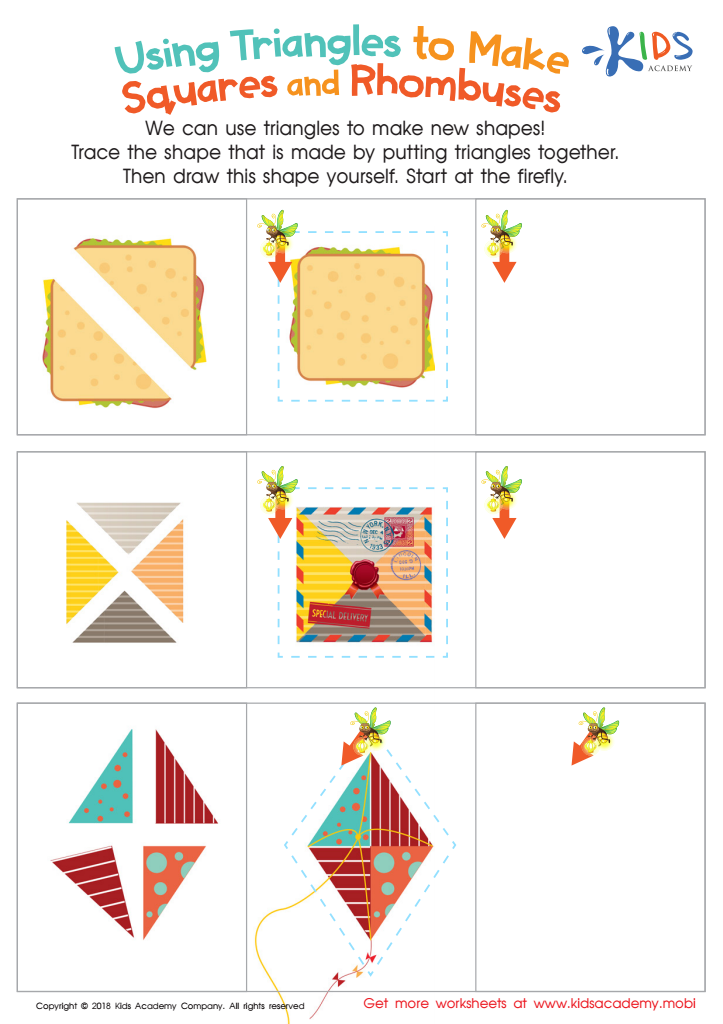
Using Triangles to Make Squares and Rhombuses Worksheet
 Assign to My Students
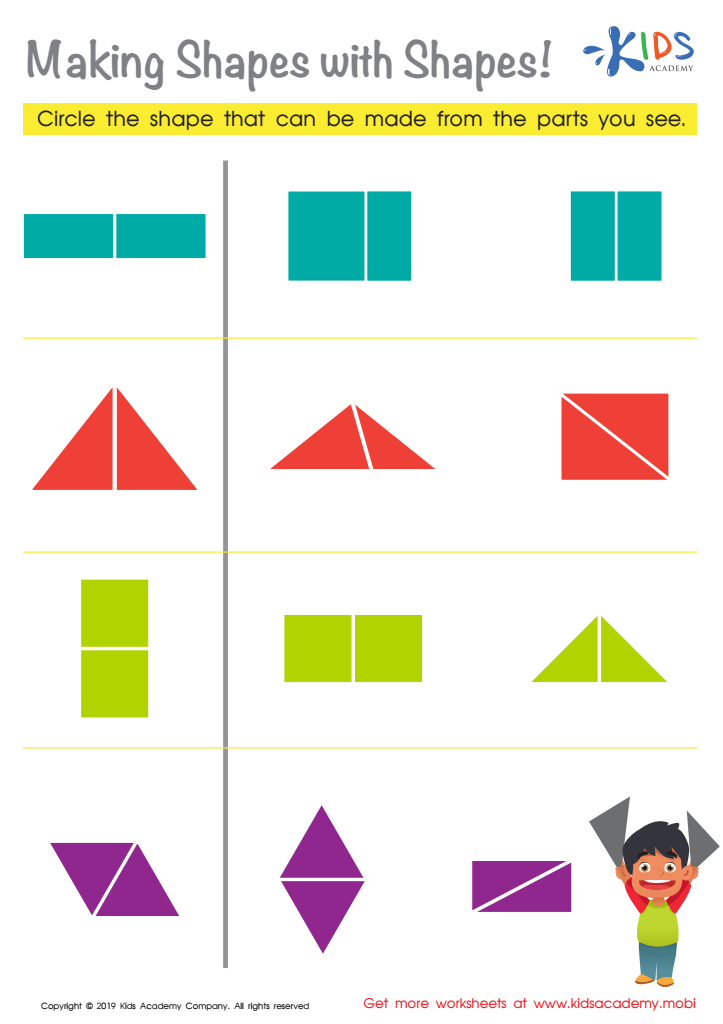
Making Shapes with Shapes Worksheet
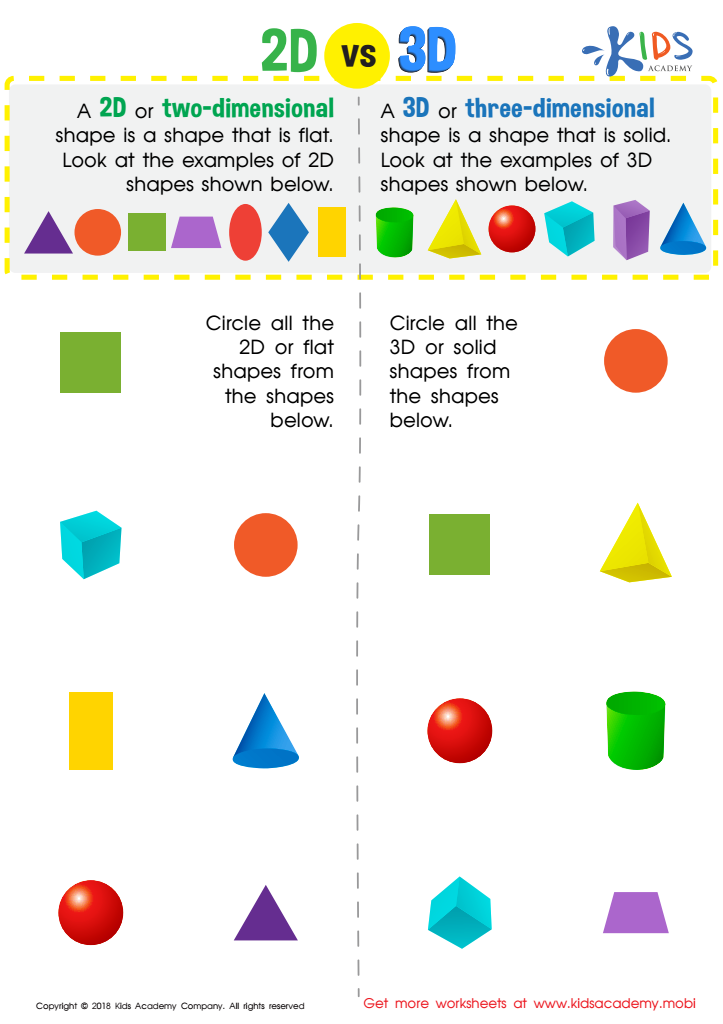
2D vs 3D Shapes Worksheet


.jpg)




Spatial understanding is crucial for children aged 6 to 9 as it lays the foundation for their mathematical skills and problem-solving abilities. At this age, children are developing the ability to recognize and manipulate shapes, understand measurements, and visualize relationships between objects. By cultivating spatial awareness, parents and teachers can enhance children’s mathematical reasoning and help them grasp concepts such as geometry and fractions more effectively.
When children learn to visualize and manipulate objects mentally, they internalize mathematical concepts, which leads to improved performance in more complex topics later, including calculus and algebra. Spatial skills are not just important for mathematics but are applicable in everyday tasks, such as navigation, art, and even science. Moreover, strong spatial understanding fosters confidence in problem-solving and critical thinking.
Encouraging spatial play through activities like puzzles, building blocks, and drawing can significantly benefit children’s cognitive development. Grounded in real-world applications, this understanding helps children connect mathematical theories to practical use, thereby making learning more engaging and relevant. By emphasizing the importance of spatial understanding, parents and teachers can better prepare children for academic success and a world where strong spatial skills are increasingly valued.








