Understanding length Math Worksheets for Ages 6-9
3 filtered results
-
From - To
Explore our "Understanding Length" math worksheets designed for children ages 6-9, perfect for enhancing their measurement skills. These engaging, age-appropriate printables introduce concepts of length, teaching students how to compare, measure, and describe objects in their environment. With fun activities and colorful illustrations, these worksheets cultivate critical thinking and boost confidence in mathematical concepts. Ideal for home or classroom use, our resources cater to various learning styles. Each worksheet encourages hands-on practice and reinforces understanding through real-world applications. Equip your little learners with the foundational skills they need for future math success! Dive into the world of length today!
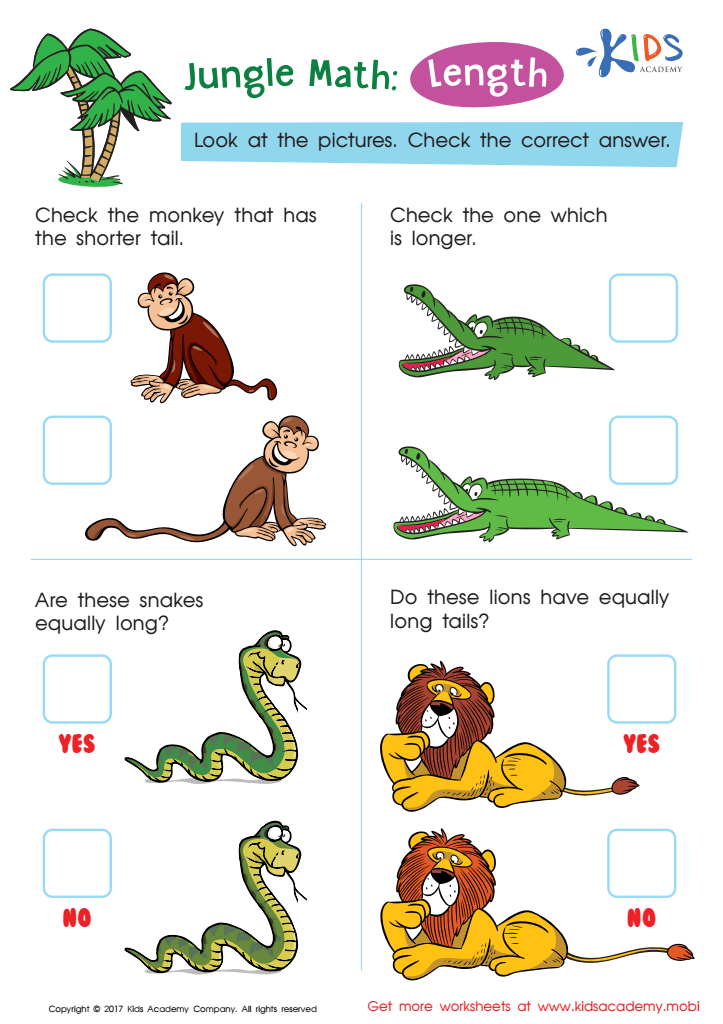
Which One Is Longer - Length Worksheet
 Assign to My Students
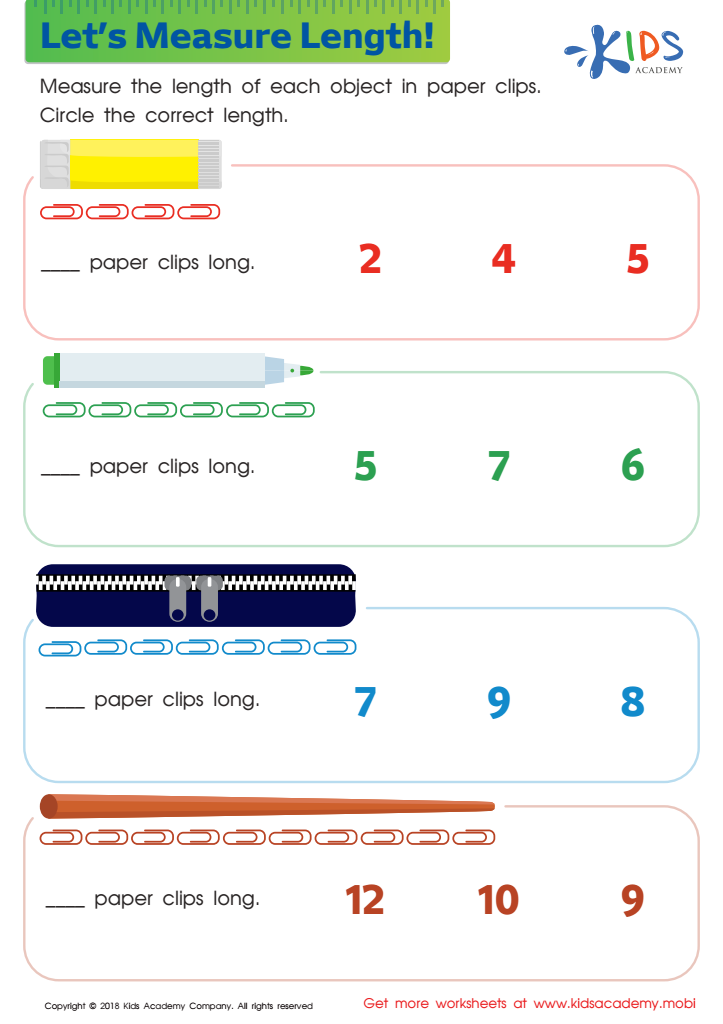
Lets Measure Length Worksheet
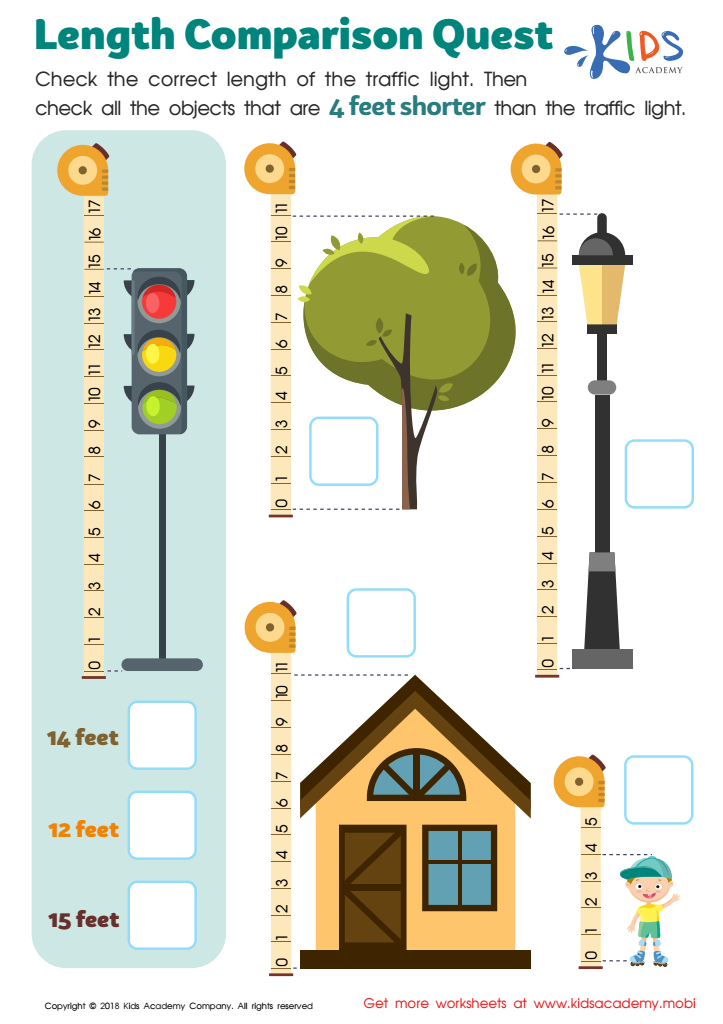
Length Comparison Quest Worksheet








Understanding length math is crucial for children aged 6-9, as it lays the foundation for essential mathematical skills and everyday problem-solving. During this developmental stage, children enhance their grasp of measuring and estimating lengths, which are foundational concepts in mathematics. These skills not only contribute to their academic growth but also cultivate their reasoning and critical thinking abilities.
Parents and teachers should care about length math because it encourages hands-on learning experiences. Activities such as measuring objects, comparing lengths, and using tools like rulers or measuring tapes make math tangible and relatable. These experiences help children develop confidence in their mathematical abilities and foster a positive attitude towards the subject.
Moreover, mastering length concepts prepares children for real-world applications, from understanding dimensions in basic construction tasks to navigating maps and planning travel routes. By emphasizing length math, parents and educators can equip kids with problem-solving tools that will benefit them throughout their lives.
Lastly, engaging in length math nurtures communication skills, as children learn to describe their measurements and findings. This holistic approach to education ultimately supports children's cognitive, social, and academic development, reinforcing the collaborative role parents and teachers play in shaping learners' futures.








