Understanding patterns Math Worksheets for Ages 6-9 - Page 3
52 filtered results
-
From - To
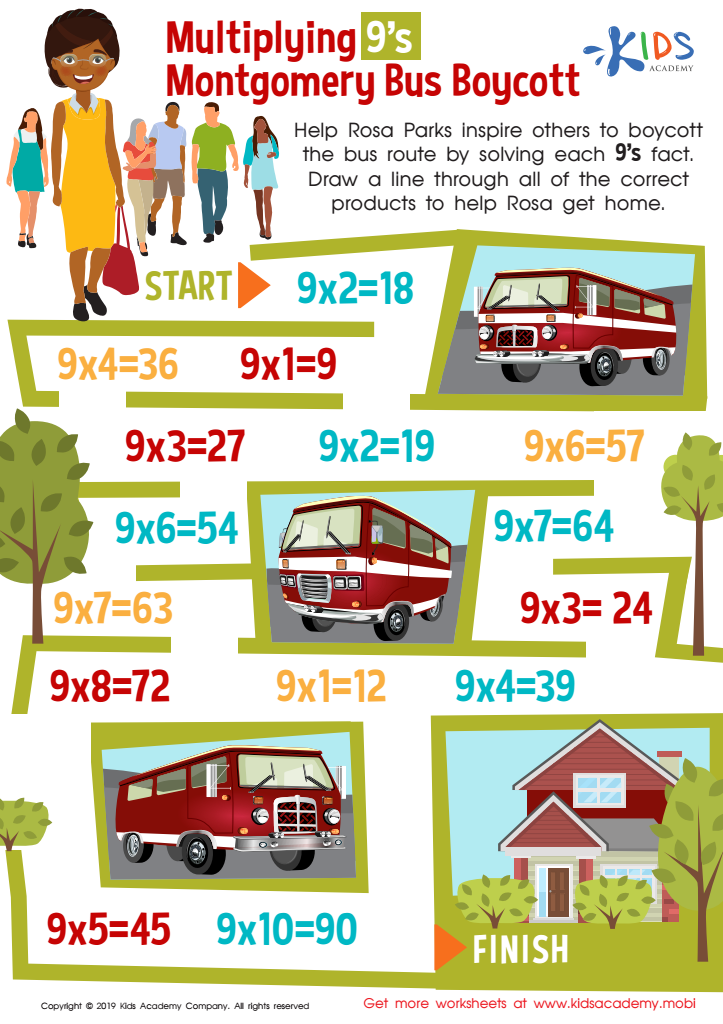
Multiplying 9’s Montgomery Bus Boycott Worksheet
 Assign to My Students
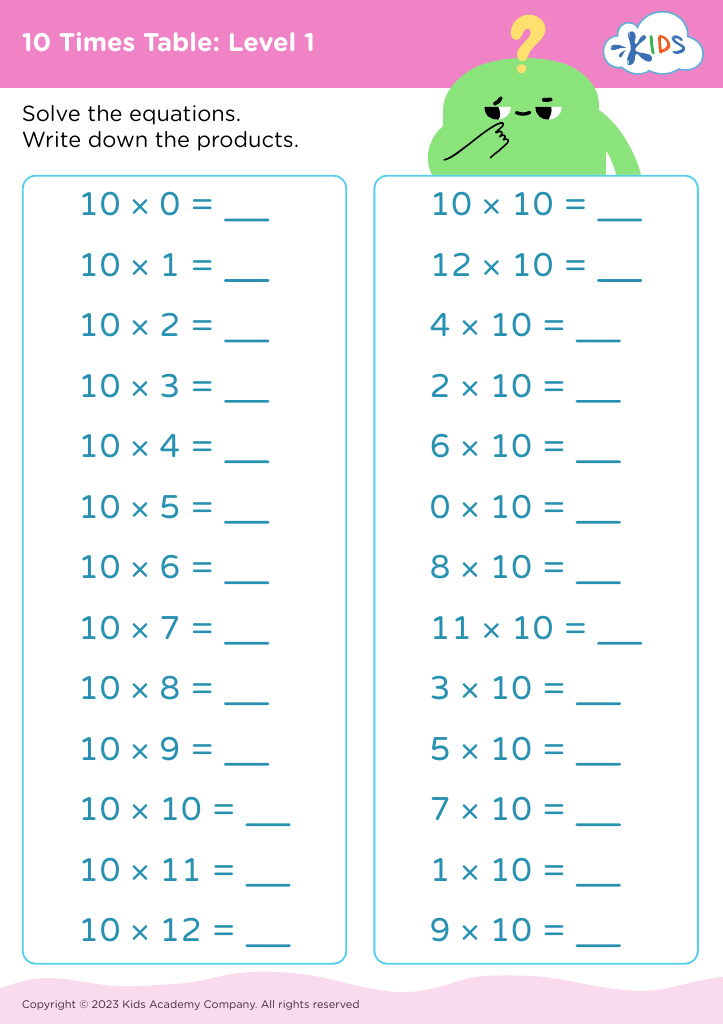
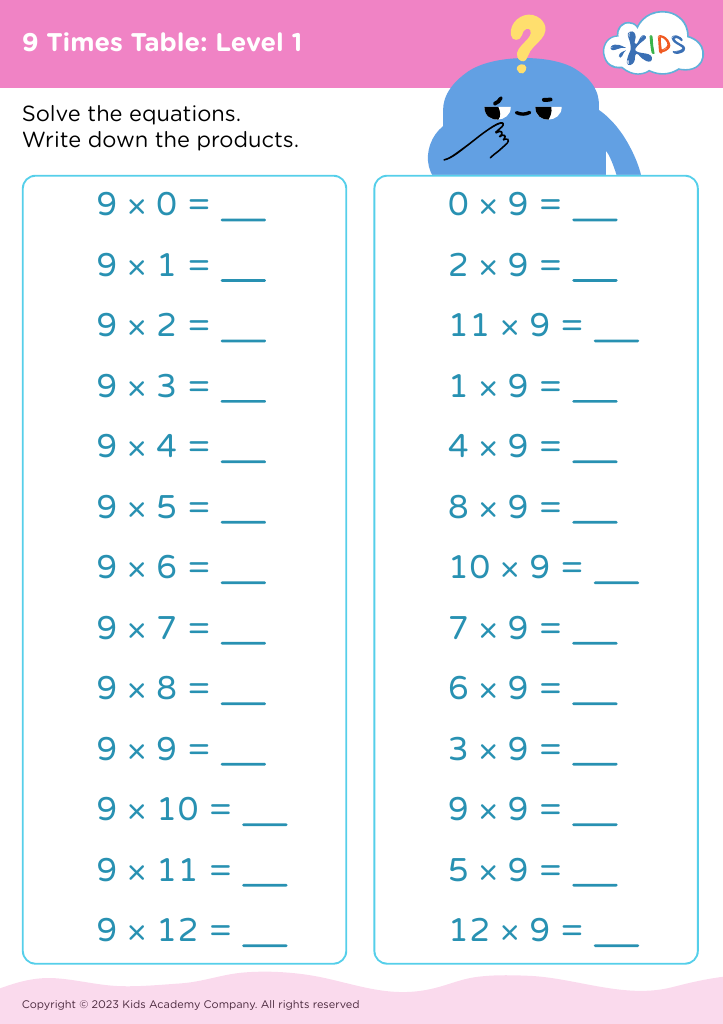
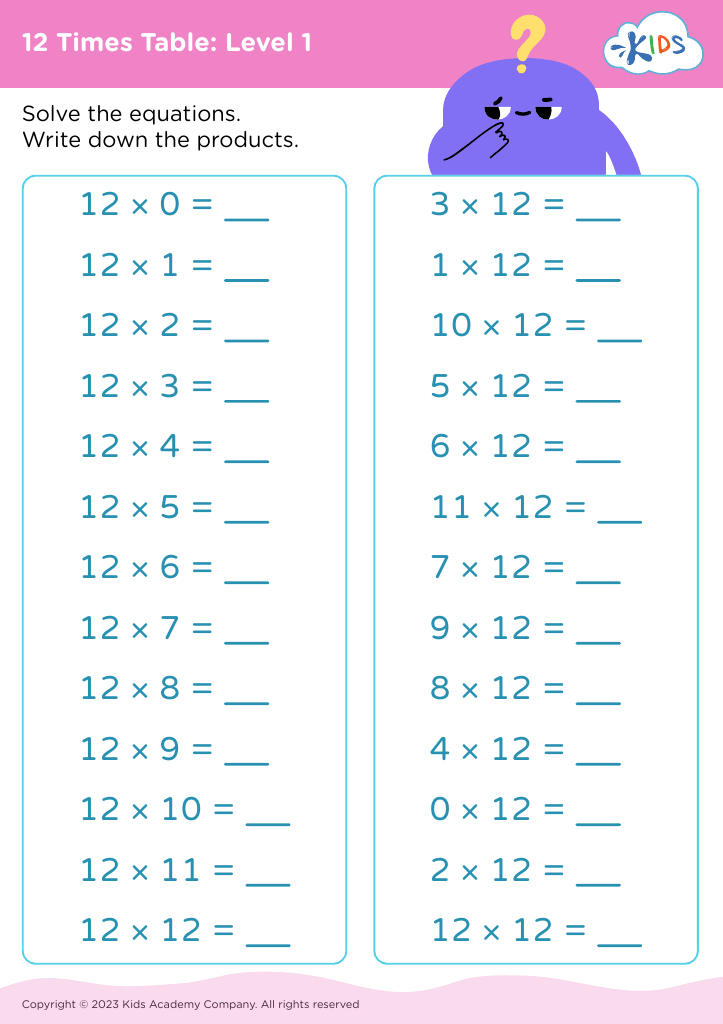








Understanding patterns is vital for children aged 6-9 as it serves as a foundation for mathematical thinking and problem-solving skills. At this age, children are naturally eager to explore their surroundings, and recognizing patterns helps them make sense of the world. Patterns are prevalent in everyday life—whether in nature, art, music, or numbers—allowing children to connect their learning to real-life experiences.
For parents and teachers, emphasizing pattern recognition enhances critical thinking. When children identify, create, and extend patterns, they learn to analyze relationships and make predictions, skills that are crucial as they advance through more complex mathematics. Additionally, exploring patterns supports cognitive development, strengthening their ability to understand sequences and categories.
Moreover, engaging with patterns fosters creativity and inquiry. By encouraging children to explore various ways to form and classify patterns, they develop flexibility in thought and are more open to different problem-solving approaches. This competence lays the groundwork for future math concepts, such as algebra and geometry. Ultimately, supporting children in understanding patterns not only enhances their immediate mathematical abilities but also equips them with skills relevant to other academic areas and life in general, promoting lifelong learning.








