
Understanding sizes Math Worksheets for Ages 6-9
3 filtered results
Difficulty Level
Grade
Age
-
From - To
Subject
Activity
Standards
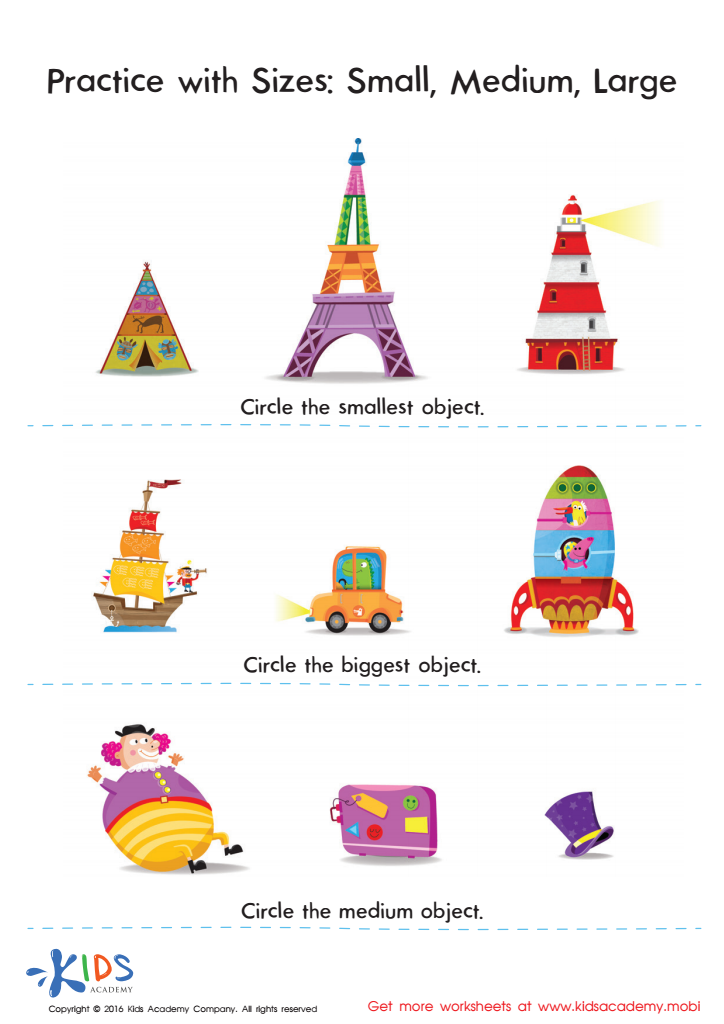
Discover our "Understanding Sizes Math Worksheets for Ages 6-9," thoughtfully designed to grasp measurement concepts effortlessly. Ideal for young learners, these engaging worksheets incorporate fun, hands-on activities that teach children how to compare, differentiate, and understand various sizes. Through visually appealing tasks and real-life scenarios, kids explore the basics of measurement, enhancing their math skills with ease. Perfect for school or home practice, our worksheets support confidence in understanding greater than, less than, and equal to concepts. Ignite a love for learning as children master sizes with purposeful and enjoyable math exercises tailored to their developmental needs.
Favorites
With answer key
Interactive
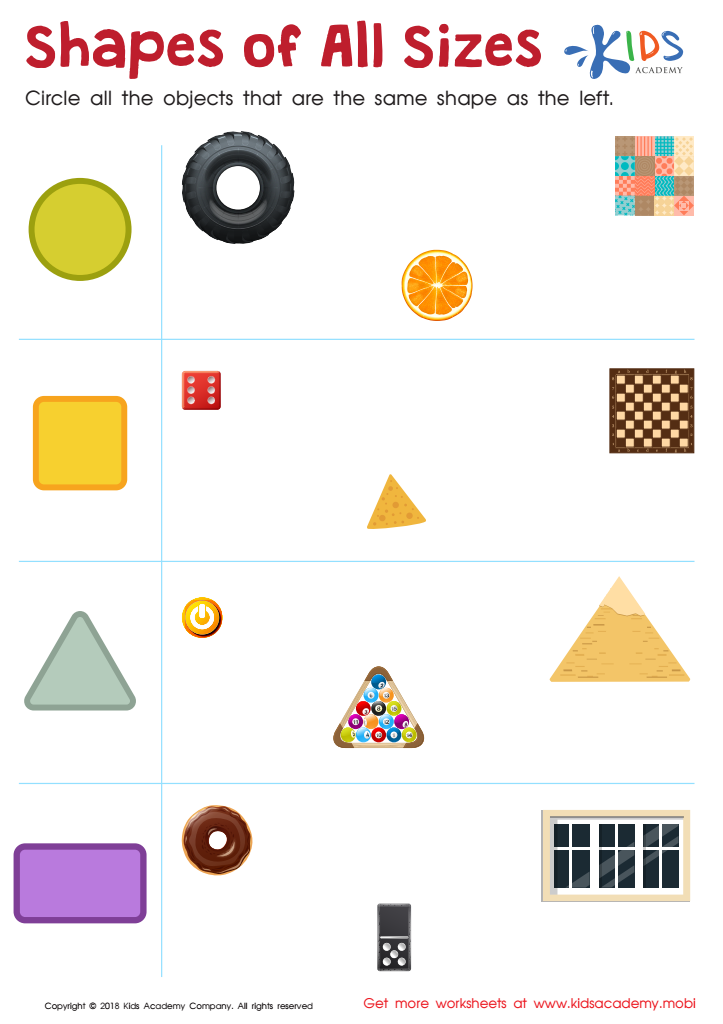
Shapes of All Sizes Worksheet
Students will have fun comparing basic shapes to familiar objects with this worksheet. It's an excellent way to help them recognize similarities in geometric shapes, building strong foundations for understanding congruence and similarity.
 Assign to My Students
Shapes of All Sizes Worksheet
Worksheet
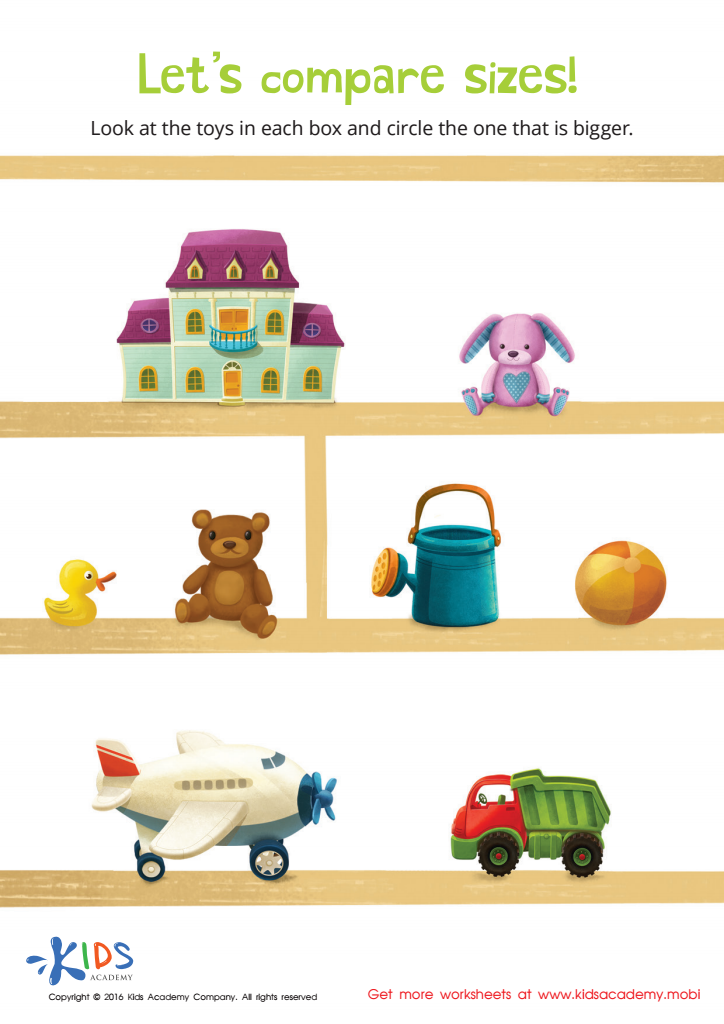
Classifying by Size Sorting Worksheet
Help your preschooler recognize differences in size using this fun worksheet! Your child will engage in important spatial recognition and problem-solving skills while talking with you about objects that can be small or large. Enjoy the vibrant pictures together!
Classifying by Size Sorting Worksheet
Worksheet
Join Kids Academy for Free
Who is primarily going to use this learning content?







Understanding sizes in math for ages 6-9 is a foundational skill that parents and teachers should prioritize. At this developmental stage, children are starting to make sense of the world around them through concrete, hands-on experiences. Grasping concepts such as length, width, height, and volume helps children navigate everyday tasks more effectively, from determining whether a toy will fit in a storage box to understanding the relative size of objects in their environment.
Mathematically, understanding sizes ties closely with geometry and spatial awareness, crucial elements in STEM education. It lays the groundwork for more complex math topics later in their academic journey, such as measurement, fractions, and geometry. When children comprehend these basic size concepts, they are better equipped to tackle problem-solving and critical thinking activities.
Moreover, mastering sizes boosts a child’s confidence in their mathematical abilities. Experiencing success in understanding and applying these concepts encourages a positive attitude towards math overall. It also promotes cognitive skills like comparison, estimation, and classification, beneficial for both academic and real-life scenarios.
From a social perspective, group activities involving sizes can enhance collaboration and communication skills. Children learn to share ideas, compare results, and work together to solve problems, making the learning process both enjoyable and effective. Therefore, fostering an understanding of sizes at ages 6-9 is essential for holistic development.








