
Hand-eye Coordination Matching Worksheets for Ages 6-9
3 filtered results
Difficulty Level
Grade
Age
-
From - To
Subject
Activity
Standards
Enhance your child's hand-eye coordination with our engaging matching worksheets designed specifically for ages 6-9. These printable activities offer a fun way to improve visual processing and fine motor skills while providing a platform for creative play. Each worksheet presents various objects and illustrations that challenge children to match pairs, fostering focus and concentration. Ideal for homeschooling or supplementary learning, our worksheets make practice enjoyable, ensuring your child remains excited about developing essential skills. Equip your young learners with the tools they need for academic success while enjoying interactive, screen-free learning experiences with our hand-eye coordination matching worksheets!
Favorites
With answer key
Interactive
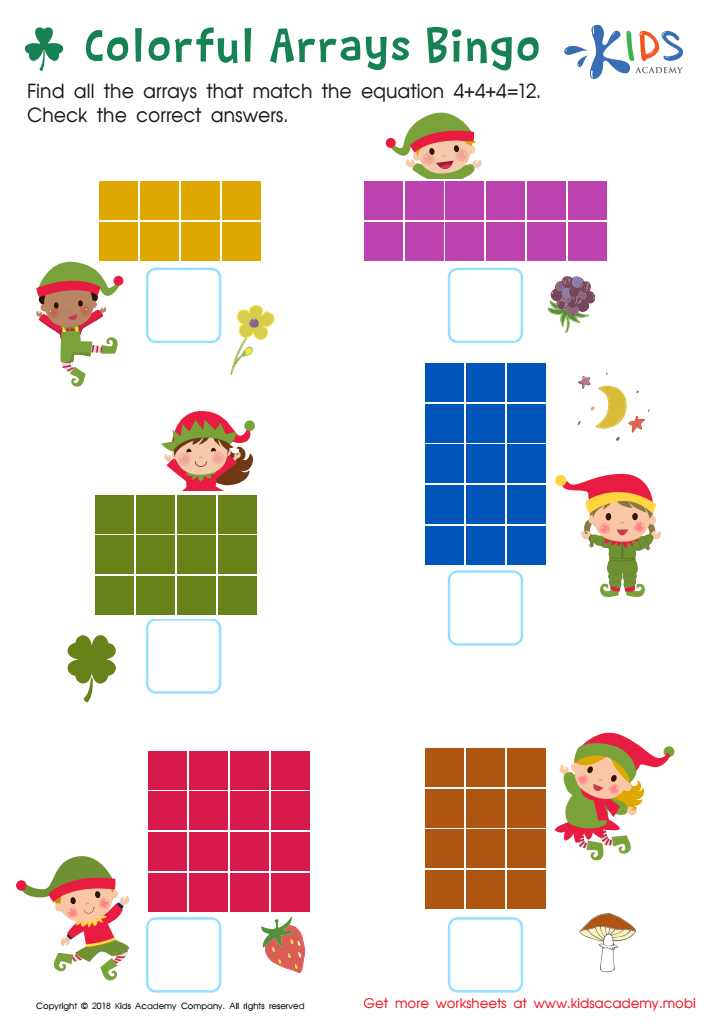
Colorful Arrays Bingo Worksheet
This worksheet stimulates thinking about arrays and how to represent them. Instruct students to count the 6 arrays and find which ones sum up to 12. Ask them to check the answers for accuracy.
 Assign to My Students
Colorful Arrays Bingo Worksheet
Worksheet
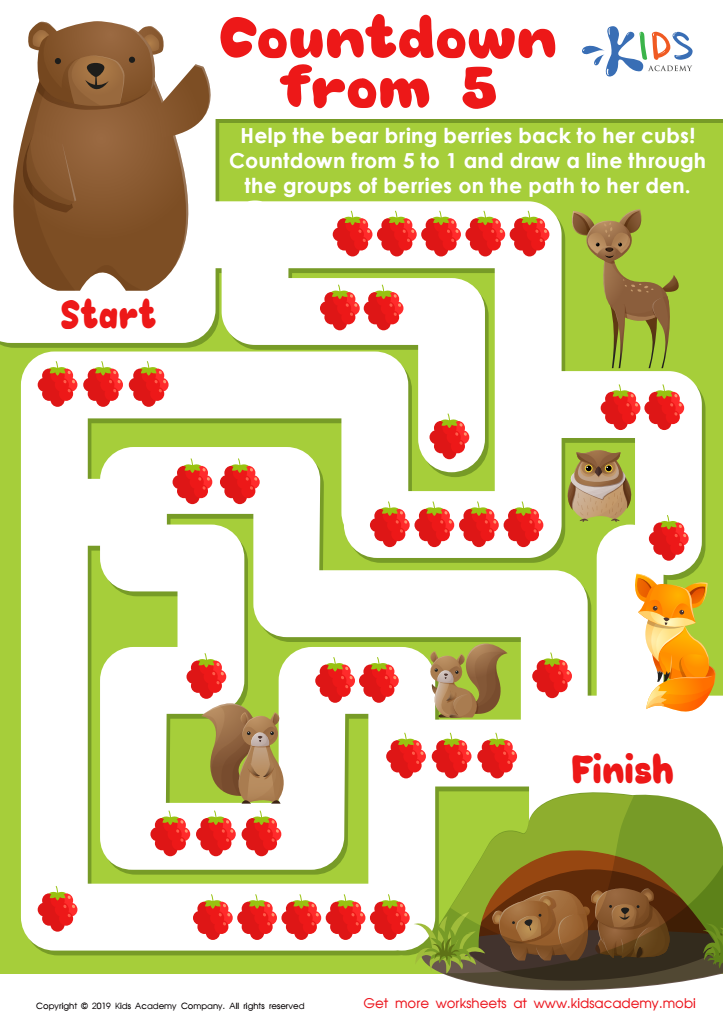
Countdown from 5 Worksheet
Encourage your kids to help Mama Bear find her way to her den! Ask them to count down from 5 to 1 and draw a line through the groups of berries on the path. Point them to the picture of the friendly bears. A fun and safe way to enjoy these cute animals!
Countdown from 5 Worksheet
Worksheet
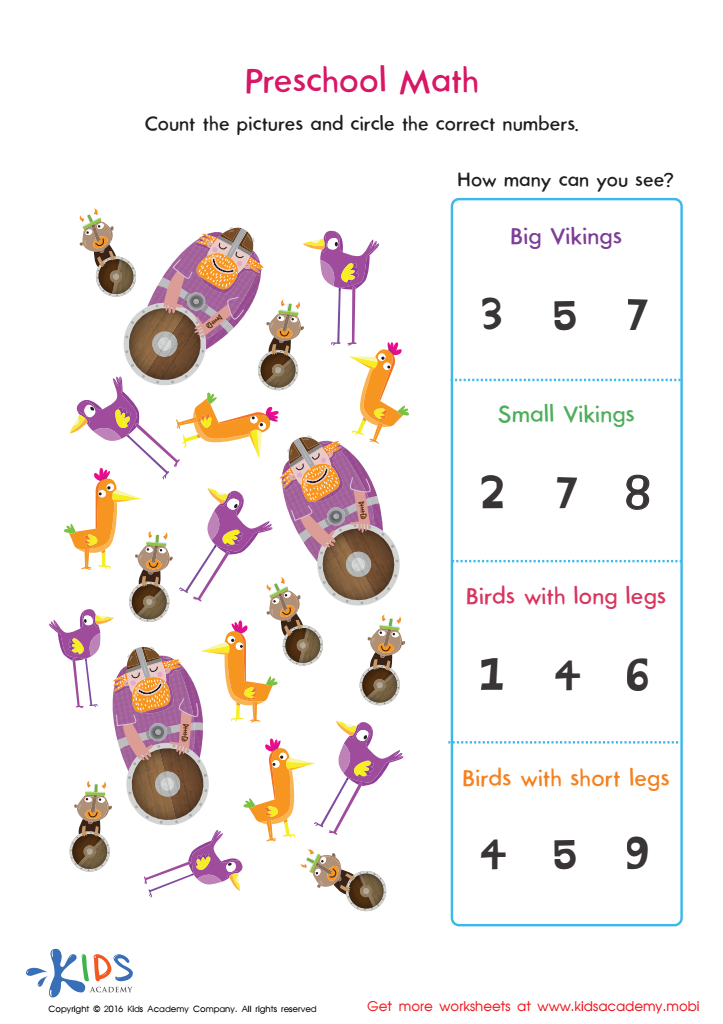
Counting Worksheet: Preschool Math
Worksheet
Join Kids Academy for Free
Who is primarily going to use this learning content?








Hand-eye coordination is a crucial skill that significantly impacts a child's development, especially between the ages of 6 to 9. During this stage, children are not just refining their motor skills; they are also developing cognitive abilities that affect their overall learning experiences. Effective hand-eye coordination aids in tasks like writing, drawing, cutting, and participating in sports, fostering a sense of accomplishment and confidence in children.
Parents and teachers should prioritize activities that enhance hand-eye coordination because this skill lays the foundation for academic success. For instance, better coordination can improve a child's ability to concentrate and follow directions, translating into improved performance in subjects like math and science where precision is essential. Furthermore, engaging in activities that promote hand-eye coordination encourages teamwork, social skills, and perseverance—factors crucial for emotional intelligence.
Additionally, activities such as sports or art not only boost coordination but can also serve as a stress reliever, enhancing overall well-being. Ultimately, supporting the development of hand-eye coordination contributes to a child's physical, cognitive, and social growth, making it vital for parents and educators to recognize and nurture this skill in early schooling years.








