
Understanding measurement units Measurement Worksheets for Ages 6-9
3 filtered results
Difficulty Level
Grade
Age
-
From - To
Subject
Activity
Standards
Discover fun and engaging "Measurement Worksheets for Ages 6-9" designed to help young learners master essential measurement units! These educator-approved worksheets provide a variety of activities that teach the basics of length, weight, volume, and time. Perfect for enhancing math skills, each worksheet includes colorful illustrations that make learning both visual and interactive. With practical exercises and real-world examples, children will build a strong foundation in measurement concepts. Ideal for use at home or in the classroom, these worksheets ensure that kids develop confidence in their ability to understand and use different measurement units effectively. Start exploring today!
Favorites
With answer key
Interactive
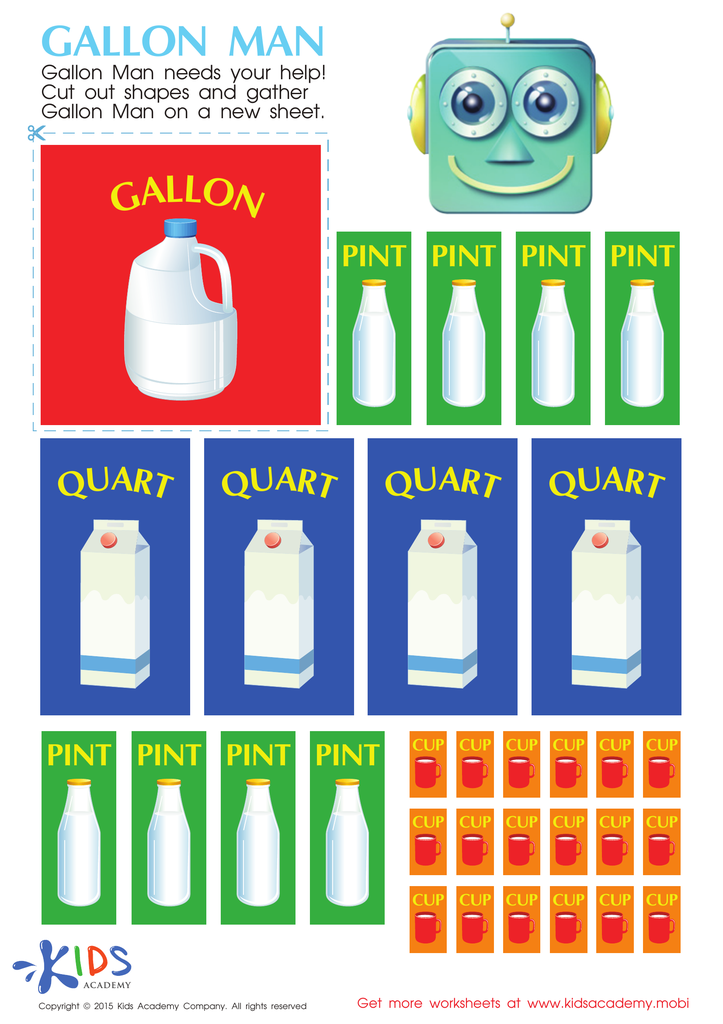
Cups, Pints and Quarts With Gallon Man Worksheet
Measurement in cups, pints, quarts and gallons has never been this fun!
Cups, Pints and Quarts With Gallon Man Worksheet
Worksheet
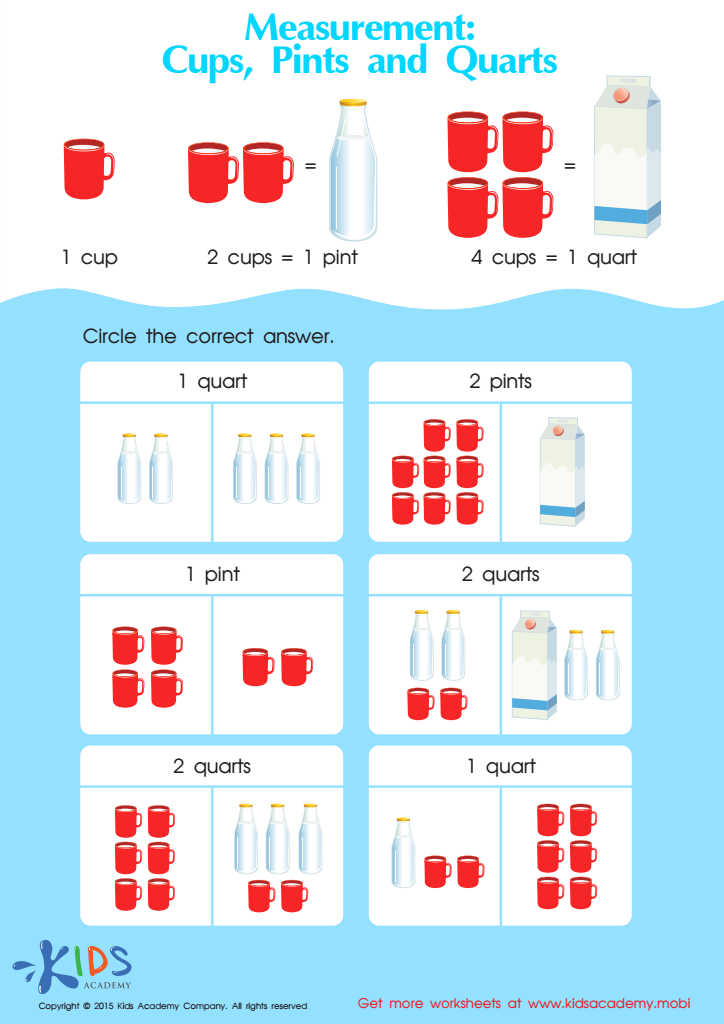
Cups, Pints and Quarts Worksheet
Let your kids explore the world of math with our worksheet! Have them count cups, pints and quarts in pictures and circle the right answer. Get even more free printable math worksheets for kindergarten on our website. Come on, join the adventure!
 Assign to My Students
Cups, Pints and Quarts Worksheet
Worksheet
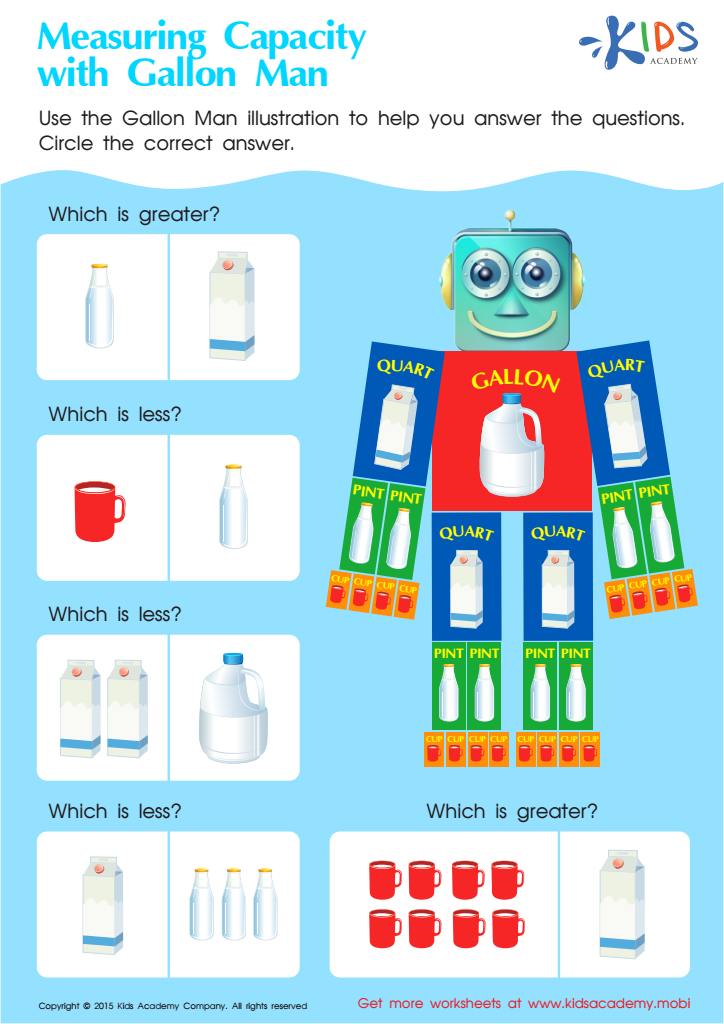
Measurement: Measuring Capacity with Gallon Man Worksheet
Check out Gallon Man to practice measuring capacity with cups, pints, quarts, and gallons. Our worksheet has questions with answers checked against Gallon Man. For more practice, visit our site for free printable math worksheets for kindergarten and learn math with fun!
Measurement: Measuring Capacity with Gallon Man Worksheet
Worksheet
Join Kids Academy for Free
Who is primarily going to use this learning content?








Understanding measurement units is essential for children aged 6-9 because it lays the groundwork for their future academic success and everyday life skills. During this critical developmental stage, children are naturally curious about the world around them. Introducing them to measurement units such as length, weight, and volume helps to satisfy this curiosity in a structured way.
Firstly, it strengthens basic math skills. Measurement involves numbers, comparisons, and operations such as addition and subtraction, crucial components of primary mathematics. A solid grasp of measurement concepts supports more difficult math concepts they will encounter later on.
Secondly, measurement relates to real-world scenarios, making learning tangible and meaningful. Whether cooking, playing sports, or understanding weather reports, children use measurement units daily. Familiarity with these units allows them to navigate their environment more confidently.
Moreover, understanding measurement fosters critical thinking and problem-solving skills. When students compare lengths or volumes, they need to figure out which is bigger or smaller and by how much. This process hones analytical abilities that are transferable across subjects.
Finally, comprehension of measurement aligns with educational standards and curricula globally, ensuring that students are keeping up with academic expectations for their grade level. For these reasons, teachers and parents should prioritize measurement education, creating a robust foundation for a child's overall development.








