Fine Motor Skills Multiplication Worksheets for Ages 6-9
3 filtered results
-
From - To
Enhance your child’s learning experience with our Fine Motor Skills Multiplication Worksheets, specifically designed for ages 6-9. These engaging worksheets combine math practice with fine motor skill development, making learning both fun and effective. Each worksheet features colorful illustrations and interactive activities, helping children strengthen their pencil grip and hand-eye coordination while mastering multiplication concepts. Your little learners will benefit from a hands-on approach to math, as they solve problems through tracing, coloring, and cutting activities. Perfect for at-home learning or classroom settings, these worksheets are an excellent resource to help children build confidence in their math abilities while developing essential skills.
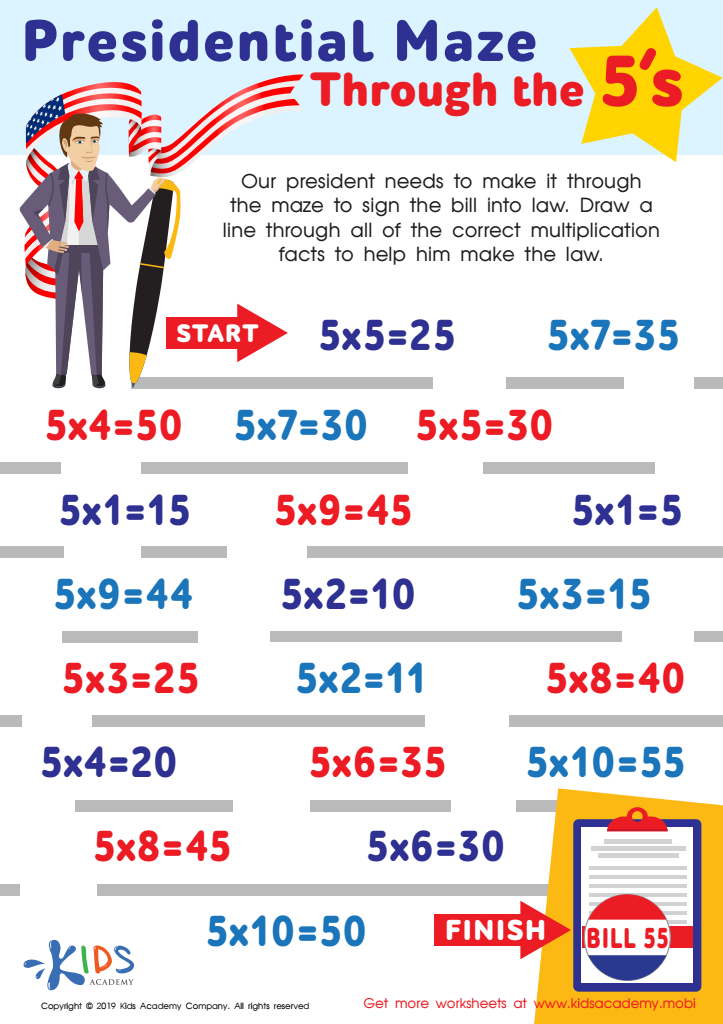
Presidential Maze Through the 5’s Worksheet
 Assign to My Students
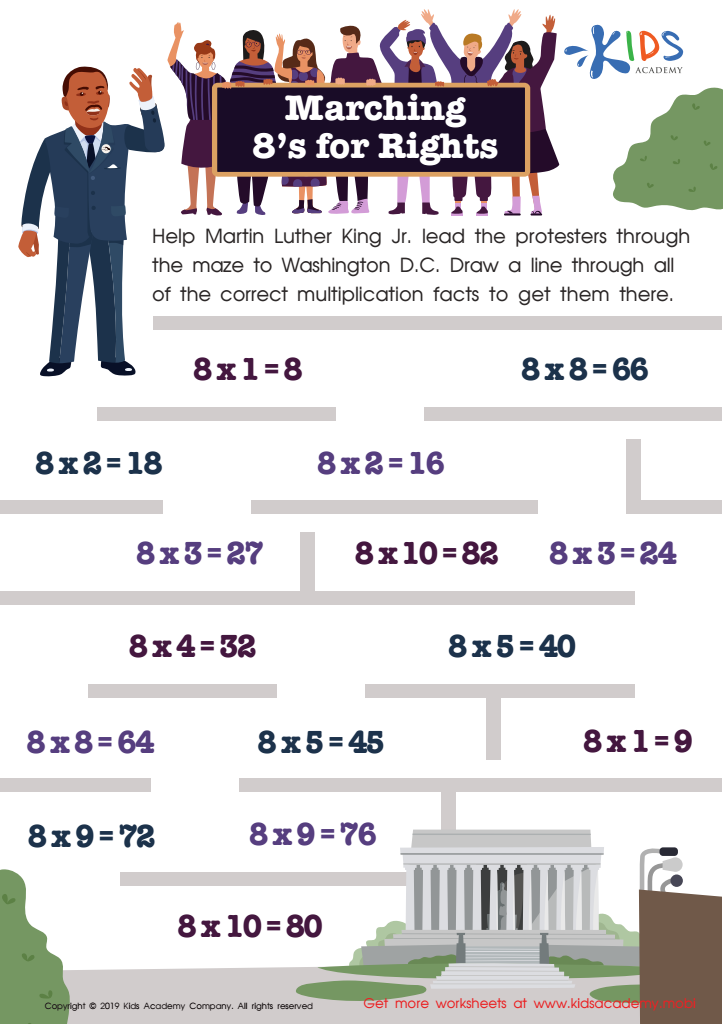
Marching 8’s for Rights Worksheet
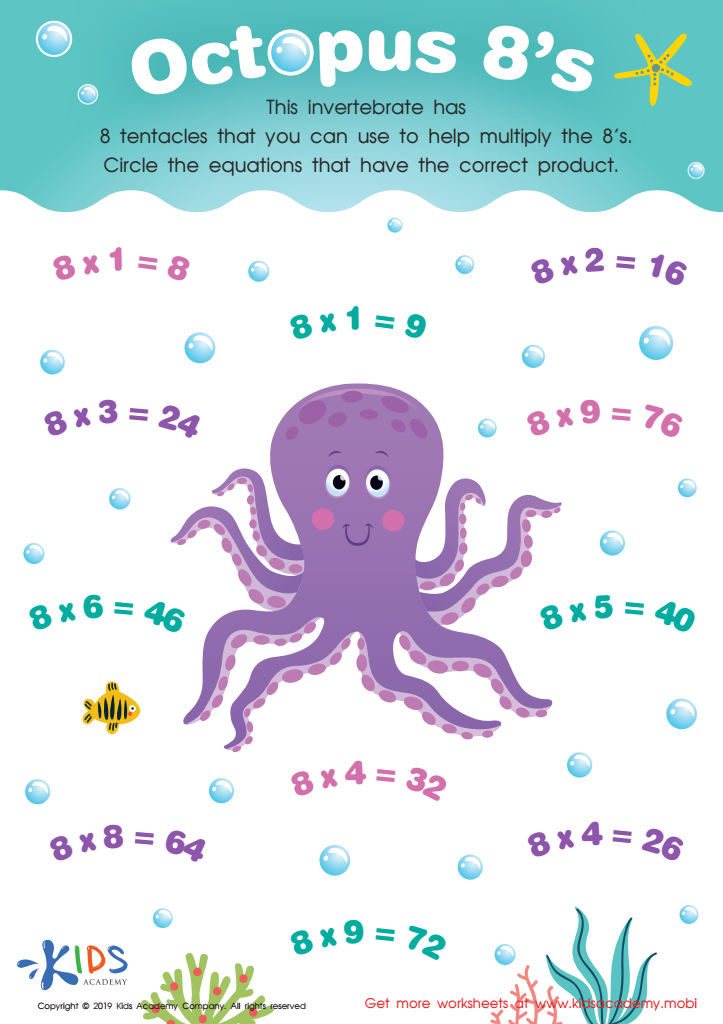
Octopus 8’s Worksheet








Fine motor skills are crucial developmental milestones for children aged 6-9, as they encompass the small muscle movements in the hands and fingers that facilitate tasks like writing, drawing, and manipulating objects. When it comes to multiplication, the ability to control hand movements significantly impacts a child's ability to engage with mathematical tools, such as manipulatives or math games.
Parents and teachers should care about fine motor skills multiplication for several reasons. Firstly, these skills are foundational for academic success, particularly in subjects that require precision and fine control, including mathematics. Improved fine motor skills enable children to work more effectively with tools such as markers and counters, facilitating a hands-on approach to multiplication concepts.
Additionally, fine motor skills bolster self-confidence. As children become proficient in tasks that involve these skills, they are more likely to participate actively in classroom activities and group projects—the essence of learning multiplication through collaboration.
Finally, fine motor skills significantly influence overall cognitive development. Engaging in activities that enhance these skills leads to improved focus and memory retention, vital for understanding multiplication concepts. Thus, supporting the development of fine motor skills is essential not only for multiplication proficiency but also for broader educational outcomes.








