Number Recognition Numbers up to 100 Worksheets for Ages 6-9 - Page 2
27 filtered results
-
From - To
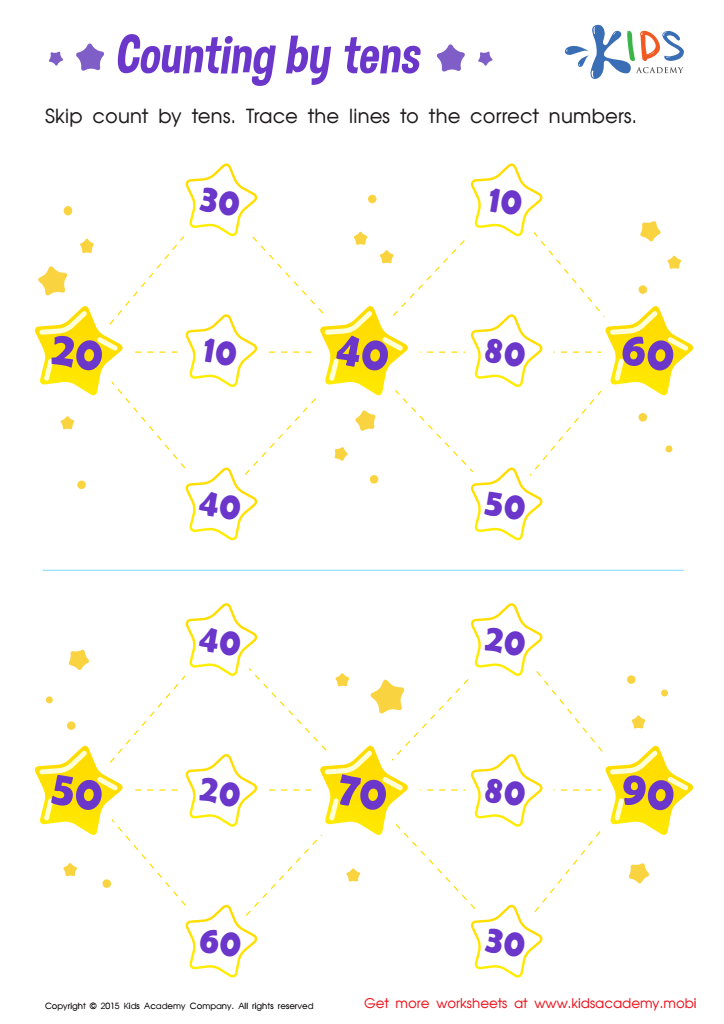
Learn Dozens: Counting by Tens Printable
 Assign to My Students
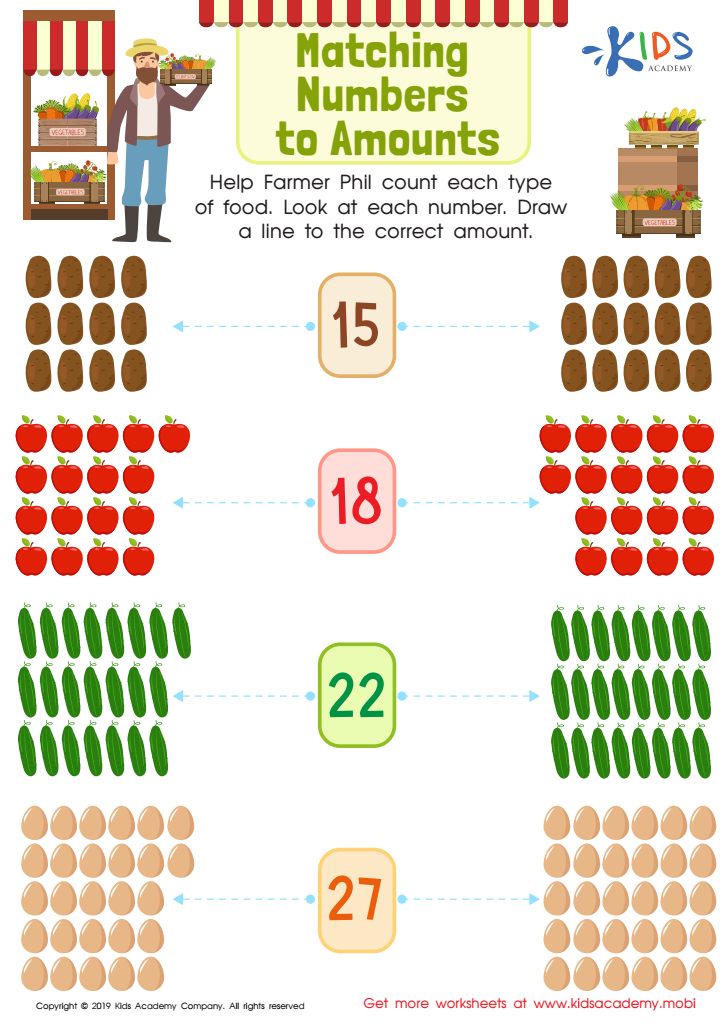
Matching Numbers to Amounts Worksheet

Counting on the City Skyline: Dot-to-Dot Worksheet




%20(1).jpg)



Number recognition is a fundamental skill for children ages 6-9, serving as a cornerstone for their mathematical development. This ability allows children to identify and understand numbers up to 100, which is crucial for everyday tasks and advanced mathematical concepts later in their education.
Parents and teachers should care about number recognition because it lays the groundwork for key mathematical operations such as addition, subtraction, and more complex calculations. When children can recognize numbers easily, they are better prepared to engage in classroom activities, participate in games, and complete assignments with confidence. This skill also enhances their problem-solving abilities and logical thinking.
Moreover, number recognition contributes to a child’s overall cognitive development. It promotes pattern recognition and memory skills, both essential for academic success. As they master this skill, children often experience boosted self-esteem, which can foster a positive attitude toward learning.
Lastly, number recognition equips children with essential life skills. Understanding numbers enables them to grasp everyday situations such as dealing with money, telling time, and reading statistics. For parents and teachers, supporting this developmental milestone is vital to nurturing well-rounded, confident learners.