Reading clocks Time Worksheets for Ages 6-9
3 filtered results
-
From - To
Unlock your child's proficiency in time-telling with our engaging Reading Clocks Time Worksheets designed for ages 6-9! These interactive worksheets make learning time both fun and educational. With a variety of exercises, kids will develop essential skills such as understanding analog clocks, identifying digital time, and calculating durations. Our carefully crafted activities promote critical thinking while enhancing their confidence in reading the clock. Perfect for home study or classroom use, these printable worksheets enable your young learners to master time concepts at their own pace. Start your child's journey to become a time-telling pro today!
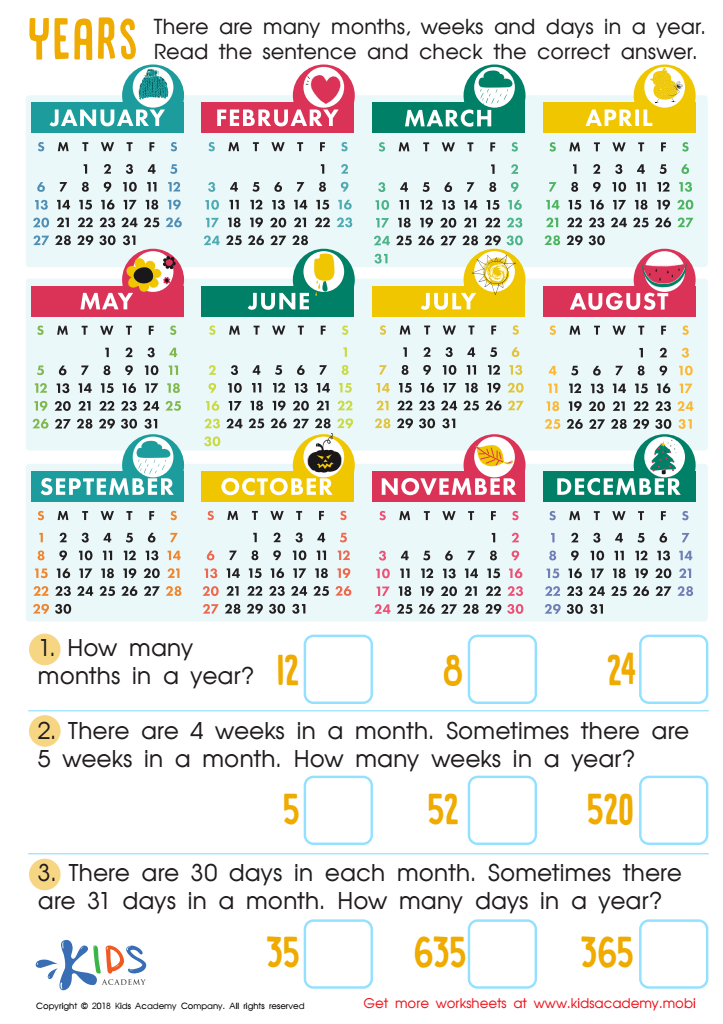
Years Worksheet
 Assign to My Students
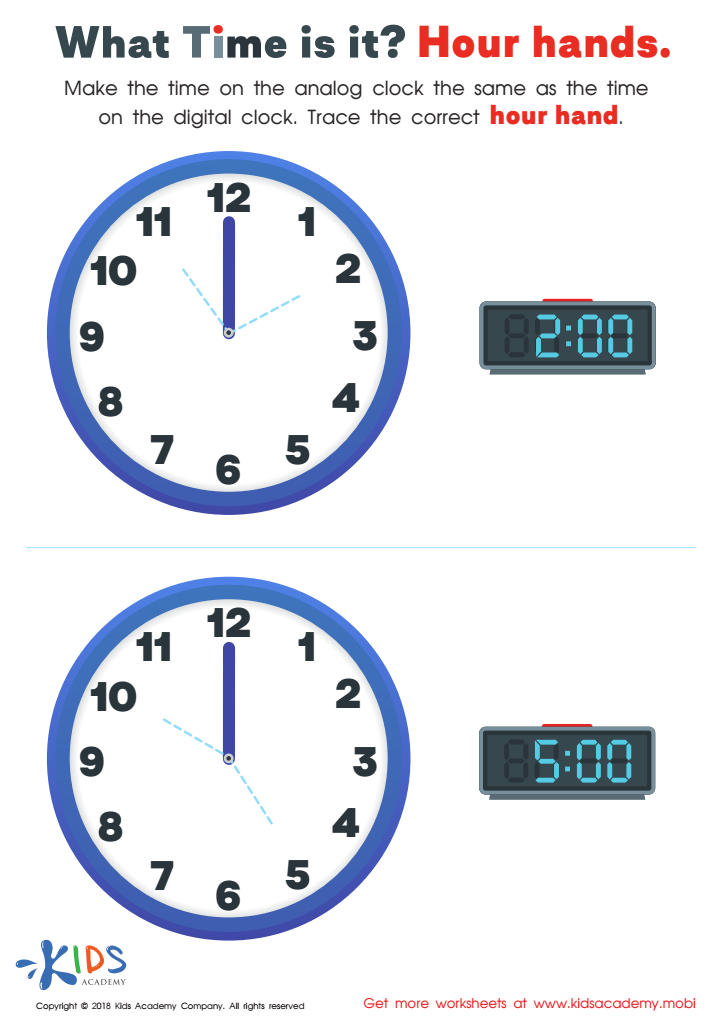
What Time Is it? Hour Hands Worksheet
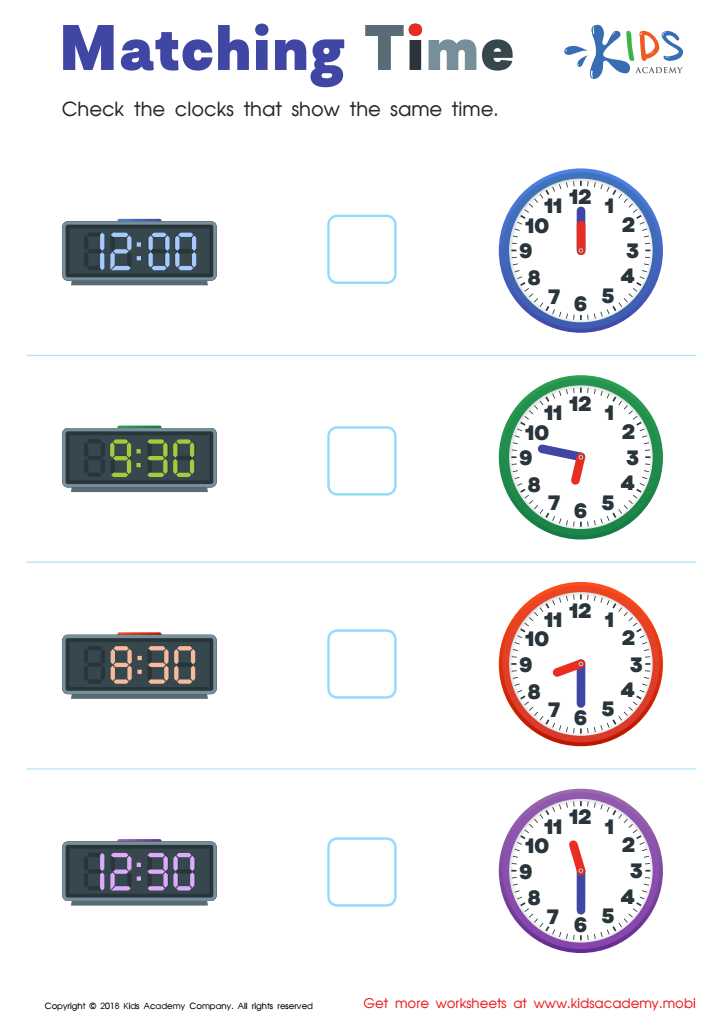
Matching Time Worksheet







Understanding how to read clocks and tell time is a vital skill for children aged 6-9, laying the groundwork for their time management abilities and independence. First, knowing how to read an analog clock promotes cognitive development, as it requires children to comprehend both numbers and their spatial relationships. This skill encourages critical thinking and enhances mathematical understanding through concepts of fractions and division.
Moreover, time-telling fosters a sense of responsibility in children. When kids are able to gauge time, they develop a sense of punctuality and learn to manage their schedules—be it for school, playdates, homework, or bedtime. This independence builds confidence and prepares them for adult life.
Additionally, teaching children to read a clock helps reinforce concepts of daily routines and the value of time, aiding them in understanding the implications of time-related decisions. Moreover, this foundational skill enhances communication and social interaction, as children learn to discuss time with peers and family.
Incorporating clock reading into everyday activities makes learning fun and engaging. By helping children grasp this essential skill, parents and teachers play a crucial role in shaping responsible and organized young individuals. Therefore, fostering an understanding of time-telling is essential for children's overall development.








