Filters

6 filtered results

Clear all filters
Favorites
With answer key
Interactive

6 filtered results

Difficulty Level

Grade


Explore our engaging Basic Addition Word Problems Worksheets designed for children ages 6 to 9. These worksheets offer a fun and interactive way to enhance your child's mathematical skills through relatable scenarios. Our thoughtfully crafted problems help young learners practice addition while developing critical thinking and problem-solving abilities. Each worksheet is age-appropriate, promoting confidence in tackling math concepts. Ideal for home or classroom use, these resources are perfect for reinforcing lessons and preparing students for more advanced concepts. Ignite your child's love for math with our colorful, easy-to-use worksheets, and watch them thrive as they solve real-life addition problems!

Check out this FREE Trial Lesson on Word Problems for age 6-9!

Drawing it Out Addition

Favorites
With answer key
Interactive
  • 6-9
  • Basic Addition
  • Word Problems
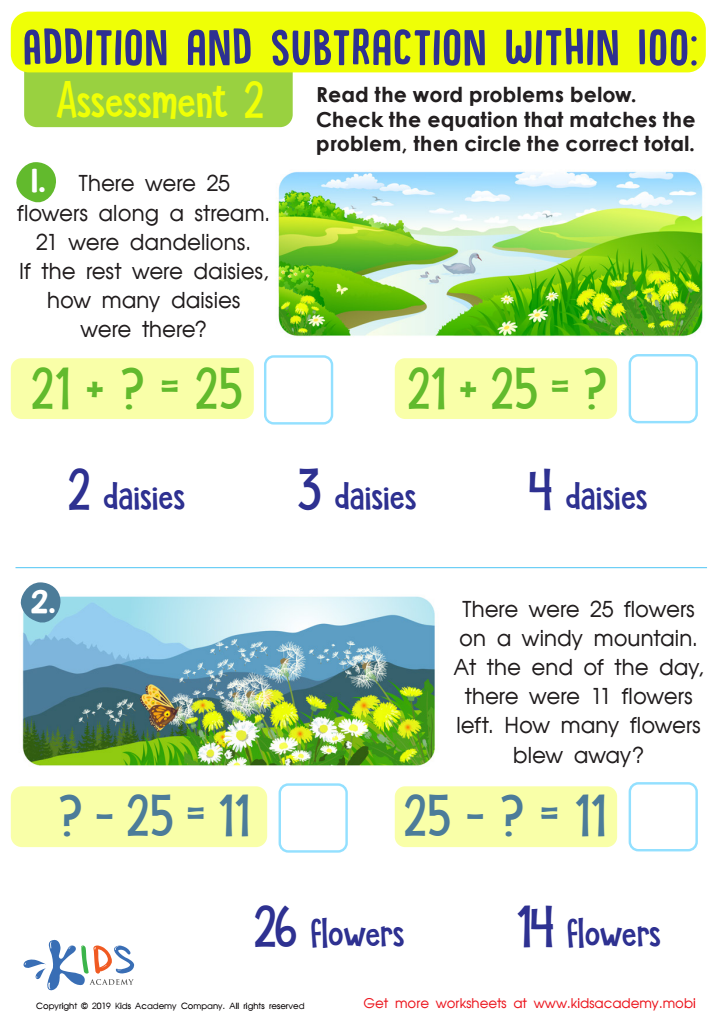
Assessment 2 Math Worksheet

Assessment 2 Math Worksheet

Using fun exercises and pictures, you can get kids excited about math. With practice and reminders of what they've learnt, they'll be solving simple addition and subtraction equations with ease. Read the word problems in the picture to them, then help them check the equation and choose the correct answer.
Assessment 2 Math Worksheet
Worksheet
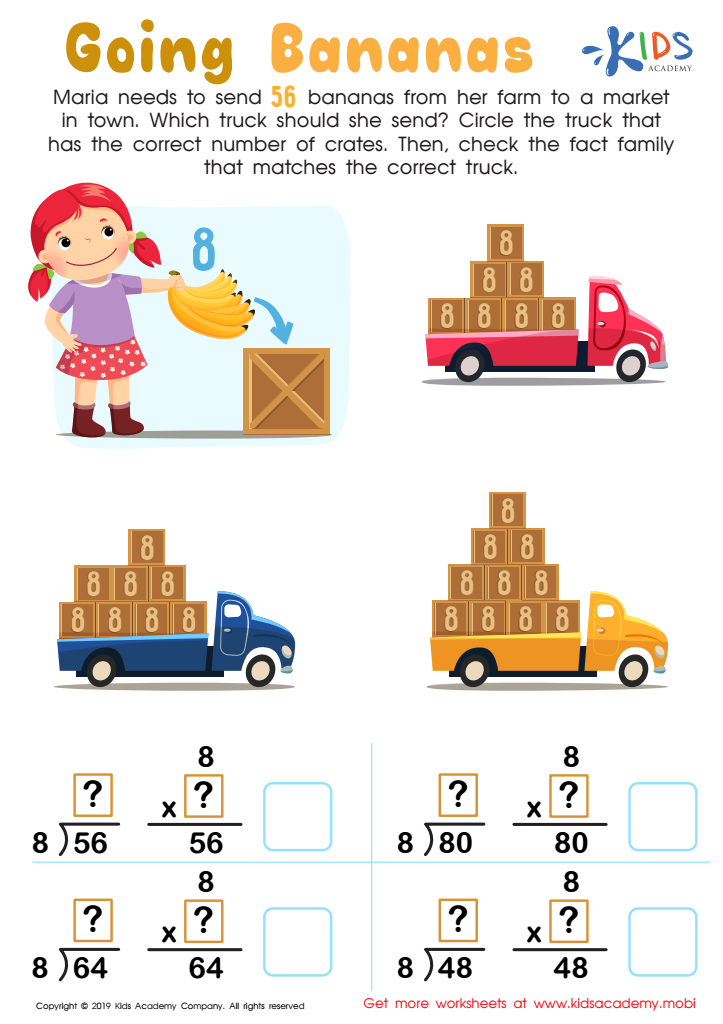
Going Bananas Worksheet

Going Bananas Worksheet

Marla needs to send 56 bananas in batches of 8. Help your child practice division and learn about fact families with this free worksheet. It'll help boost their multiplication skills and increase speed when solving problems.
Going Bananas Worksheet
Worksheet
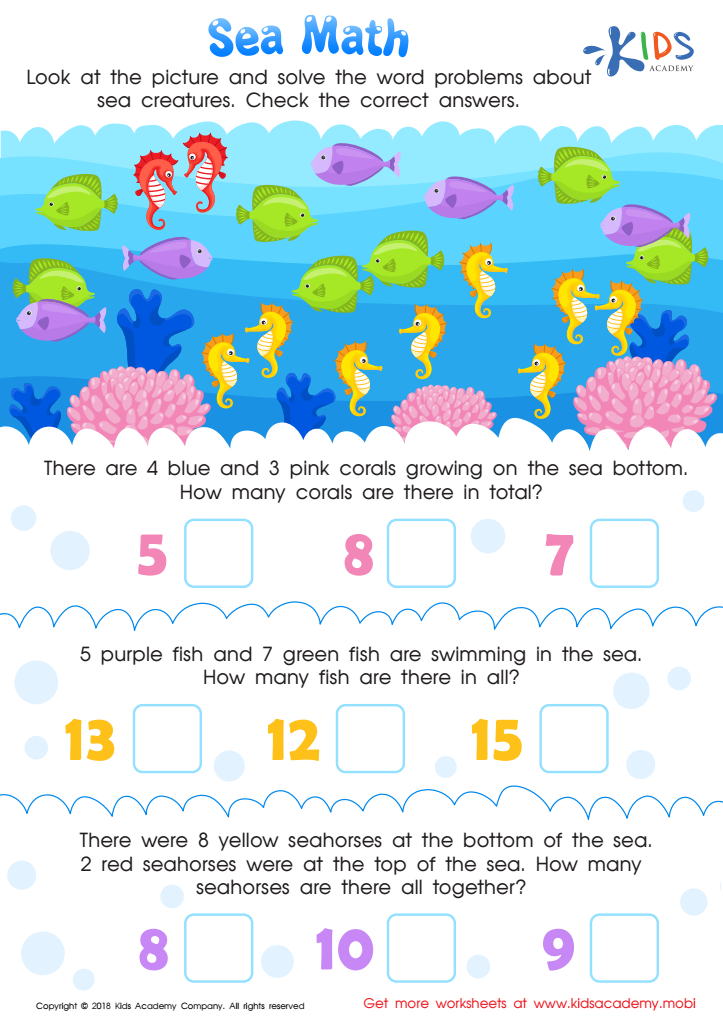
Sea Math Worksheet
Sea Math Worksheet

Sea Math Worksheet

Dive into an ocean of addition with this fun math worksheet! Help your little mathematician count and add colorful coral and fish. Point out phrases like "in total" or "all together" as a reminder to use addition. Watch them add to find the answer and check the boxes to finish!
Sea Math Worksheet
Worksheet
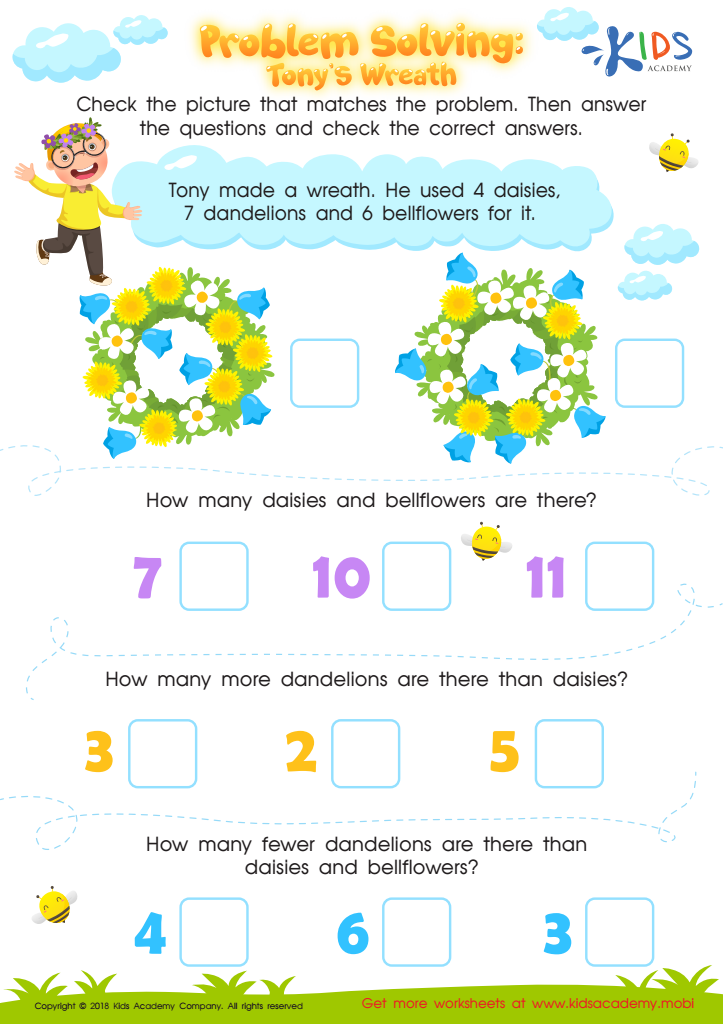
Problem Solving: Tony's Wreath Worksheet

Problem Solving: Tony's Wreath Worksheet

Tony needs help! He's made a beautiful, colorful wreath and needs help counting the flowers. Your math student can read the word problems, match answers to the problems and solve basic addition and subtraction. They'll practice with two and three addends, minuends and subtrahends to find sums and differences and help Tony and his bee friends.
Problem Solving: Tony's Wreath Worksheet
Worksheet
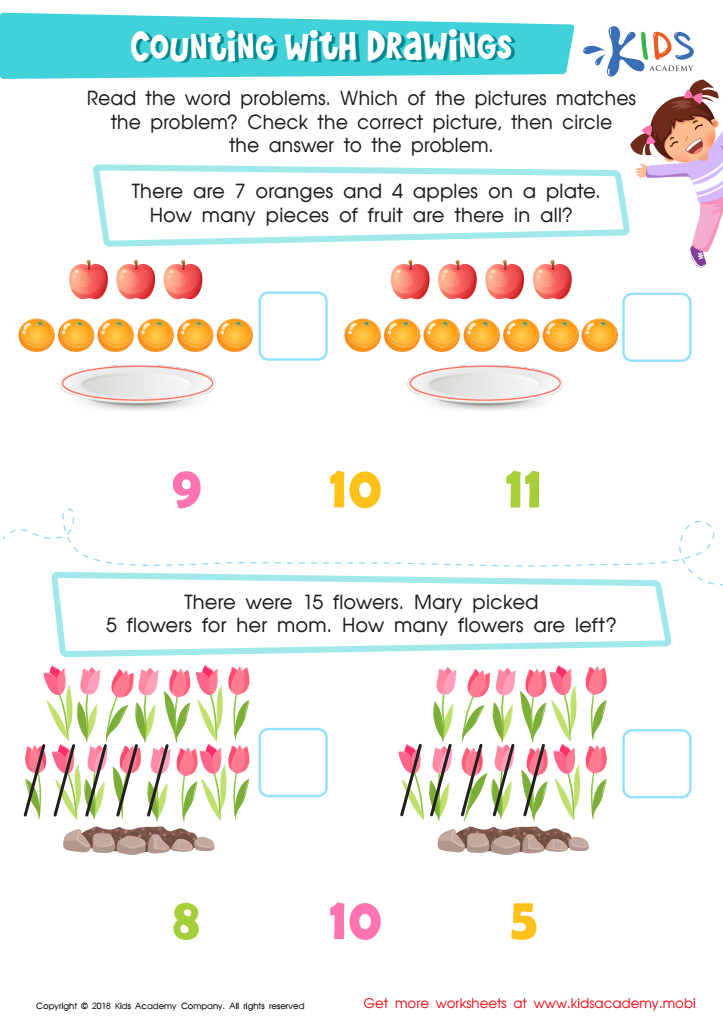
Counting with Drawings:Fruits & Flowers Worksheet

Counting with Drawings:Fruits & Flowers Worksheet

At Kids Academy, we know pictures make math come alive and make sense. This worksheet is perfect for early learners to practice word problems. Kids read each problem and count the images that represent the numbers, then solve the problem with addition or subtraction to get the right answer.
Counting with Drawings:Fruits & Flowers Worksheet
Worksheet
Animal Addition Worksheet


Animal Addition Worksheet

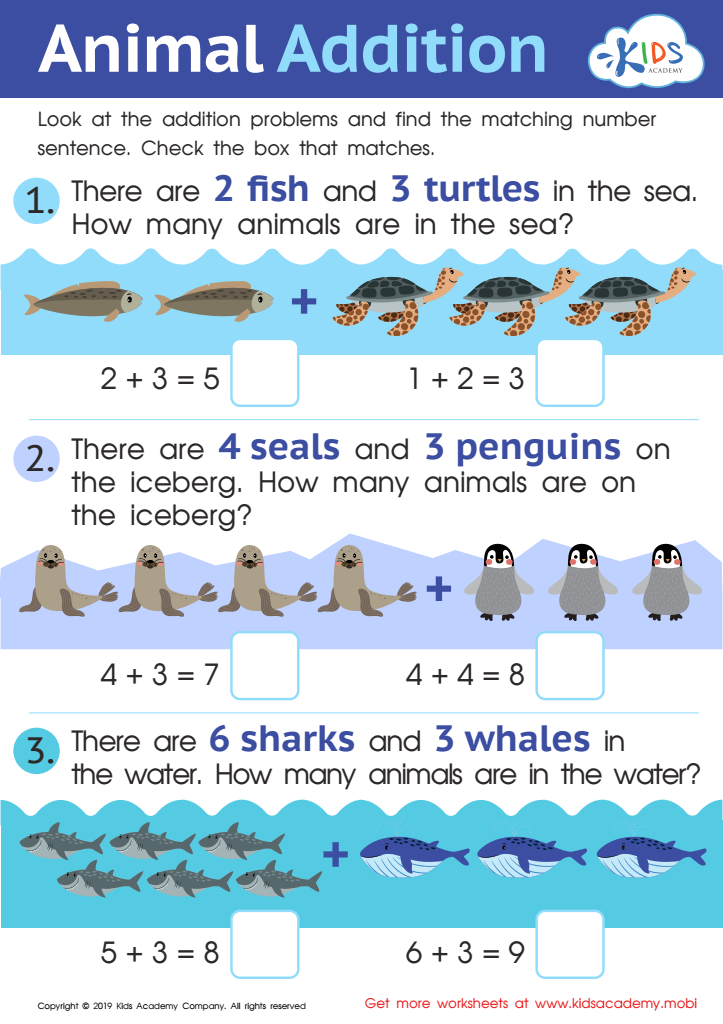
Get your kids learning addition and subtraction with this fun worksheet! Show them that solving equations can be enjoyable and help them match number sentences to the correct boxes. By doing this together, you'll create a positive learning experience that your kids won't forget.
Animal Addition Worksheet
Worksheet


Basic addition word problems are essential for young learners aged 6-9 because they serve as a foundation for both mathematical understanding and real-world application. At this developmental stage, children are not only learning to perform addition but also to interpret and solve problems presented in descriptive form. Engaging with word problems helps them develop critical thinking skills and enhances their comprehension abilities.

Understanding how to translate a word problem into a mathematical equation reinforces the connection between spoken language and mathematical concepts, ultimately improving both literacy and numeracy skills. Additionally, these problems often relate to everyday situations, such as sharing snacks or determining how many toys are in a collection, making mathematics more relevant and enjoyable for students.

Parents and teachers should prioritize these problems to foster problem-solving capabilities and encourage a positive attitude towards math, as early experiences can significantly influence a child's future relationship with the subject. By exploring addition word problems, children learn perseverance and gain confidence, skills that are vital for their academic journey. Moreover, investing time in these developmental activities enhances foundational skills, paving the way for more complex mathematical concepts in later grades.